
TIG Welding Learning Time Calculator
Understand Your TIG Learning Curve
Based on industry experience, estimate how long it will take you to become proficient in TIG welding. TIG is the hardest method to master due to its precision requirements.
Welding isn’t one skill-it’s a family of skills, each with its own rhythm, pressure, and precision. If you’ve ever watched someone weld and thought, “How do they make that look so easy?”-you’re not wrong. Some types of welding are downright brutal to pick up. But if you’re asking what’s the hardest welding to learn, the answer isn’t vague or opinion-based. It’s backed by decades of trade experience, apprentice dropout rates, and employer surveys. And it’s TIG welding.
TIG Welding: The Mountain No One Talks About
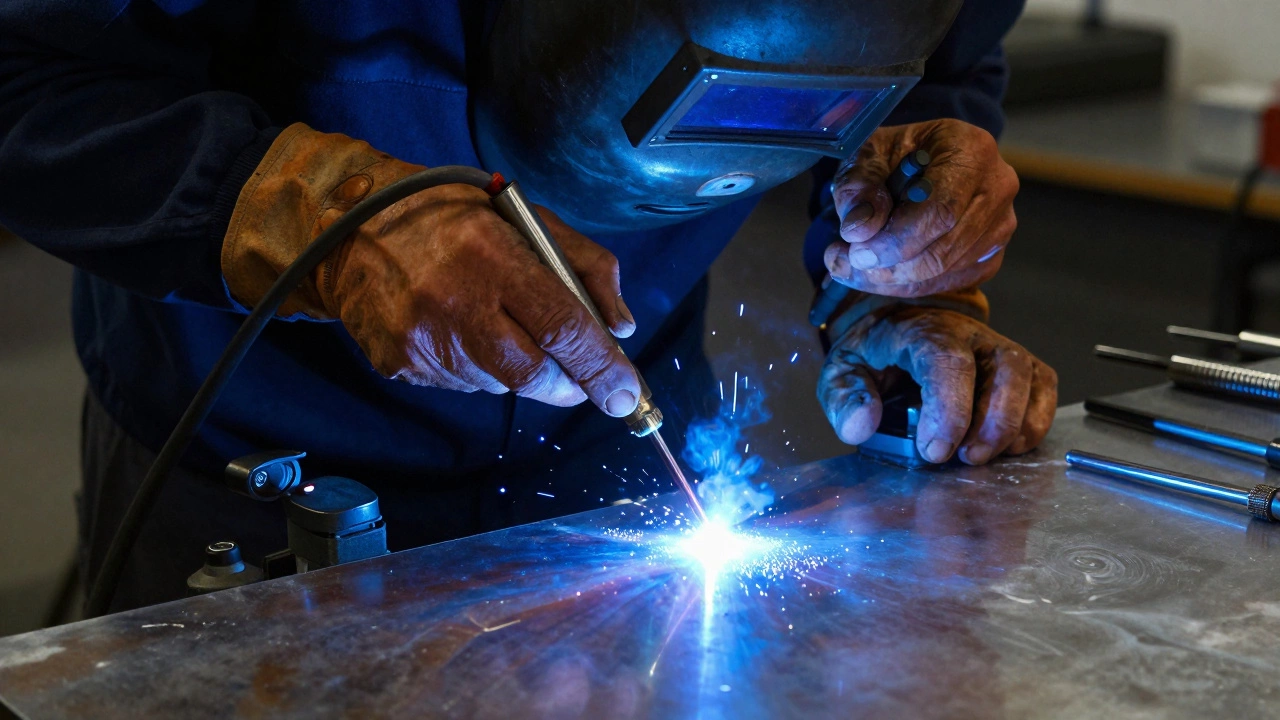
TIG welding-short for Tungsten Inert Gas-is often called the “art form” of welding. It’s clean, precise, and gives you control over every drop of metal. But that control comes at a cost: you have to manage three things at once with both hands and your foot.
Unlike MIG or stick welding, where the machine feeds wire automatically, TIG forces you to feed the filler rod with one hand, hold the torch steady with the other, and control the amperage with a foot pedal. All while keeping a consistent arc length, angle, and travel speed. One shaky breath, one twitch of the wrist, and your bead turns lumpy, porous, or cracked. No room for error.
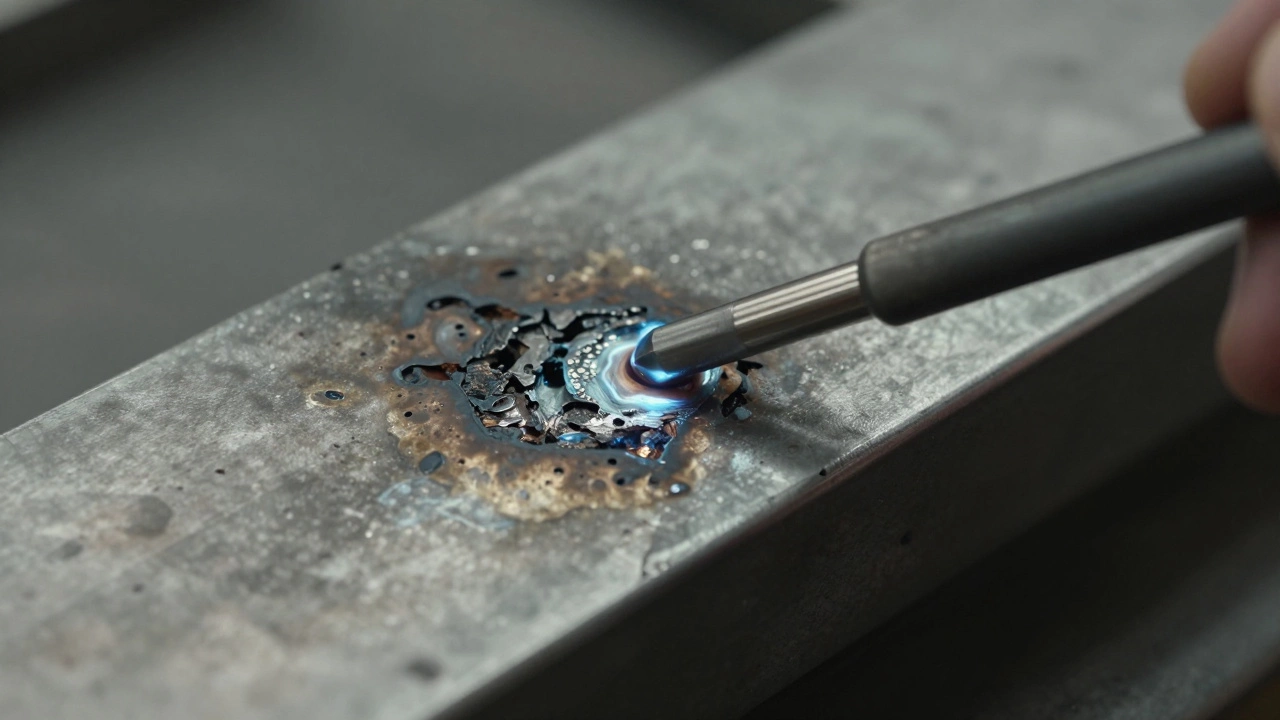
Most welders start with stick or MIG because they’re forgiving. You can burn through metal, reheat it, and fix it. With TIG, you’re working on thin stainless steel or aluminum-materials that don’t forgive. A tiny overheating spot warps the whole piece. A contaminated tungsten tip ruins your arc. And if you don’t keep the shielding gas flowing perfectly? Your weld turns brittle and dark, like burnt toast.
Why TIG Is So Much Harder Than Other Methods
Let’s break down what makes TIG different-and harder-than the alternatives:
- Two-handed control: You’re not just welding-you’re choreographing. Your left hand feeds the rod. Your right hand holds the torch. Your foot adjusts heat. No automation. No safety net.
- Material sensitivity: TIG is the go-to for aluminum, titanium, and thin-walled stainless. These materials react fast. Aluminum oxidizes in seconds. Titanium turns blue and weak if overheated. You need to know the exact melting point of each alloy.
- No slag to hide mistakes: Stick welding leaves slag that covers imperfections. MIG can mask poor technique with filler speed. TIG shows everything. Every crack, every porosity, every uneven ripple. You can’t hide. You can’t bluff.
- Slow learning curve: Most welders take 6-12 months to become decent at TIG. In comparison, someone can get comfortable with MIG in 4-6 weeks. That’s a huge time investment for a skill that’s not always needed on job sites.
It’s not just hard-it’s mentally exhausting. You’re not just welding. You’re thinking about heat input, gas flow, rod angle, travel speed, and joint fit-up-all while your arms are shaking from fatigue.
Real-World Consequences of Poor TIG Welding
Forget about ugly beads. Bad TIG welding can kill.
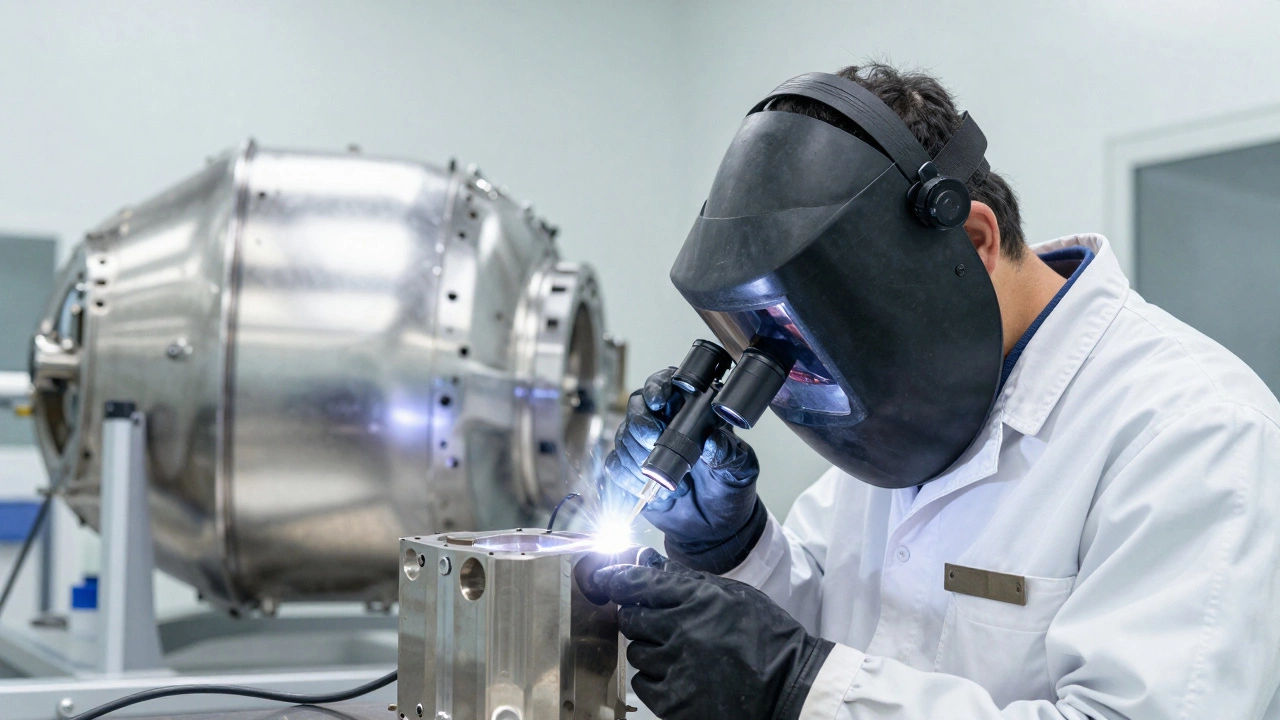
In aerospace, a single micro-crack in a titanium landing gear component can lead to catastrophic failure. In nuclear plants, TIG is used for piping that carries radioactive coolant. One bad weld means shutdowns, millions in cleanup, and regulatory penalties. Even in custom fabrication, a poorly welded aluminum fuel tank can leak under pressure.
That’s why employers don’t hire entry-level welders for TIG work. They don’t trust it. They require certifications-like ASME Section IX or AWS D18.1-that prove you can consistently produce defect-free welds under inspection. And those tests are brutal.
What About Other “Hard” Welding Methods?
Some say underwater welding is harder. Others point to pipe welding in tight spaces. But those are situational challenges-not technical ones. Underwater welding is dangerous because of the environment, not because the technique itself is harder to learn. You’re still using MIG or stick down there.
Pipe welding? Yes, it’s tough. But it’s about positioning, not control. You’re welding in awkward angles-overhead, vertical, 6G positions. But the machine does most of the work. You’re still feeding wire or a rod. You’re not managing three separate inputs at once.
Plasma arc welding? It’s precise, but it’s niche. Most shops don’t use it. Laser welding? Automated. Robotic. You don’t learn it-you program it.
TIG is the only method where the welder is the entire machine. No automation. No shortcuts. Just you, your hands, and a tiny pool of molten metal.
Who Should Even Try TIG Welding?
If you’re considering welding as a career, don’t start with TIG. Start with stick or MIG. Build muscle memory. Learn how heat moves through metal. Understand joint design. Get comfortable with the basics.
Then, after you’ve done 100+ welds and passed your 6G pipe test, maybe you’ll be ready for TIG.
But if you’re drawn to TIG because you want to work on:
- Custom motorcycle frames
- Aerospace components
- Medical equipment
- High-end food and beverage processing systems
- Restoration of vintage cars or aircraft
…then you’re going to need it. And you’ll be paid 30-50% more than a general welder because there aren’t enough people who can do it well.
How to Actually Learn TIG Welding
There’s no magic trick. But here’s what works:
- Practice on scrap aluminum. Buy 1/8-inch 6061-T6 plate. Cut it into 4x4 inch squares. Practice running beads without filler rod first. Just get the arc stable.
- Use a foot pedal. Don’t use a hand control. You need the fine-tuning only a pedal gives.
- Watch the puddle. Not the arc. The puddle. It should look like mercury-smooth, shiny, and moving slowly. If it’s bubbling, you’re too hot. If it’s not flowing, you’re too cold.
- Use high-purity argon. 99.995% pure. No cheap gas. Contamination is your enemy.
- Change tungsten types. Ceriated (gray) is easiest for beginners. Lanthanated (gold) is better for AC aluminum.
- Record yourself. Film your welds. Watch them back. You’ll spot mistakes you didn’t feel.
And don’t rush. One welder I spoke to in Bristol said he spent 18 months just practicing on 1/8-inch aluminum before he passed his first certification test. He didn’t quit. He just stopped measuring progress in days and started measuring it in welds.
The Payoff
Yes, TIG is the hardest. But it’s also the most respected. In the UK, certified TIG welders earn between £40,000 and £65,000 a year. In aerospace or offshore, it’s higher. And they’re in demand. Shops are turning away work because they can’t find qualified TIG welders.
If you’re willing to put in the time, the pain, and the repetition-you’ll be one of the few who can do what most can’t. And that’s not just a job. It’s a craft.
Is TIG welding harder than MIG welding?
Yes, TIG is significantly harder than MIG. MIG welding automates the wire feed, so you only need to focus on torch movement and speed. TIG requires you to manually feed filler rod, control heat with a foot pedal, and maintain a stable arc-all at the same time. MIG is easier to pick up, often within a few weeks. TIG takes months to master.
Can you learn TIG welding without prior welding experience?
Technically, yes-but it’s not recommended. Most people who try TIG without learning stick or MIG first get frustrated and quit. You need to understand how heat affects metal, how joints fit together, and how to control an arc before adding the complexity of manual filler rod feeding. Start with basic welding, then move to TIG.
What materials is TIG welding best for?
TIG is ideal for thin metals and reactive alloys: aluminum, stainless steel, titanium, magnesium, and copper alloys. It’s the only method that can cleanly weld aluminum without burning through it. It’s also the standard for high-purity applications like food processing equipment, medical devices, and aerospace parts.
How long does it take to become proficient in TIG welding?
Most welders need between 6 months and 2 years of consistent practice to become truly proficient. This depends on how often you train. Someone practicing 20 hours a week might pass certification in 8-10 months. Someone only welding on weekends might take 18-24 months. There’s no shortcut-only repetition.
Do you need certification to do TIG welding professionally?
Yes, if you’re working in regulated industries like aerospace, nuclear, oil and gas, or pressure vessel fabrication. Employers require certifications like AWS D18.1 (aerospace) or ASME Section IX. Even in custom fabrication, clients will ask for certified welders. Without certification, you’re limited to non-critical jobs.



Write a comment