
Level 4 Beauty Therapy ROI Calculator
Your Current Situation
Potential Career Outcomes
After obtaining Level 4, you may qualify for these roles:
Your Personalized Analysis
Total Investment:
Projected New Salary Range:
Career Insight
Imagine walking into a clinic where you don't just perform treatments-you design them. You assess complex skin conditions, manage the business side of the salon, and perhaps even train the next generation of therapists. That is exactly what Level 4 beauty therapy represents. It is not just another certificate on your wall; it is the bridge between being a technician and becoming a specialist or manager.
If you are currently working as a beauty therapist, you might feel stuck at the same wage bracket, performing the same facials and manicures day after day. The question isn't just "what is Level 4?" but rather, "will this actually change my career trajectory?" The short answer is yes, but only if you understand that Level 4 shifts your focus from manual skills to strategic expertise and advanced clinical knowledge.
The Shift from Technician to Specialist
To understand Level 4, we first need to look at where you are coming from. Most beauty therapists start with Level 2 qualifications, which cover basic treatments like waxing, simple facials, and nail care. These are essential for entry-level jobs. Then comes Level 3, which introduces more advanced techniques like microdermabrasion, advanced massage, and potentially some laser hair removal under supervision.
Level 4, however, changes the game entirely. In the UK education framework, specifically within the Regulated Qualifications Framework (RQF), Level 4 is equivalent to the first year of a university degree. While Levels 2 and 3 ask you to follow instructions and perform tasks safely, Level 4 asks you to analyze, evaluate, and create.
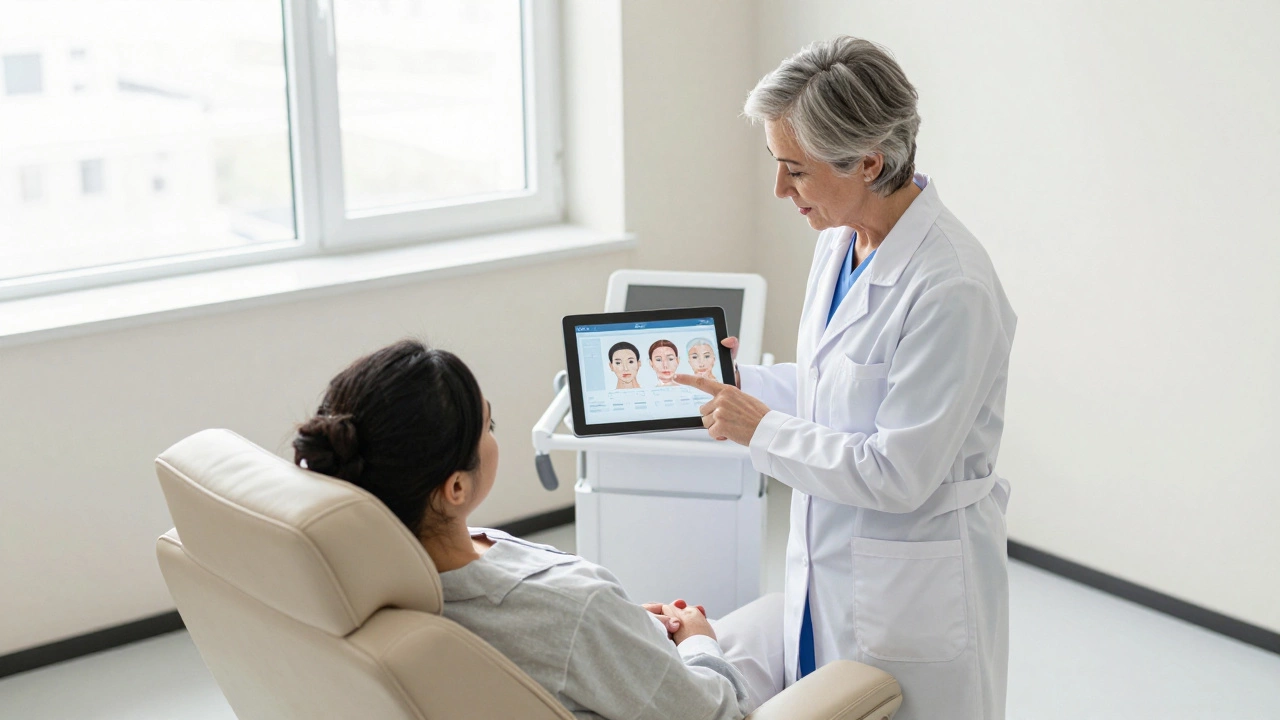
You are no longer just applying cream to a client's face. You are diagnosing skin types based on physiological responses, understanding the pharmacological effects of active ingredients, and tailoring treatment plans for clients with medical histories. This level often overlaps significantly with Aesthetic Medicine, which is a branch of healthcare focused on cosmetic procedures and enhancing appearance. While aesthetic medicine is typically reserved for doctors and nurses, Level 4 beauty therapy allows therapists to operate at the highest non-medical tier, handling complex skincare issues that require deep scientific knowledge.
What Do You Actually Study?
The curriculum for Level 4 beauty therapy is rigorous. It moves away from pure practical repetition and into theory-heavy modules. Here is what you can expect to tackle:
- Advanced Skin Science: You will study dermatology in depth. This isn't just about knowing what acne is; it's about understanding the bacterial causes, hormonal triggers, and cellular regeneration processes. You learn how to treat conditions like rosacea, eczema, and severe pigmentation disorders that go beyond standard spa treatments.
- Business Management: Many Level 4 courses include units on running a successful beauty business. This covers financial planning, marketing strategies, legal compliance (such as Health and Safety regulations), and staff management. If you've ever wanted to open your own clinic, this is where you learn the math behind the glamour.
- Leadership and Training: You may learn how to mentor junior therapists. This involves understanding adult learning theories and assessment techniques. Essentially, you become qualified to teach others, which is a significant step up in professional status.
- Complex Treatment Planning: Instead of selling a single service, you learn to create holistic treatment plans. For example, combining specific nutritional advice, lifestyle changes, and advanced non-invasive treatments to achieve long-term results for a client.
These topics ensure that when you graduate, you aren't just looking for a job; you are positioning yourself as an expert consultant. Employers value this because it reduces their training costs and increases client retention through higher-quality, personalized service.
Career Opportunities After Level 4
So, what can you actually do with a Level 4 qualification? The doors open wider than you might think. Here are the most common paths:
| Role | Key Responsibilities | Typical Salary Range (UK) |
|---|---|---|
| Senior Beauty Therapist | Performing advanced treatments, mentoring juniors, handling difficult clients. | £25,000 - £35,000 |
| Salon Manager | Overseeing daily operations, staffing, inventory, and customer service standards. | £30,000 - £45,000 |
| Skin Clinic Director | Managing high-end clinics, focusing on medical-grade skincare and complex cases. | £40,000 - £60,000+ |
| Beauty Educator/Trainer | Teaching at colleges or providing corporate training for brands. | £35,000 - £50,000 |
| Product Development Consultant | Working with brands to test and develop new skincare products based on scientific principles. | £40,000 - £55,000 |
One distinct advantage of Level 4 is the potential to work in medical spas or alongside plastic surgeons. While you cannot perform surgical procedures, your advanced knowledge allows you to handle post-operative care, such as scar reduction therapies and lymphatic drainage, which require a higher level of certification and trust.

Is It Worth the Investment?
Let’s talk money and time. Level 4 courses are not cheap, and they are not quick. Depending on whether you choose a full-time college course, a part-time evening class, or an online NVQ route, the cost can range from £1,500 to over £5,000. The duration usually spans 9 to 18 months.
However, consider the return on investment. A standard Level 3 therapist might earn between £18,000 and £24,000 annually. By moving into a senior role or management position enabled by Level 4, you can realistically add £10,000 to £15,000 to your annual income within two years. Plus, there is the intangible value of job security. As the beauty industry becomes more regulated and clients become more educated about skincare science, employers are desperate for therapists who can back up their services with real knowledge.
There is also the entrepreneurial angle. If you plan to start your own business, the business management units in Level 4 can save you thousands in consulting fees later. Knowing how to structure your finances, comply with insurance requirements, and market effectively is invaluable.
How Does It Compare to Other Qualifications?
You might wonder if you should pursue a BTEC, an NVQ, or a university degree instead. Here is the breakdown:
- NVQ/SVQ (National/Scottish Vocational Qualification): These are work-based assessments. They are highly respected in the industry because they prove you can do the job in a real-world setting. Level 4 NVQs are ideal if you are already working and want formal recognition of your advanced skills.
- BTEC Extended Diploma: This is more academic and classroom-based. It is great if you prefer structured learning and want a broader theoretical foundation before entering the workforce.
- University Degree (BA/BSc in Beauty Therapy): This goes beyond Level 4, reaching Level 6. It is suitable if you aim for high-level research, international brand management, or teaching at the university level. However, for most practitioners, Level 4 is the sweet spot between practical application and advanced theory.
For most people asking "what is Level 4," the NVQ route is the most direct path to career advancement without spending three years in a lecture hall.
Who Should Avoid Level 4?
Not everyone needs this qualification. If you are happy working in a hotel spa, performing standard massages and basic facials, and you have no interest in management or complex skincare, Level 4 might be overkill. It requires a significant commitment of time and mental energy. If you dislike studying biology, chemistry, or business mathematics, you will find the coursework challenging.
Additionally, if you are looking for a quick fix to increase your salary, Level 4 won't do it overnight. The value comes from leveraging the qualification into a better role or starting your own business. It is a tool, not a magic wand.
Next Steps for Your Career
If you decide that Level 4 is right for you, here is how to proceed:
- Research Providers: Look for accredited centers in your area. Check if they offer NVQ Level 4 in Beauty Therapy or Advanced Aesthetics. Ensure they are approved by awarding bodies like City & Guilds or VTCT.
- Talk to Your Employer: Many salons and clinics will sponsor your training if you agree to stay with them for a certain period after qualification. It’s worth having this conversation before you pay out of pocket.
- Assess Your Current Skills: Make sure you have a solid Level 3 foundation. Jumping straight to Level 4 without mastering the basics can lead to gaps in your practical ability.
- Plan Your Finances: Calculate the total cost, including textbooks, uniform, and any hidden fees. Look for government funding options or apprenticeships if you are eligible.
Level 4 beauty therapy is a pivotal moment in your career. It transforms you from a pair of hands into a mind behind the treatments. It offers autonomy, higher earnings, and the respect that comes with true expertise. Whether you want to run your own empire or simply master your craft, this qualification provides the foundation to build on.
Is Level 4 beauty therapy the same as a degree?
No, but it is equivalent to the first year of a bachelor's degree. In the UK Regulated Qualifications Framework (RQF), Level 4 corresponds to Certificate of Higher Education (CertHE) or Diploma of Higher Education (DipHE) levels. It is more vocational and practical than a traditional university degree, focusing on industry-specific skills rather than broad academic theory.
Can I perform laser treatments with a Level 4 qualification?
It depends on the specific course and equipment. Some Level 4 courses include training in IPL (Intense Pulsed Light) and certain types of laser hair removal. However, medical-grade lasers often require additional specialized training or supervision by a medical professional. Always check the syllabus of your chosen course to see which devices are covered.
How long does it take to complete a Level 4 beauty therapy course?
Full-time courses typically take 9 to 12 months. Part-time or work-based NVQ routes can take 12 to 18 months, depending on how quickly you can complete the required assessments and portfolio evidence while working.
Do I need a Level 3 qualification before starting Level 4?
Yes, almost all providers require you to hold a Level 3 qualification in beauty therapy or related fields, along with relevant work experience. This ensures you have the foundational practical skills needed to handle the advanced theoretical and clinical aspects of Level 4.
Is Level 4 beauty therapy recognized internationally?
UK qualifications like NVQ and City & Guilds are highly respected globally, particularly in Europe, Australia, and the Middle East. However, regulations vary by country. If you plan to work abroad, check the local licensing requirements, as some countries may require additional certifications or exams to practice legally.



Write a comment