

A teachers aide isn’t just someone who watches kids while the teacher takes a break. It’s a hands-on, often overlooked role that keeps classrooms running smoothly - especially in schools with large classes or students who need extra help. If you’re thinking about becoming one, you need to know what you’re actually signing up for. This isn’t a part-time babysitting gig. It’s structured, demanding, and deeply rewarding work.
What Does a Teachers Aide Actually Do?
The core job is simple: support the teacher and help students learn. But the details matter. A typical day might start with setting up materials before class - organizing worksheets, checking science kits, or preparing reading groups. Then you’re moving between tables, helping kids who are stuck on math problems, reminding others to stay on task, or quietly guiding a child through their first time using scissors in art class.
You’re not teaching the whole class. You’re filling in the gaps. If a student has autism, dyslexia, or just needs more time to process instructions, you’re the one who gives them that time. You might repeat directions, use visual cards, or model how to hold a pencil. You take notes on what works - which prompts help, which distractions trigger meltdowns, which rewards motivate.
Working With Different Types of Students
Not every student needs the same kind of help. Some have Individual Education Plans (IEPs) or Education, Health and Care Plans (EHCPs). You’ll be expected to follow these closely. That means knowing how to use communication boards for non-verbal kids, managing sensory breaks for children with anxiety, or helping with mobility aids during transitions.
For kids who are ahead, you might run extension activities - a reading challenge, a coding game, or a group project. You don’t replace the teacher’s lesson, but you make sure no one falls through the cracks.
In primary schools, you’re often the first adult a child talks to when they’re upset. You might help them calm down after a fight on the playground, tie their shoelaces, or remind them to wash their hands. These small moments add up.
Administrative and Classroom Management Tasks
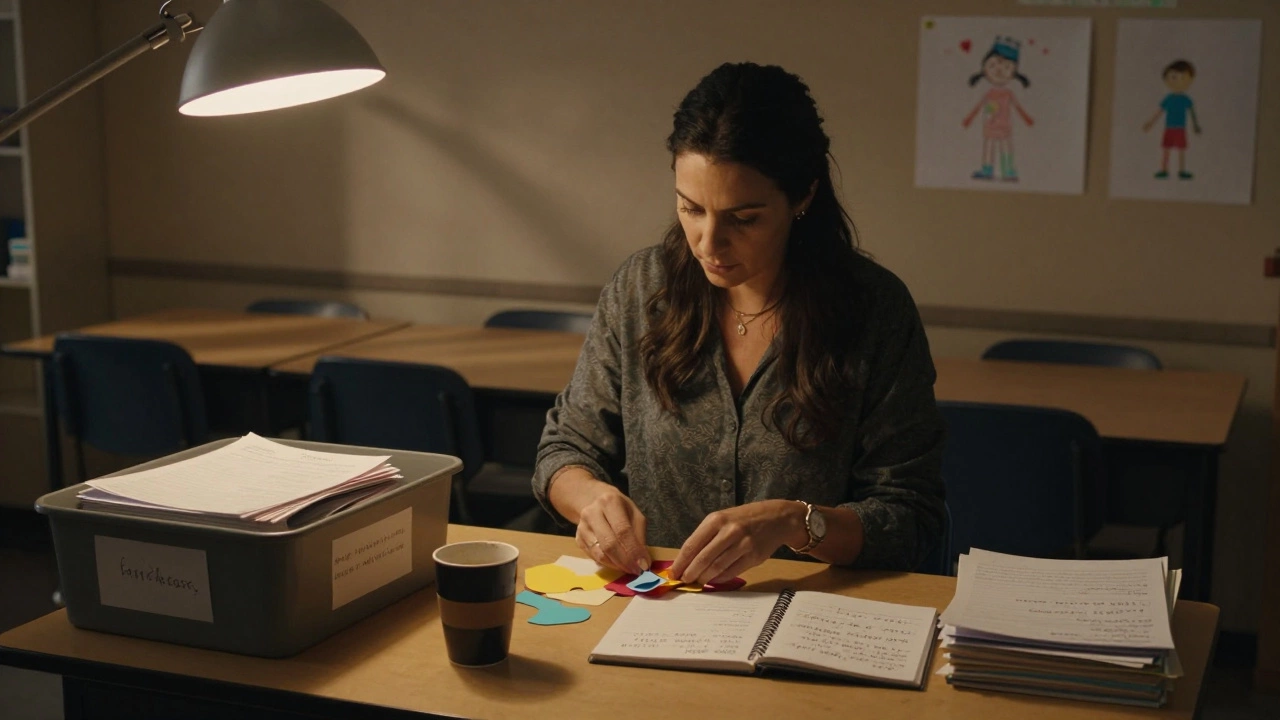
There’s paperwork. A lot of it. You might take attendance, grade quick quizzes, file reports, or update behavior logs. You help prepare materials for the next day - cutting out shapes, laminating flashcards, labeling bins. You keep the classroom tidy because a cluttered space makes learning harder.
You also help with transitions: lining kids up for lunch, walking them to the playground, supervising recess. You’re the extra pair of eyes when the teacher is busy with a group. You notice if someone’s missing, if a child is unusually quiet, or if someone’s lunchbox is still full.
Working With Teachers - Not Against Them
A good teachers aide doesn’t try to run the class. You don’t correct the teacher in front of students. You support their plan. If a lesson isn’t working, you might quietly suggest an alternative - like switching from a worksheet to a hands-on activity - but you do it after class.
Communication is key. You’ll have short check-ins with the teacher before and after school. You might send a quick note: “Jamie struggled with fractions today - tried the number line method, worked better.” That feedback helps the teacher adjust.
You’re part of the team. You don’t get the spotlight, but your input shapes how lessons unfold.

Where Do Teachers Aides Work?
Most work in state-funded primary and secondary schools. But you’ll also find them in special needs schools, early years nurseries, academies, and sometimes in private institutions. Some work in after-school clubs or summer programs.
In England, you’ll often see aides employed by the school directly, not through agencies. Pay varies by region and experience, but most start around £18,000-£22,000 per year. Full-time roles are common, though part-time and term-time-only positions exist too.
What Skills Do You Need?
You don’t need a degree to start - but you do need patience, reliability, and emotional resilience. You’ll see kids cry, throw tantrums, or shut down. You need to stay calm. You need to be consistent. You need to care without being overbearing.
Basic literacy and numeracy are essential. You’ll be helping with reading, writing, and math. You don’t need to be a genius - just clear and confident in explaining things simply.
Organizational skills matter. You’re juggling multiple students, materials, and schedules. If you forget to bring the spelling list, the whole group stalls. If you misplace the headphones for the audio book station, a child misses their lesson.
And you need to be discreet. You’ll hear private conversations - about family issues, bullying, or learning struggles. You keep that information confidential. Trust is everything.
Training and Qualifications
You can start as a teaching assistant with no formal qualifications. Many schools hire based on attitude and experience. But if you want to grow, you’ll need training.
The most common route is a Level 2 or Level 3 Teaching Assistant qualification - often called NVQ or CACHE courses. These cover child development, safeguarding, communication, and supporting learning. You’ll learn how to support children with special needs, understand behavior management strategies, and follow school policies.
Many people take these courses while working. They’re flexible, often online or in evening classes. Some schools even pay for your training if you commit to staying on.
First aid and safeguarding certifications are usually required. You’ll need to pass a DBS check - the same background check teachers get.
Why People Stay in the Role
It’s not a high-paying job. It’s not glamorous. But people stick with it because they see the difference they make.
You’re the one who helps a child read their first sentence. You’re the one who gets a shy kid to raise their hand. You’re the adult who remembers a child’s birthday and makes them a card. You see progress that no one else notices.
Many teaching assistants go on to become teachers. Others stay because they love the rhythm of school life - the bell, the lunchtime chatter, the quiet moments after the kids leave.
Common Misconceptions
Some think teaching aides are just “assistant teachers.” They’re not. You don’t plan lessons. You don’t set grades. You don’t discipline the whole class.
Others think it’s easy. It’s not. You’re constantly switching between roles: counselor, coach, organizer, translator, cheerleader. You’re on your feet for hours. You deal with messes, tears, and frustration - often without thanks.
And it’s not just for people who “like kids.” It’s for people who understand that learning isn’t just about books. It’s about safety, trust, and feeling seen.
What Comes Next?
If you’re happy in the role, you can move up. Level 3 assistants often take on more responsibility - leading small groups, training new aides, or helping with school events. Some become Special Educational Needs Coordinators (SENCOs). Others use the experience to get into teaching, social work, or child psychology.
But even if you stay as an aide, you’re doing vital work. Schools can’t function without you. And for the kids who need that extra hand, you’re not just a helper - you’re a lifeline.


Write a comment