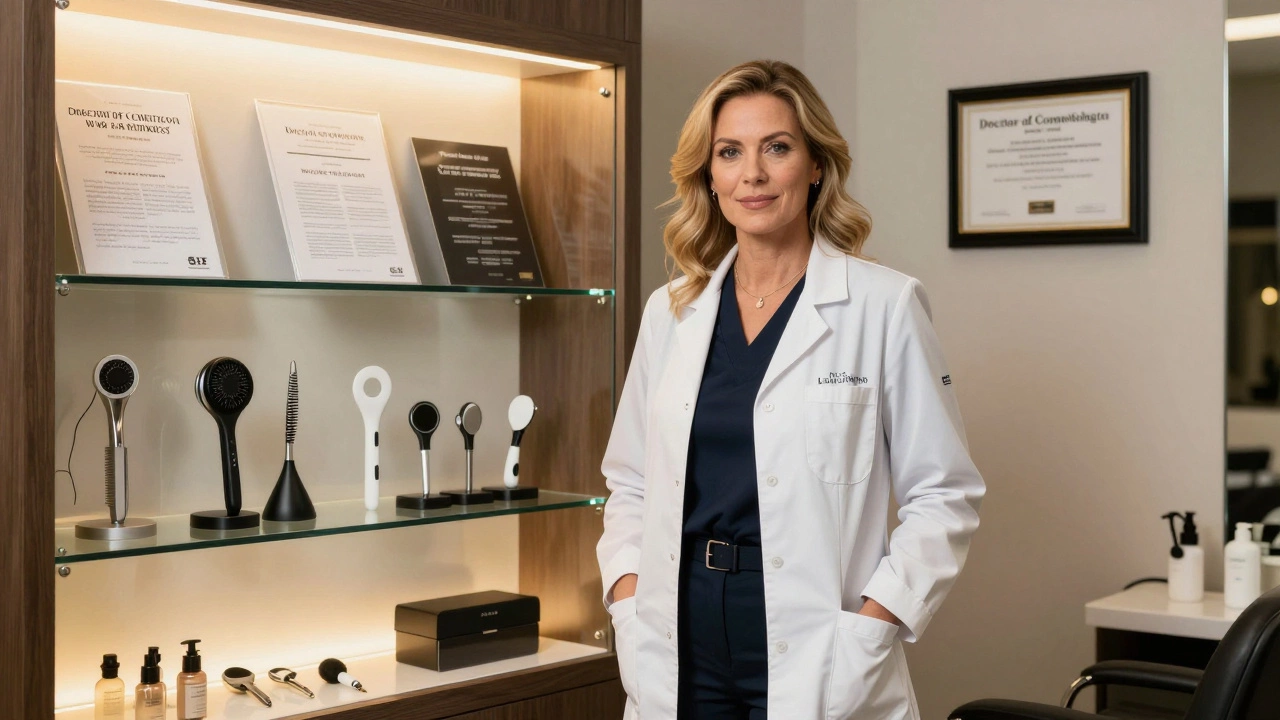
Highest Degree in Cosmetology: What You Really Need to Know
When you think about the highest degree in cosmetology, the top formal qualification someone can earn in beauty and hair services. Also known as Level 4 or Level 5 NVQ in Beauty Therapy, it’s not always a university degree—many of the most respected professionals in UK salons never went to college. The beauty industry doesn’t run on paper degrees. It runs on proof you can do the job—clean cuts, safe treatments, client trust, and consistent results.
What most people don’t realize is that NVQs, work-based qualifications that prove you can perform real tasks in a salon. Also known as National Vocational Qualifications, they’re the backbone of UK beauty training. A Level 3 NVQ in Beauty Therapy gets you licensed to work in most salons. A Level 4? That’s where you start teaching, managing, or specializing in advanced treatments like laser or medical aesthetics. Level 5? That’s rare, but it’s the closest thing to a "highest degree" in this field—and it’s all about leadership and training others.
You won’t find a PhD in cosmetology, but you will find people with decades of hands-on experience, certifications in niche areas like scalp therapy or eyelash extensions, and employer-backed training that’s more valuable than any classroom lecture. The beauty therapy qualifications, structured programs that combine theory with real client work to build professional competence. Also known as VTCT or City & Guilds diplomas, they’re what employers actually check. Many top salons don’t care if you have a degree—they care if you’ve passed your NVQ, completed your portfolio, and can handle a client with confidence.
What’s missing from most people’s understanding is that the "highest" isn’t about how long you studied—it’s about what you can do on the job. A Level 4 NVQ in Advanced Beauty Therapy lets you offer treatments that require deeper knowledge: chemical peels, microdermabrasion, even working alongside dermatologists. That’s not something you learn in a textbook. You learn it by doing, under supervision, and being assessed while you work.
And here’s the truth: you don’t need to chase a degree to be the best. The UK beauty industry is full of people who started with a Level 1 course, worked their way up through apprenticeships, and now run their own salons—all without ever setting foot in a university. What matters is the right training, the right certification, and the drive to keep learning.
Below, you’ll find real guides on how to get certified, what each level actually means, how long it takes, and how much it costs. No fluff. Just what you need to know to move forward—whether you’re starting out or looking to level up.