

Hairdressing Course Time Calculator
How Long Will Your Training Take?
Estimate your hairdressing course duration based on your location, program type, and qualification level.
Select your options above to see your estimated training time.
When you’re thinking about becoming a hairdresser, one of the first questions that comes up is: how many years is a hairdressing course? The answer isn’t one-size-fits-all. It depends on where you live, what level of qualification you want, and whether you choose full-time study, part-time classes, or an apprenticeship. Most people assume it’s a quick two-month course, but the reality is more layered-and far more practical.
What You’re Actually Signing Up For
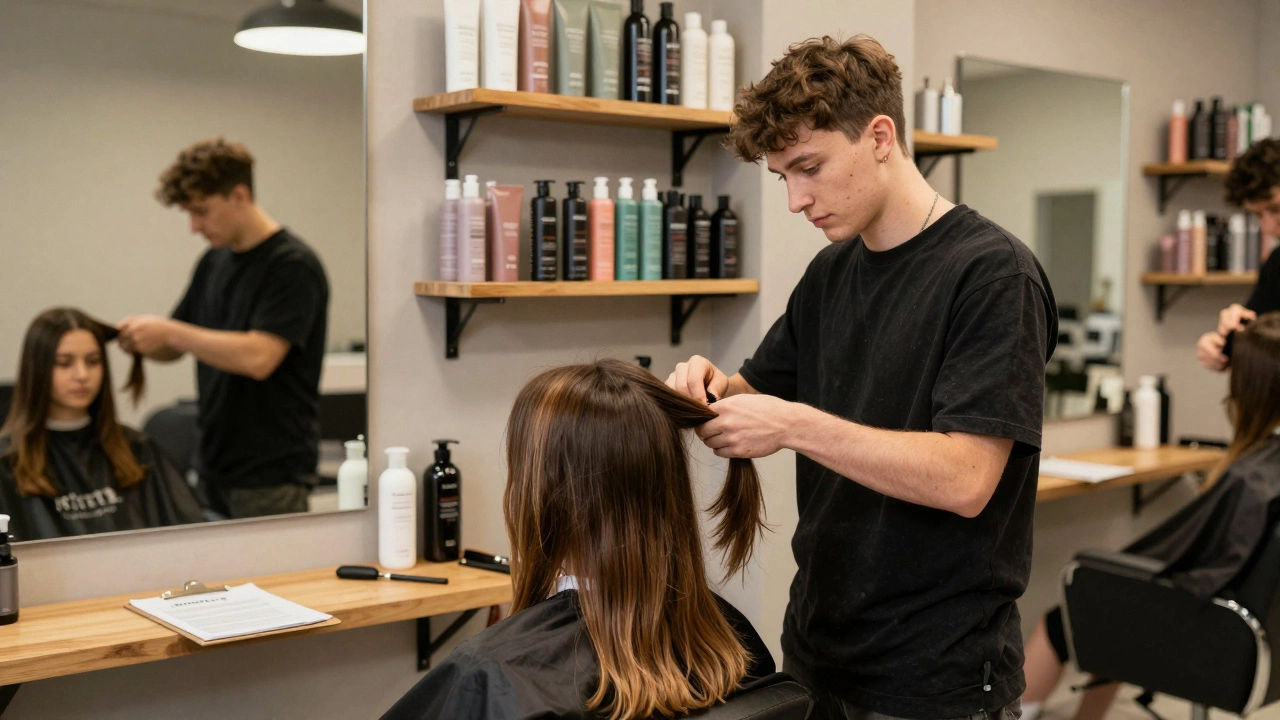
Hairdressing courses aren’t just about cutting hair. They cover everything from washing and blow-drying to coloring, perming, styling, scalp treatments, and client consultation. In the UK, most professional hairdressers train for a Level 2 or Level 3 NVQ (National Vocational Qualification). These aren’t just theory classes-they’re hands-on, real-client experiences.
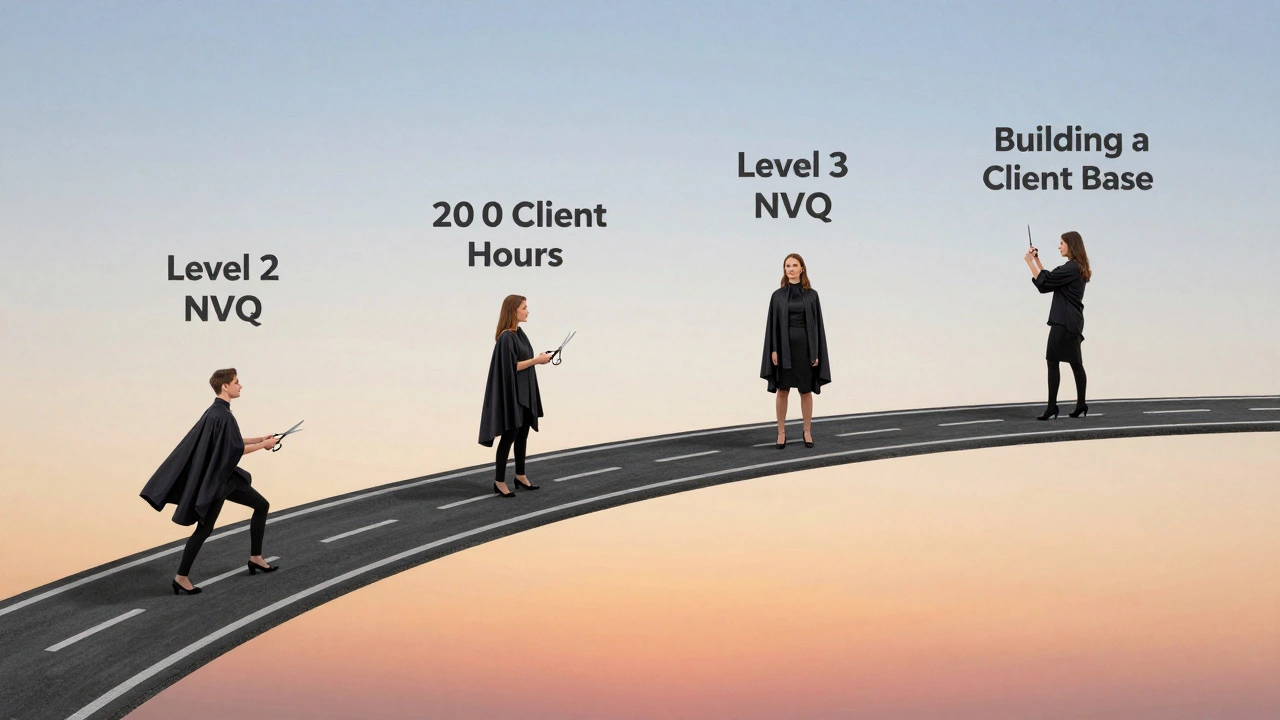
A Level 2 qualification, which gets you qualified to work as a junior stylist in a salon, usually takes about one year if you’re studying full-time. If you’re doing it part-time while working another job, it can stretch to 18 to 24 months. That’s because you need to log at least 200 hours of practical work with real clients under supervision. You can’t fake that.
Apprenticeships: Learn While You Earn
If you’re looking for the most common path into the industry, think apprenticeship. In the UK, a hairdressing apprenticeship typically lasts between one and two years. You’re employed by a salon, paid a wage (usually the national minimum wage for apprentices), and attend college one day a week. The rest of the time, you’re cutting hair under the guidance of senior stylists.
Apprenticeships are structured around the same NVQ levels. Level 2 apprenticeships take about 12 months. Level 3-which lets you become a senior stylist or even a salon manager-adds another 12 to 18 months. So, if you start at Level 2 and go all the way to Level 3, you’re looking at 24 to 30 months total. That’s two to two-and-a-half years.
Some salons offer extended apprenticeships that include advanced techniques like balayage, extensions, or men’s grooming. These can add another six months. Don’t be fooled by ads promising “certification in 6 weeks.” Those are short workshops, not industry-recognized qualifications.
College vs. Private Schools
There’s a big difference between training at a public college and a private hairdressing academy.
Colleges follow government-approved NVQ frameworks. Their courses are standardized, regulated, and often funded or subsidized. You’ll graduate with a nationally recognized credential that salons trust. The downside? You might wait months to get into a class, and schedules are rigid.
Private academies, on the other hand, often promise faster results. Some claim you can become a hairdresser in just 12 to 16 weeks. These are intensive, full-time programs focused on technical skills. But here’s the catch: many aren’t accredited. Even if you complete the course, you still need to sit for an NVQ or City & Guilds exam to be legally employable in most salons.
Think of it this way: a 16-week course teaches you how to cut hair. A one-year NVQ teaches you how to run a chair, handle difficult clients, manage inventory, and understand hygiene laws. One makes you a technician. The other makes you a professional.
What About the US and Other Countries?
In the United States, hairdressing is regulated at the state level. Most states require between 1,000 and 2,100 hours of training before you can sit for the licensing exam. That translates to roughly 9 to 15 months of full-time study. Some states like California require up to 1,600 hours-about 12 months. If you go part-time, it can take two years or more.
In Australia, a Certificate III in Hairdressing typically takes 12 to 18 months. Canada’s requirements vary by province, but most need 1,500 to 2,000 hours, which again means one to two years.
The pattern is clear: anywhere you go, if you want a real license, you’re looking at a minimum of one year. There’s no shortcut that gives you legal standing.
What Happens After the Course?
Finishing your course doesn’t mean you’re done learning. Most new hairdressers spend the first 6 to 12 months working under a senior stylist, refining their technique. Salons don’t hire beginners and immediately put them on the floor. You’ll likely start with shampooing, assisting, and basic trims. That’s normal.
Within two years, most stylists are ready to take on their own clients. By year three, many are booking their own appointments, managing product sales, and building a loyal client base. The real investment isn’t just the course-it’s the years after.
Cost vs. Time: Is It Worth It?
Let’s talk numbers. A full-time NVQ Level 2 course at a college in the UK might cost £2,000 to £4,000. An apprenticeship? Often free-you get paid while you learn. Private academies can charge £5,000 to £10,000 for accelerated programs, but again, you still need to pass the official exam.
Compare that to the average salary. A junior stylist in the UK earns £18,000 to £22,000 a year. After two years of experience, that jumps to £25,000-£35,000. With a loyal client list, top stylists earn £50,000+.
So if you invest two years and maybe £3,000 in training, you’re setting yourself up for a career that can pay back ten times that within five years. That’s not just a course-it’s a career launchpad.
Common Myths Debunked
- Myth: You can become a hairdresser in 3 months. Truth: You might learn basic cuts, but you won’t be licensed or hireable.
- Myth: Online courses count. Truth: No licensed salon accepts online-only training. Hands-on practice is mandatory.
- Myth: Older people can’t start. Truth: Many people switch careers into hairdressing in their 30s, 40s, and even 50s. Age isn’t a barrier.
- Myth: You need artistic talent. Truth: Technique matters more than natural talent. You learn precision, not inspiration.
How to Choose the Right Program
Here’s what to look for:
- Is it accredited by a recognized awarding body like City & Guilds, VTCT, or NVQ?
- Does it include real client hours? Ask how many you’ll do.
- Do they help with job placement after graduation?
- What’s the pass rate for their students on the final exam?
- Can you visit the salon or classroom before signing up?
Don’t sign anything without seeing the curriculum. Ask for a breakdown of the 200+ required practical hours. If they can’t tell you exactly what you’ll be doing each week, walk away.
Final Thoughts
So, how many years is a hairdressing course? For most people, it’s one to two years to get certified. If you want to build a career-not just a skill-it’s three to five years to become truly confident and profitable. There’s no magic timeline. But there is a clear path: start with a recognized qualification, work under experienced stylists, and never stop learning.
The best hairdressers aren’t the ones who finished fastest. They’re the ones who kept showing up, kept practicing, and kept listening to their clients. That’s what takes time. And that’s what makes the difference.
Can I become a hairdresser without going to school?
No, not legally. In the UK, US, Canada, and Australia, you must complete a government-approved training program and pass a licensing exam to work in a salon. Some people try to cut hair informally, but they can’t legally charge for services, use professional products, or get insurance. Without certification, you’re not just risking your income-you’re risking your safety and your clients’.
Is a hairdressing course worth the cost?
Yes-if you choose the right one. A £3,000 NVQ course that leads to a job paying £25,000+ a year is a solid investment. Compare that to a £10,000 private course that doesn’t lead to a license. The key is accreditation. Always check if the course is recognized by the industry and if it prepares you for the official exam. Apprenticeships are often the best value-you earn while you learn.
How old do you have to be to start a hairdressing course?
Most programs accept students from age 16. Some colleges offer part-time courses for 14- and 15-year-olds, but full-time training usually starts at 16. There’s no upper age limit. Many people start their hairdressing careers after raising kids or leaving other jobs. Experience in customer service or retail can actually help you succeed.
Do I need good grades to get into a hairdressing course?
Not usually. Most Level 2 courses only require basic literacy and numeracy. You don’t need A-levels or a degree. What matters more is your attitude, willingness to learn, and ability to work with people. Salons care more about your reliability and client skills than your school report card.
Can I do a hairdressing course online?
No-not for certification. Online courses can teach you theory, color science, or trends, but none of them count toward a professional license. All licensing bodies require hands-on training with real clients under supervision. You can’t practice cutting hair on a mannequin alone and call yourself qualified. Always verify if the course leads to a recognized qualification before paying.

Write a comment