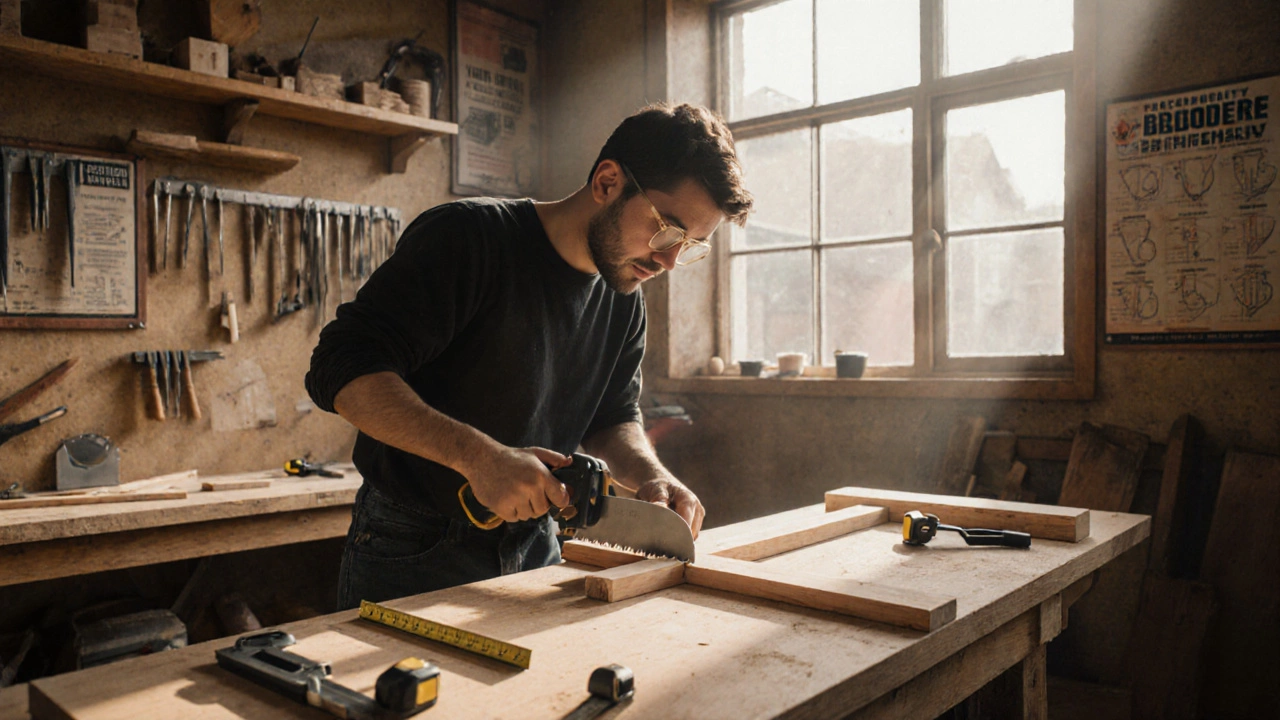
Carpentry Training: Skills, Tools, and How to Start in the UK
When you start carpentry training, a hands-on trade focused on building and repairing wooden structures. Also known as woodworking, it’s one of the most reliable skilled trades in the UK, with steady demand in housing, renovation, and commercial projects. You don’t need a degree—just the right training, practice, and a willingness to get your hands dirty.
Most people begin with NVQ carpentry, a work-based qualification that proves you can do the job, not just talk about it. Unlike classroom-only courses, NVQs track your real-world skills on site—measuring, cutting, assembling, and finishing. You’ll learn how to read blueprints, use power tools safely, and handle everything from framing walls to installing doors. Carpentry math, the practical math used daily in the trade. It’s not calculus—it’s fractions, angles, and simple geometry. You’ll need to measure twice, cut once, and understand how 3/4-inch plywood stacks up against 2x4 studs. Most trainees master this with practice, not textbooks.
Tools matter. You won’t get far with just a hammer and saw. carpentry tools, the essential equipment used to shape, join, and finish wood. A good level, tape measure, circular saw, chisels, and a nail gun are the basics. Many employers expect you to bring your own tools after the first year. Training programs often include tool safety, maintenance, and how to choose quality gear without overspending.
Carpeting isn’t just about building houses. It’s in kitchens, staircases, sheds, and custom furniture. Whether you’re working for a contractor, starting your own business, or fixing up your own home, the skills are transferable. And with housing shortages and renovation booms across the UK, carpenters aren’t just busy—they’re needed.
You’ll find posts here that break down exactly how much math you need, why dovetail joints trip up even experienced carpenters, and how NVQs compare to other certifications. There’s no fluff—just real talk on what it takes to build a career in wood. Whether you’re wondering if you can learn this on your own or how to get your first apprenticeship, the guides below give you the straight facts.