

NVQ Level 6 Eligibility & Evidence Checker
Check Your NVQ Level 6 Eligibility
Getting an NVQ Level 6 isn’t about passing a test. It’s about proving you can do a job at a senior level-without sitting an exam. If you’re wondering how to qualify for NVQ Level 6, the answer isn’t in a classroom. It’s in your day-to-day work. This qualification sits at the same level as a bachelor’s degree, but it’s earned through real-world performance, not essays or multiple-choice questions.
What NVQ Level 6 Actually Means
NVQ stands for National Vocational Qualification. Level 6 is the highest level you can get in the standard UK framework before moving into degrees or professional certifications. It’s not for beginners. It’s for people who are already leading teams, making decisions, and solving complex problems on the job. Think project managers in construction, senior nurses in healthcare, or site supervisors in engineering.
The government doesn’t care how you learned your skills. Whether you trained through an apprenticeship, worked your way up from the bottom, or took evening classes, what matters is that you can show you’re doing the job at a Level 6 standard. That means you’re not just following instructions-you’re planning, managing resources, training others, and handling compliance and risk.
Who Can Apply for NVQ Level 6?
You don’t apply like you would for a university course. There’s no entry exam or minimum grades. Instead, you need to be working in a role that matches the qualification’s scope. If you’re a junior assistant, you won’t qualify. If you’re a team leader, operations manager, or senior technician, you might.
Here’s what most people in NVQ Level 6 roles actually do:
- Manage teams of 5+ people
- Develop work plans and budgets
- Ensure legal and safety compliance
- Train or mentor junior staff
- Make decisions that affect project outcomes
- Handle client or stakeholder communication at a senior level
If your job includes even three of these, you’re likely eligible. But you can’t just say you do them-you have to prove it.
How to Prove You Qualify
The whole NVQ system runs on evidence. You don’t write a paper. You collect real work products and observations. Your assessor will ask you to show:
- Project plans you created
- Sign-off sheets you approved
- Emails or reports you sent to clients
- Records of staff training you delivered
- Photos or videos of you leading a site or operation
- Witness statements from colleagues or managers
You’ll also be observed doing your job. An assessor might sit with you for a full day, watching how you handle a problem, manage a deadline, or resolve a conflict. They’re not grading your personality-they’re checking if your actions match the national standard for Level 6.
Most people spend 3 to 6 months gathering evidence. Some take longer if their workplace doesn’t document things well. The key is to start collecting everything from day one. Save every report, every meeting note, every email where you made a decision.
Which NVQ Level 6 Qualifications Are Common?
NVQ Level 6 isn’t one single thing. It’s a category with different titles depending on your industry. Here are the most common ones:
| Industry | Typical NVQ Level 6 Title | Who It’s For |
|---|---|---|
| Construction | Level 6 Diploma in Construction Site Management | Site managers, supervisors, quantity surveyors |
| Healthcare | Level 6 Diploma in Leadership for Health and Social Care | Senior nurses, care home managers, clinical leads |
| Engineering | Level 6 Diploma in Engineering Management | Production managers, maintenance supervisors, project engineers |
| Business | Level 6 Diploma in Management and Leadership | Department heads, operations managers, team leaders |
| IT | Level 6 Diploma in IT Systems and Network Management | IT team leads, network engineers, service managers |
Each of these has its own set of units-usually 10 to 15-that cover everything from budgeting to health and safety law. You don’t need to do them all at once. Most people complete them over time as they naturally use those skills on the job.
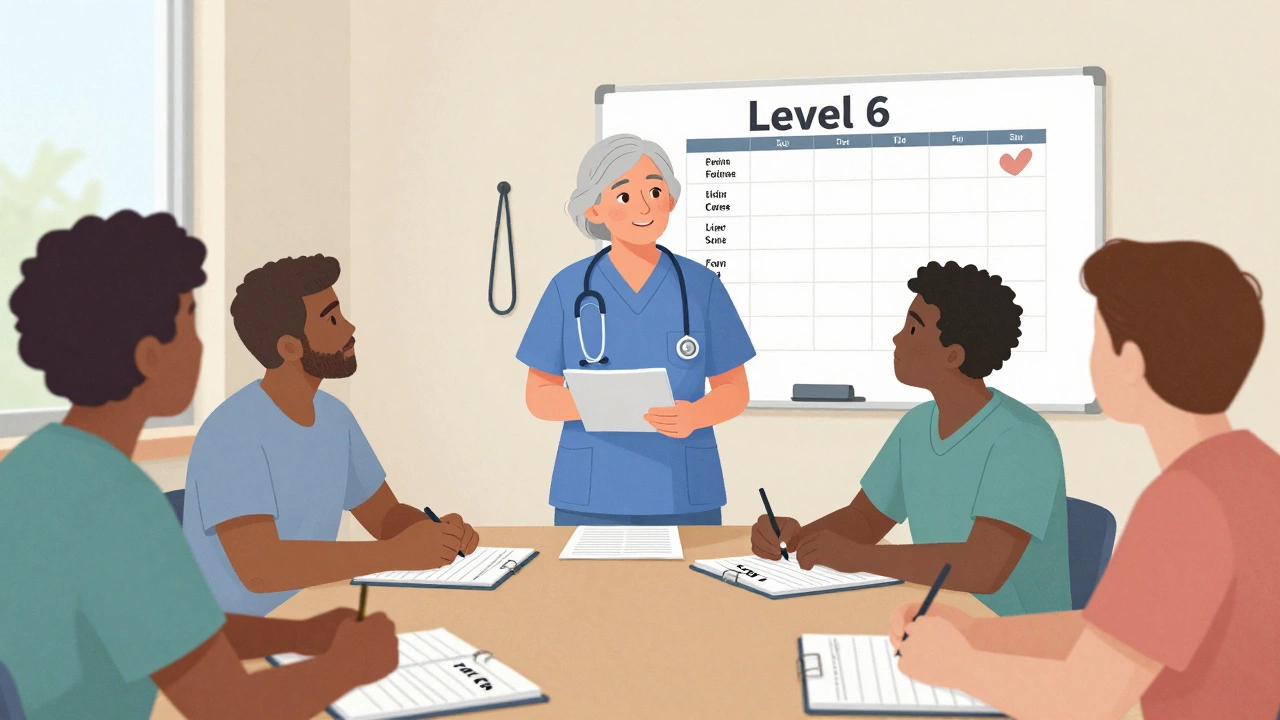
Where Do You Start?
You don’t sign up for NVQ Level 6 like a course. You find an approved training provider or assessor who works in your field. They’ll guide you through the process. Many employers offer this as part of staff development. Ask your HR department if they support NVQs.
If your employer doesn’t help, search for providers on the Ofqual Register of Qualifications. Look for organizations that specialize in your industry. Don’t pick the cheapest one. Pick the one with assessors who’ve actually worked in your field. An assessor who’s never managed a construction site won’t understand your evidence.
Once you’ve found a provider, they’ll give you a portfolio template. Start filling it out. Don’t wait until you’re ready. Start now. Even if you’re not sure it counts, write it down. You can always remove it later.
What If You Don’t Have Formal Evidence?
Some people work in small businesses where paperwork is light. Others are self-employed. That’s okay. You can still qualify.
If you don’t have emails or reports, use witness statements. Ask your manager, client, or colleague to write a short note confirming you led a project, handled a budget, or trained someone. Record a video of yourself explaining how you handled a tough situation. Keep a log of your daily decisions-what you did, why you did it, and what happened.
Assessors are used to this. They’ve seen electricians who never filled out a form but can walk them through every job they’ve done in the last five years. Your story matters as much as your documents.
How Long Does It Take?
Most people finish NVQ Level 6 in 6 to 12 months. But it’s not a race. Some take 18 months if they’re working full-time and studying in their spare time. Others finish in 3 months if they’re already doing everything the qualification asks for.
The clock starts when you register with an assessor. It doesn’t end until they sign off that you’ve met every requirement. Don’t rush. A rushed portfolio with weak evidence will get sent back. Take your time. Build a strong case.

What Happens After You Get It?
Once you’ve got your NVQ Level 6, you’ve officially reached the same level as a university graduate. That opens doors:
- You can apply for chartered status in engineering, construction, or management
- You can move into higher management roles
- You can apply for university top-up degrees (often just one year to get a full bachelor’s)
- Some employers give you a pay rise automatically
It’s not a magic ticket. But it’s a powerful signal. It tells employers you don’t just know the theory-you’ve done the job, under pressure, with real consequences.
Common Mistakes to Avoid
People fail NVQ Level 6 not because they can’t do the job-they fail because they don’t document it right.
- Waiting until the end to collect evidence. If you wait, you’ll forget details. Start today.
- Using vague statements. Don’t write “I managed a team.” Write “I managed a team of 8 electricians on the Bristol City Centre redevelopment project, scheduling shifts and resolving safety issues daily.”
- Not getting witness statements. Even if you’re the boss, someone else needs to confirm your role.
- Choosing the wrong qualification. Don’t pick a business NVQ if you’re in construction. Match the title to your actual job.
- Thinking you need a degree first. You don’t. Many people with NVQ Level 6 never went to university.
Final Thought: It’s About Proof, Not Papers
NVQ Level 6 is designed for people who learned on the job. If you’ve been doing senior-level work for a few years, you’re probably already qualified. You just haven’t put it together yet.
Start small. Pick one thing you do every week that’s at Level 6 standard. Write it down. Save the evidence. Talk to your assessor. You don’t need to be perfect. You just need to be consistent.
The system isn’t broken. It’s just quiet. It doesn’t shout like university degrees or flashy certifications. But for people who’ve earned their skills through hard work, it’s one of the most respected qualifications you can get.
Do I need a degree to get NVQ Level 6?
No, you don’t need a degree. NVQ Level 6 is designed for people who learned through experience, not classrooms. Many people with this qualification never went to university. What matters is your ability to prove you’re performing at a senior level in your job.
Can I do NVQ Level 6 while working full-time?
Yes, absolutely. NVQ Level 6 is built for working professionals. You don’t need to quit your job. Most people complete it over 6 to 12 months by collecting evidence during their normal work. Your assessor will work around your schedule.
How much does NVQ Level 6 cost?
Costs vary by provider and industry, but most NVQ Level 6 qualifications range from £1,200 to £2,500. Some employers pay for it as part of staff development. If you’re self-employed, check if you qualify for government funding through Skills Bootcamps or the Adult Education Budget in England.
Is NVQ Level 6 recognized outside the UK?
Yes, but recognition varies. NVQs are part of the UK’s Regulated Qualifications Framework (RQF), which aligns with the European Qualifications Framework (EQF). Many countries, especially in the EU, Australia, and Canada, accept it as equivalent to a bachelor’s degree. Always check with your target employer or licensing body.
Can I go straight to NVQ Level 6 without doing lower levels?
Yes. There’s no rule that says you must do Level 3 or Level 5 first. If you’re already working at a senior level, you can start at Level 6. Many people do. The qualification is based on your current job role, not your past qualifications.



Write a comment