

NVQ Verification & Recovery Planner
Not sure if you have an NVQ or how to prove it? Answer these questions to get a personalized action plan.
- Be Specific: When contacting providers, include dates and student IDs if possible.
- Digital First: Always check cloud storage/email archives before calling.
- RPL Option: If you can't find records but have experience, ask about Recognition of Prior Learning.
- Keep Copies: Scan any documents you find immediately.
Your Action Plan
You might be sitting at your desk, wondering if that certificate from ten years ago actually counts for anything today. Or maybe you’re applying for a job that demands an NVQ (National Vocational Qualification), and you have no idea if you ever completed one. It’s a common panic. We often forget where we put our paperwork, or worse, we assume we finished a course when we didn’t. The good news? In the UK, most vocational qualifications are tracked digitally. You don’t need to dig through boxes in the attic just yet.
The Digital Trail: Where Your Records Live
Think of your education history like a credit report. It’s not held by one single bank; it’s spread across different agencies. For vocational training, the main hub is the Ofqual Register. This is the official database of all regulated qualifications in England, Wales, and Northern Ireland. If your NVQ was accredited properly, it will show up here.
But wait-Ofqual lists the *qualification*, not necessarily your personal record. To find out if you hold it, you need to look at two other places first. First, check with the training provider. Did you attend a college, a private training center, or learn on the job through an employer scheme? They are legally required to keep records of assessments for several years, though retention policies vary. Some keep them for three years, others for life.
If the provider is gone (and let’s be honest, many small training centers close down), your next stop is the awarding body. Every NVQ is issued by an organization like City & Guilds, Pearson Edexcel, NCFE, or SQA. These bodies maintain central registers of learners who have passed their assessments. Finding this info can feel like detective work, but it’s usually straightforward once you know which body handled your specific sector.
Step-by-Step: How to Verify Your Status
Don’t start with the hardest option. Follow this logical order to save time and frustration.
- Check your personal files first. Look for any certificates, transcripts, or emails confirming completion. Even a digital PDF counts as proof if it has a unique reference number.
- Contact your last known training provider. Email them with your full name, date of birth, and approximate dates of study. Ask specifically for a "transcript" or "confirmation of achievement." Be polite but persistent. If they say they’ve lost your records, ask for a search fee estimate before paying anything.
- Identify the Awarding Body. Look at your old certificate. The logo in the corner tells you who issued it. If you don’t have the cert, guess based on your industry. Construction? Likely City & Guilds or CITB. Hairdressing? Maybe VTCT or Habia. Beauty? Often CIBTAC or ITEC.
- Request a replacement certificate or verification letter. Most awarding bodies charge between £15 and £40 for a replacement document. This isn’t just paper-it’s a legal confirmation that you hold the qualification.
What if you did an apprenticeship? That’s different. Apprenticeships are recorded on the Individualised Learner Record (ILR), which feeds into government databases. You can request your ILR extract from the Department for Education via the GOV.UK service if you were enrolled after 2002.
Common Pitfalls: Why You Might Think You Have One (But Don’t)
Here’s where things get tricky. Many people confuse "attending a course" with "achieving an NVQ." An NVQ is competency-based. It’s not about passing an exam; it’s about proving you can do the job safely and correctly. If you stopped halfway through because your workplace changed roles, you likely don’t have the qualification, even if you paid fees.
Another issue is outdated terminology. Since 2019, many sectors have moved away from the term "NVQ" toward "Level 2/3 Diploma" or "Technical Certificate." But employers still use "NVQ" as shorthand. So, if you see "Level 2 Diploma in Health and Social Care," that’s effectively what people mean when they ask for an NVQ Level 2 in care. Don’t dismiss a diploma because it doesn’t say "NVQ" on the cover.
| Feature | NVQ / Technical Certificate | GCSE / A-Level | University Degree |
|---|---|---|---|
| Evidence Type | Portfolio of practical work | Written exams | Dissertations and exams |
| Assessment Method | Workplace observation | School-based testing | Lecture-based assessment |
| Typical Duration | 6-18 months (competency-based) | 1-2 years | 3-4 years |
| Best For | Hands-on trades and services | Academic progression | Specialized professional roles |

What If You Can’t Find Any Records?
This happens more often than you’d think. Maybe the provider went bust. Maybe you worked informally without formal registration. If there’s zero trace of your learning, you have two choices: prove your skills now, or start fresh.
Proving current skills is faster than retraining. Many awarding bodies offer "Recognition of Prior Learning" (RPL). This means you build a portfolio based on what you’re doing right now at work. An assessor visits your workplace, watches you perform tasks, and checks your documentation. If you’re competent, they can award you the NVQ without you having to sit in a classroom again. This process typically takes 3-6 months and costs less than a full course.
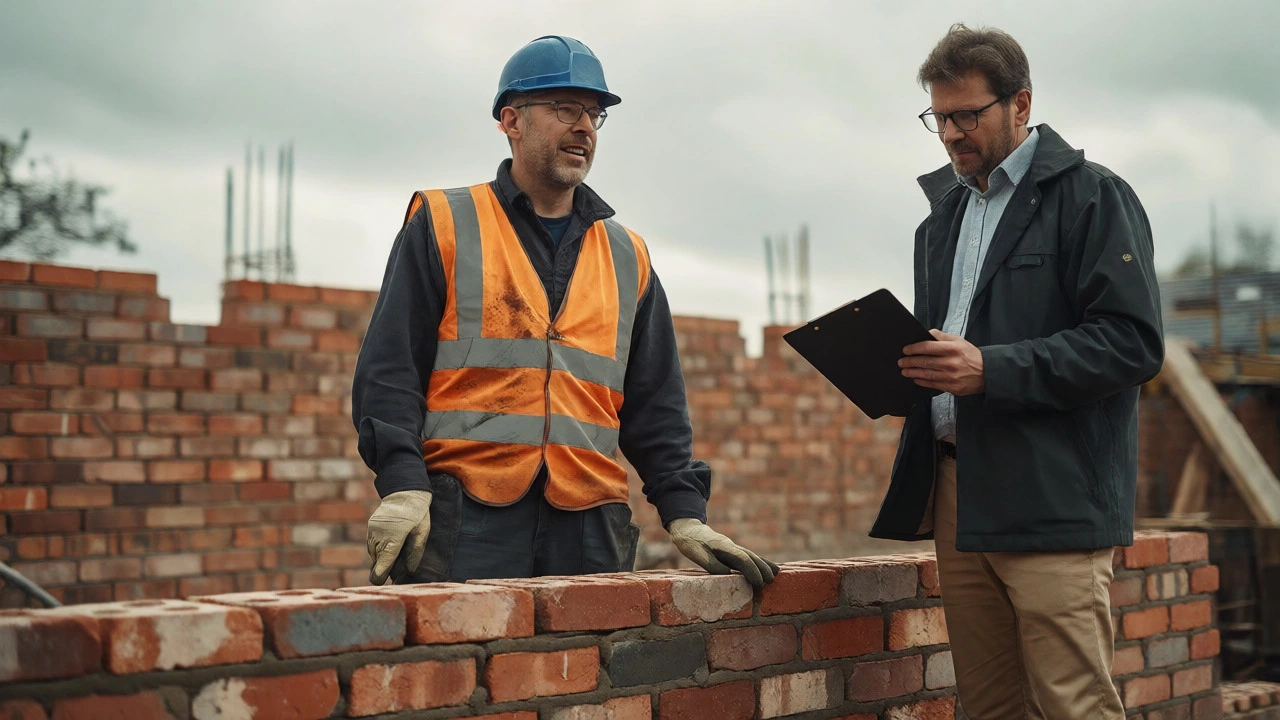
For example, imagine Sarah, a bricklayer in Bristol. She’s been laying bricks for 15 years but never got her Level 2 NVQ because her old employer folded. She contacts a local training provider offering RPL. Her assessor comes to her site, sees her mix mortar and lay walls correctly, and reviews her previous pay slips and project photos. Within four months, Sarah has a valid Level 2 NVQ in Bricklaying. No exams. Just proof she already knows how to do the job.
Why Verification Matters More Than Ever in 2026
Employers aren’t just being picky. Regulations in sectors like construction, health, and childcare require verified qualifications for insurance and compliance reasons. If you claim to have an NVQ but can’t produce a certificate, you might lose a contract or fail a background check.
Also, funding changes matter. The UK government’s Skills Bootcamps and Lifelong Loan Entitlement schemes often require existing qualifications to unlock higher-level training. Knowing exactly what you have helps you access free or subsidized courses. If you think you have a Level 2, but it turns out you only completed half of it, you’ll waste time applying for Level 3 courses you’re not ready for.
Keep your digital copies safe. Scan every certificate and store them in cloud storage with clear filenames like "NVQ_Level2_Hairdressing_2015.pdf." Share access with a trusted family member. Paper burns; clouds rarely crash.
Quick Checklist Before You Contact Anyone
- Do you remember the name of the training center? (Even partial names help.)
- Can you recall the year you started or finished?
- Do you have any old ID photos from the course?
- Is your employer willing to write a reference confirming your skills?
- Have you checked your spam folder for old emails from awarding bodies?
Once you gather these details, you’re armed. You’re not asking vague questions; you’re providing data. Training providers respond faster to specific queries. "I studied with you around 2018" gets ignored. "I studied with you from Jan 2018 to June 2019, Student ID possibly ending in 452" gets answered.
Frequently Asked Questions
How long do training providers keep my records?
There is no single law mandating lifetime storage for all providers. Most colleges keep records for 3-7 years post-completion. Private training centers may destroy records sooner due to GDPR data minimization rules. Always ask for a copy of your transcript while you still have access to the provider.
Can I get a replacement certificate if the provider closed down?
Yes, contact the awarding body directly (e.g., City & Guilds, Pearson). They maintain central learner records independent of the training center. You may need to pay a fee for a replacement certificate or a 'Statement of Achievement' which serves the same purpose.
Is an NVQ the same as a GCSE?
No. A GCSE is academic and assessed via written exams. An NVQ is vocational and assessed via practical competence in the workplace. However, both are recognized levels in the Regulated Qualifications Framework (RQF). An NVQ Level 2 is roughly equivalent to five GCSEs at grades 4-9 in terms of level, but not content.
How much does it cost to verify my NVQ?
Checking online via public registers is usually free. Requesting a replacement certificate from an awarding body typically costs between £15 and £40. If you need Recognition of Prior Learning (RPL) to regain a lost qualification, expect to pay £300-£800 depending on the sector and provider.
What if my NVQ is listed under a different name?
Qualification titles change over time. Search for keywords rather than exact titles. For example, search "Health and Social Care" instead of just "NVQ." Use the Ofqual register search tool, which allows fuzzy matching and filters by subject area.



Write a comment