

CSCS Card & Training Path Finder
Your Training Path
CSCS Card RequiredWorking in construction isn’t just about lifting bricks or swinging a hammer. It’s a skilled trade that demands proper training, real experience, and certified knowledge. If you’re thinking about starting a career in construction-or even just doing a big home project-you need to know what training is actually required. There’s no one-size-fits-all answer, but there are clear paths you can follow to get started safely and legally.
Basic Safety Training Is Non-Negotiable
Before you step onto any construction site in the UK, you need a valid Construction Skills Certification Scheme (CSCS) card. This isn’t optional. Site managers check these cards daily. Without one, you won’t be allowed on site-even to carry tools.
To get a CSCS card, you must pass the Health, Safety and Environment Test. It’s a 45-minute multiple-choice exam covering things like risk assessments, PPE use, emergency procedures, and hazard reporting. You’ll also need proof of a relevant qualification, like an NVQ or a short safety course. The test costs around £22.50 and is available at test centres across the country.
There are different CSCS cards for different roles. A labourer gets a Red Card, a skilled tradesperson gets a Blue Card, and a site supervisor gets a Black Card. Each requires different levels of training. If you’re just starting out, the Red Card is your entry point.
Apprenticeships Are the Most Common Path
Most professional builders in the UK started as apprentices. These are paid, on-the-job training programmes that combine hands-on work with classroom learning. You’ll earn while you learn, and after 2-4 years, you’ll walk away with a nationally recognised qualification.
Apprenticeships are available in:
- Bricklaying
- Carpentry and Joinery
- Plumbing
- Electrical Installation
- Painting and Decorating
- Plant Operations
You’ll usually need GCSEs in English and Maths (or equivalent) to start, but some providers accept candidates without them if they’re willing to take functional skills courses alongside. The government funds a large portion of apprenticeship costs, so employers often cover the rest. You’ll work under a qualified supervisor and attend college one day a week-or in blocks.
Apprenticeships are the most respected route because they prove you can do the job, not just talk about it.
NVQs Are the Industry Standard for Skills
If you’re not doing a full apprenticeship, you can still earn a NVQ (National Vocational Qualification) in construction. These are competency-based qualifications. That means you’re assessed on what you can actually do, not what you can write in a test.
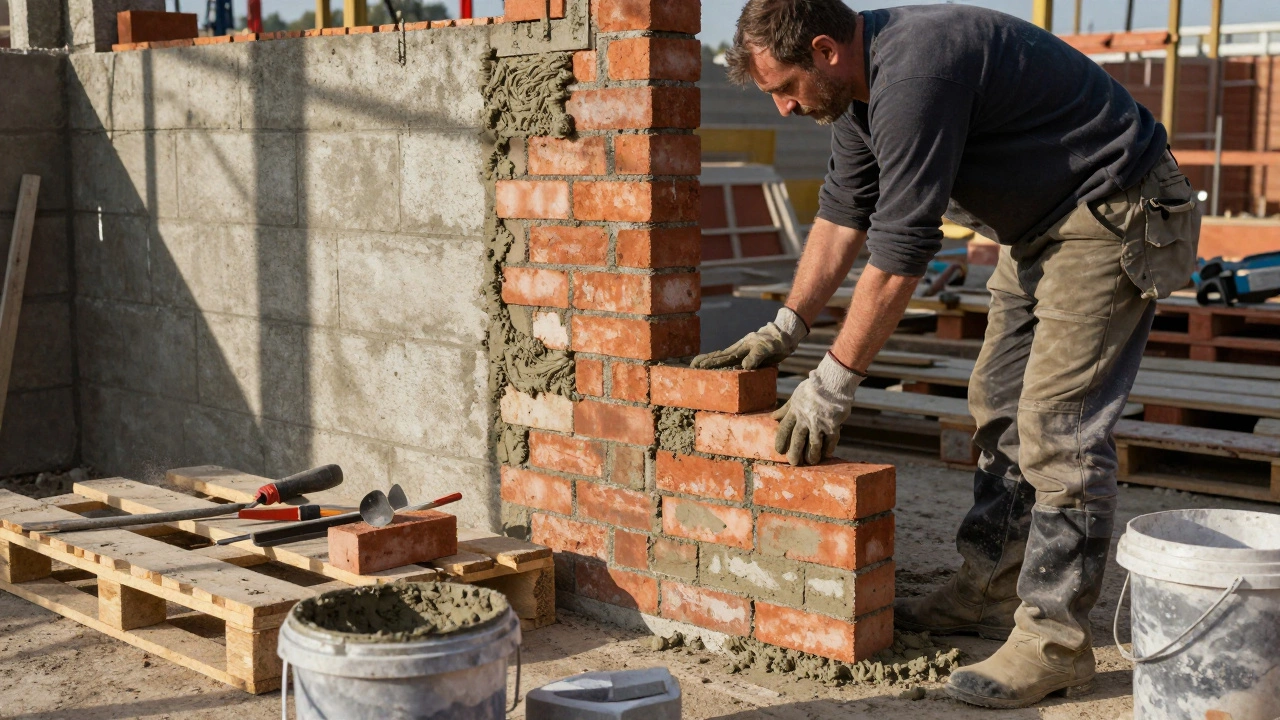
For example, an NVQ Level 2 in Bricklaying means you’ve demonstrated you can lay bricks to building standards, read plans, mix mortar correctly, and follow safety rules on site. An assessor will visit you at work, watch you perform tasks, and review your portfolio of evidence.
NVQs are required for most Blue and Black CSCS cards. You can do them part-time while working. Many employers pay for their staff to complete them. Levels range from 1 (entry-level) to 5 (senior management). Most tradespeople aim for Level 2 or 3.
Specialist Training for High-Risk Jobs
Some roles need extra certification because they involve serious hazards. These aren’t optional-they’re legally required.
- Working at Height: You need a PASMA or IPAF certification if you’re using scaffolding or aerial lifts.
- Asbestos Awareness: Anyone who might disturb old building materials must complete a 1-day asbestos training course.
- Manual Handling: Required for anyone lifting heavy materials regularly.
- First Aid at Work: At least one person on every site must hold a valid 3-day First Aid certificate.
- Excavation and Trenching: If you’re digging deep holes, you need specific training on soil types and shoring systems.
These courses are usually 1-2 days long and cost between £80 and £200. They’re offered by training providers like CITB, City & Guilds, and local colleges. Many employers will book these for you.
What About Electricians and Plumbers?
Specialist trades like electrical work and plumbing have stricter rules. You can’t just pick up a wire or a pipe and start working.
Electricians must complete a 3-4 year apprenticeship, pass City & Guilds 2391 (Electrical Inspection and Testing), and register with a Competent Person Scheme like NICEIC or ELECSA. Only then can they legally certify their own work under Part P of the Building Regulations.
Plumbers need similar certification through City & Guilds 6129 or equivalent. They must also understand gas safety if they’re working with boilers or pipework-meaning a separate Gas Safe registration.
These aren’t just nice-to-haves. Doing electrical or gas work without certification is illegal and can lead to fines, prosecution, or even manslaughter charges if someone gets hurt.
Do You Need a Degree?
For most hands-on jobs-bricklayer, carpenter, electrician-no. A degree isn’t required. In fact, most site workers don’t have one.
But if you want to move into management, planning, or engineering roles, a degree or HNC in Construction Management, Civil Engineering, or Building Services can help. These are usually 1-3 year programmes offered by universities and colleges. They’re useful if you want to become a site manager, quantity surveyor, or project engineer.
For the majority of people, though, practical training through apprenticeships and NVQs is faster, cheaper, and more respected.
How to Get Started Today
If you’re ready to begin, here’s your step-by-step plan:
- Take the Health, Safety and Environment Test to qualify for a Red CSCS card.
- Apply for an apprenticeship through the Government’s Find an Apprenticeship service.
- If you’re already working, ask your employer if they support NVQ training.
- Enrol in any specialist courses you need-like asbestos awareness or working at height.
- Keep your CSCS card active by renewing it before it expires (usually every 5 years).
You don’t need to know everything before you start. The industry expects you to learn on the job. What matters is that you’re willing to train properly, follow rules, and take safety seriously.
Common Mistakes to Avoid
Many new workers make these errors:
- Thinking a CSCS card isn’t important-sites won’t let you in without one.
- Skipping safety courses to save money-accidents happen to untrained people.
- Trying to do electrical or gas work without certification-this is illegal and dangerous.
- Waiting until they have ‘perfect’ qualifications before applying-most employers will train you if you show up willing to learn.
Construction is physically demanding, but it’s also one of the most rewarding trades. Good workers are always in demand. You don’t need a degree. You don’t need connections. You just need to train right.
Do I need a CSCS card to work on a construction site?
Yes. Every person entering a construction site in the UK must have a valid CSCS card. It proves you’ve passed the required safety test and have the right level of training for your role. Without it, you will be turned away.
Can I start construction work without any experience?
Yes. Many people start as labourers with no prior experience. You’ll need a Red CSCS card and basic safety training, but you don’t need to know how to lay bricks or run wires. Employers train you on the job, especially if you’re in an apprenticeship.
How long does construction training take?
It depends on the path. A basic CSCS card can be obtained in a week. An apprenticeship takes 2-4 years. NVQs can be completed in 6-18 months while working. Specialist courses like asbestos awareness take just one day.
Are construction jobs well-paid?
Yes, especially with experience. A qualified carpenter or electrician can earn £30,000-£45,000 a year. Site supervisors earn £40,000-£60,000. Apprentices start at around £15,000-£20,000 but see big pay increases as they gain skills and certifications.
Can I do construction training online?
Some parts can-like the Health and Safety test or asbestos awareness courses. But hands-on skills like bricklaying, plumbing, or electrical work require in-person training and assessment. You can’t learn to use a power saw or install a gas boiler from a video.
What Comes Next?
Once you’ve got your Red CSCS card and completed your first safety course, your next step is to find a job. Look for local builders, housing associations, or construction firms hiring apprentices. Many offer on-the-job training with no upfront cost.
Don’t wait for the perfect opportunity. Start small. Show up early. Ask questions. Learn from everyone on site. The construction industry doesn’t reward talent-it rewards reliability and willingness to learn. If you’re serious, you’ll be earning a good wage in less than two years.



Write a comment