
Welding Process Difficulty & Learning Path Calculator
Calculate Your Welding Learning Journey
Ask any seasoned welder what gives them the most trouble, and you’ll get a split answer. Some will point to the tiny, precise bead of a TIG welding is a precision arc welding process that uses a non-consumable tungsten electrode to produce a weld. joint. Others will swear it’s controlling the heat so your steel doesn’t warp into a twisted mess. The truth is, welding isn’t just about making two pieces of metal stick together. It’s a battle against physics, geometry, and your own hands.
If you are looking into welding courses are structured training programs designed to teach individuals the technical skills and safety protocols required for professional welding., understanding these hurdles early saves time, money, and frustration. You need to know exactly what you are signing up for before you pick up a torch.
The Physical Challenge: Hand-Eye Coordination Under Pressure
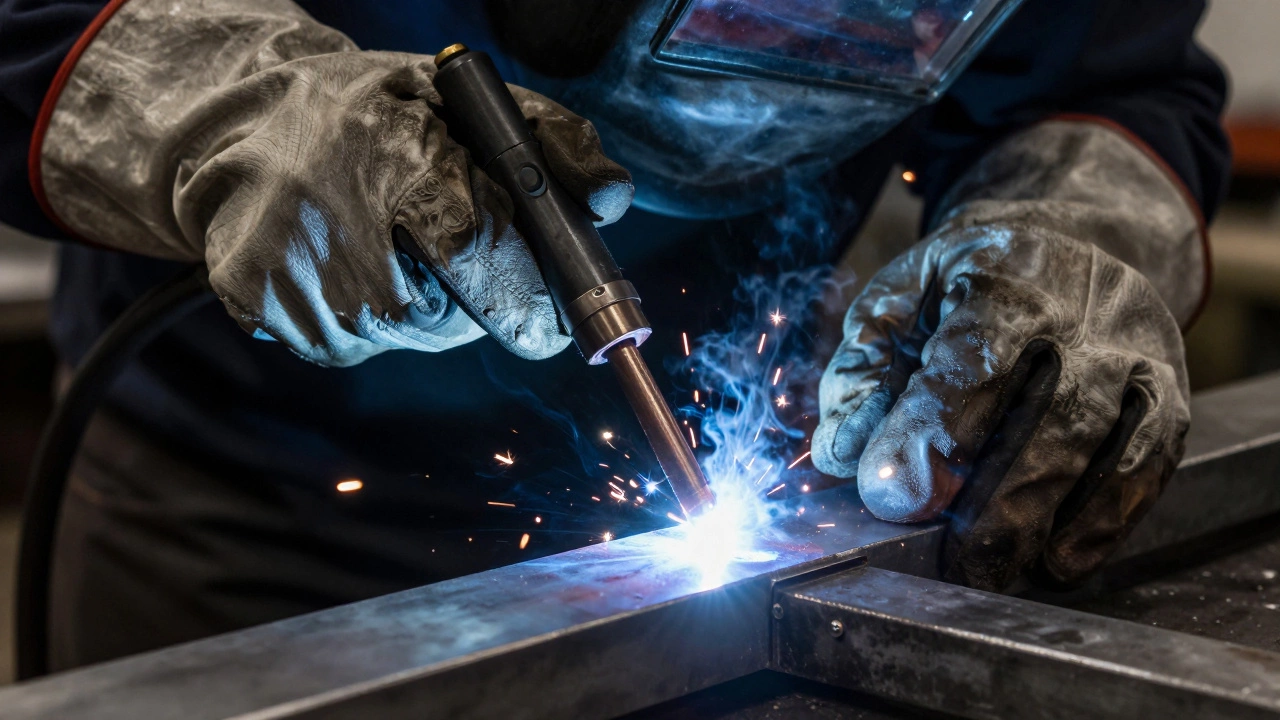
Most people assume welding is heavy labor. While lifting beams is part of the job, the hardest physical aspect is actually fine motor control while wearing bulky gear. Imagine trying to thread a needle while wearing oven mitts, standing on a ladder, with a bright light blinding you, and a puddle of molten metal moving at your command. That is the reality of MIG welding is a semi-automatic or automatic arc welding process that uses a continuous wire feed as the electrode and filler metal..
In MIG welding, you have to move the gun at a steady pace. Too fast, and the bead is weak and narrow. Too slow, and you burn through the metal or create a messy pile of slag. Your hand must move in perfect sync with your eyes tracking the molten pool. This coordination takes months to build. In Stick welding is an arc welding process that uses a consumable electrode covered with a flux to lay down welds., the challenge doubles because you also have to angle the rod correctly while maintaining the arc length. If your hand shakes, the arc breaks. If you drift, the weld fails. This is why vocational training is education focused on providing specific skills needed for particular trades or crafts. emphasizes repetitive practice drills before real projects.
The Invisible Enemy: Heat Distortion and Warping
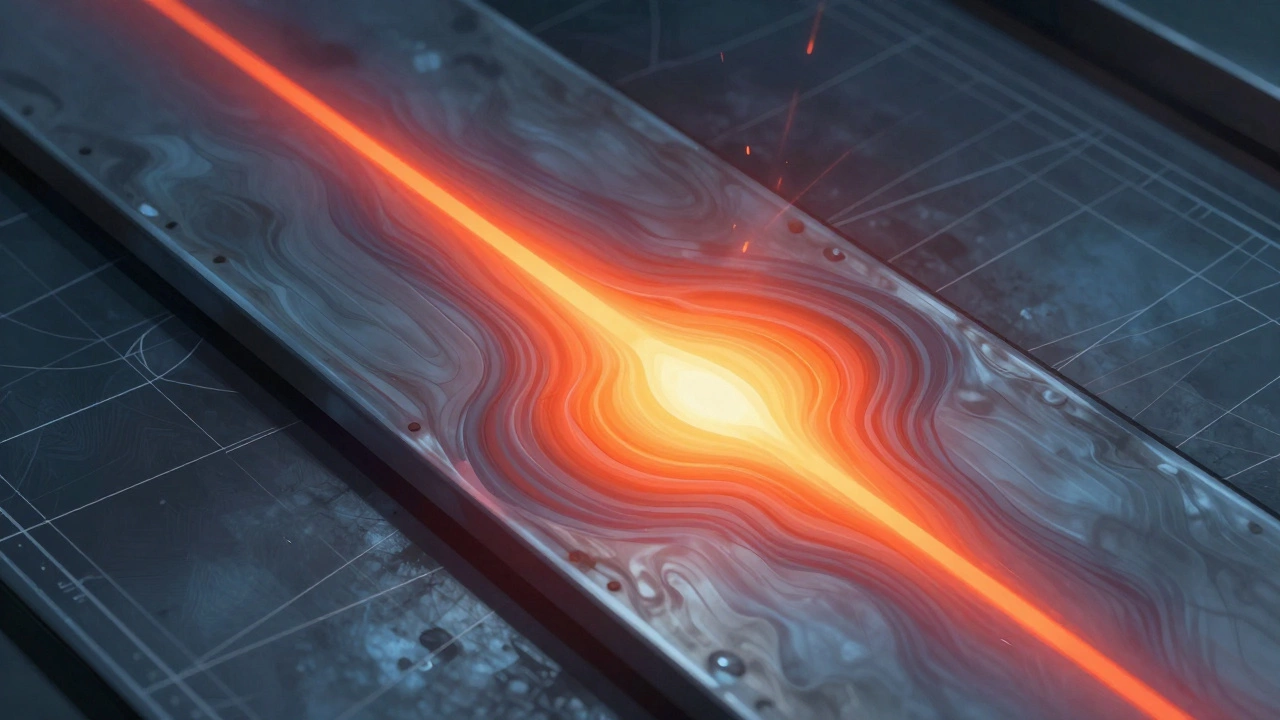
You can make a perfect-looking bead, but if the metal warps, the part is useless. Controlling heat input is arguably the hardest intellectual challenge in welding. Metal expands when heated and contracts when cooled. When you weld one side of a plate, it shrinks as it cools, pulling the metal out of shape. This is called distortion.
Preventing this requires more than just good technique. It demands planning. You need to understand sequence welding-where to start, where to stop, and how to alternate beads to balance the stress. For example, when welding a long seam, you might use a "skip welding" technique, placing short beads every few inches and then filling in the gaps. This allows the heat to dissipate evenly. Without this knowledge, even a strong weld can result in a bent frame or a misaligned pipe. This is a key topic in advanced construction training is specialized education covering the methods and materials used in building structures..
Precision on Thin Materials: The TIG Test
If you want to test your limits, try TIG welding thin aluminum or stainless steel. There is no shield gas bottle to worry about (well, there is, but let’s focus on the torch). In TIG, you hold the torch in one hand and feed the filler rod with the other. Both hands must work independently yet harmoniously. You are literally drawing with fire.
On thin sheet metal, the margin for error is zero. One second too long in one spot, and you have a hole. The heat travels quickly in aluminum, so you have to keep moving. This process requires intense concentration. Many students find that their first week of TIG training leaves them exhausted not from physical exertion, but from mental fatigue. Keeping the tungsten electrode clean and sharp is also critical; a contaminated tip ruins the arc stability instantly.
Welding in Difficult Positions
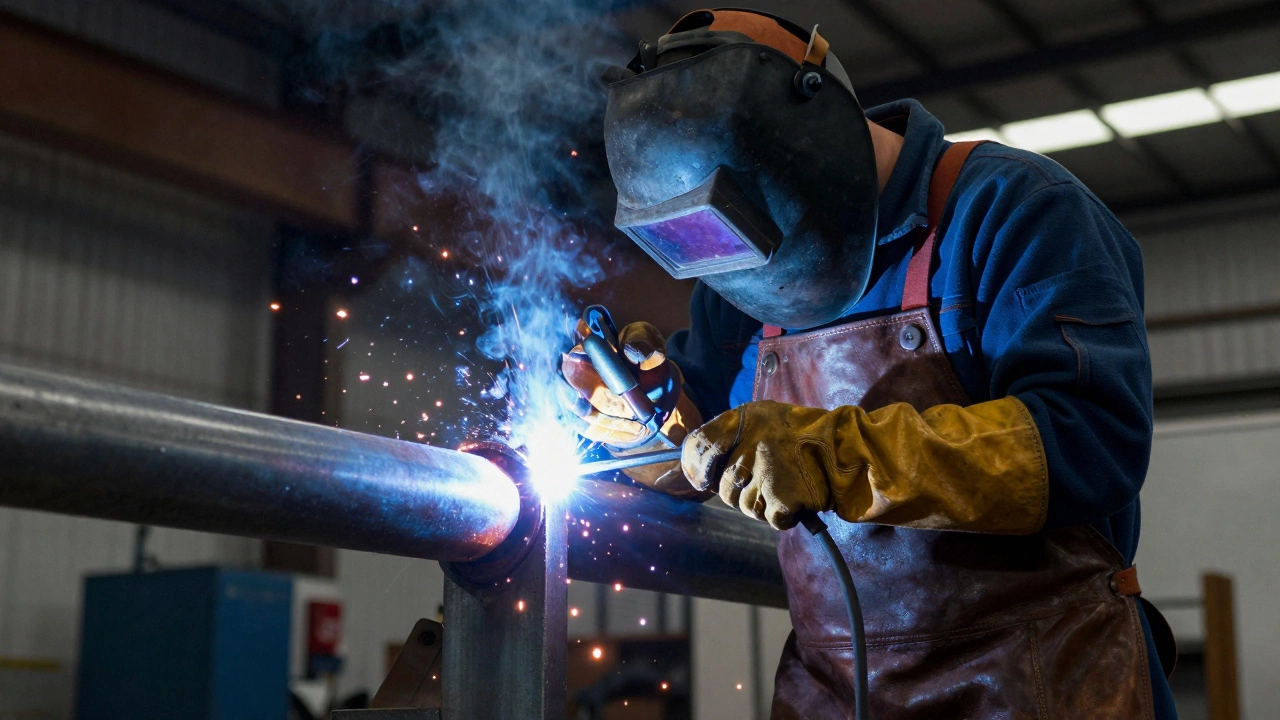
Gravity is your enemy when you aren’t welding flat on a table. The American Welding Society classifies positions as flat, horizontal, vertical, and overhead. Flat is easy. Overhead is a nightmare. In an overhead position, molten metal wants to fall onto your face. You have to manipulate the puddle so it freezes in place before gravity pulls it down. This often means using lower amperage and faster travel speeds. Vertical welding requires you to "climb" the joint without letting the puddle sag. Mastering all four positions is a requirement for certified welders and is a major focus in comprehensive certification exams are standardized tests that verify a welder's ability to produce code-compliant joints in various positions..
Reading Blueprints and Understanding Codes
A skilled welder isn’t just a technician; they are a reader of specifications. The hardest thing many beginners overlook is interpreting welding symbols on blueprints. These symbols dictate the type of weld, its size, length, and the standards it must meet. Misreading a symbol can lead to structural failure. Furthermore, different industries follow different codes. Structural steel follows AWS D1.1, while pressure vessels follow ASME Section IX. Knowing which code applies and how to document your welds for inspection is a complex layer of the job that separates hobbyists from professionals.
| Process | Primary Difficulty | Learning Curve | Best For |
|---|---|---|---|
| MIG | Hand-eye coordination | Low to Medium | General fabrication, automotive |
| TIG | Two-hand coordination, heat control | High | Precision work, aerospace, food grade |
| Stick | Arc stability, slag removal | Medium | Construction, outdoor work, dirty metal |
| FCAW | Fume management, spatter control | Low | Heavy structural steel |
Choosing the Right Path: Why Courses Matter
Trying to learn these difficult skills alone is inefficient and dangerous. A structured training program is a curriculum designed to provide systematic instruction in specific trade skills. provides feedback on your technique before bad habits set in. Instructors can see subtle errors in your stance or grip that you cannot feel. They teach you how to set up your machine correctly for different metals and thicknesses. They also instill safety protocols are rules and procedures designed to prevent accidents and injuries in the workplace., which is crucial given the risks of burns, electric shock, and fume inhalation.
When selecting a course, look for one that offers hands-on time with multiple processes. Theory is important, but muscle memory is built only by doing. Ensure the facility has modern equipment and qualified instructors who are currently working in the industry. This connection to current practices ensures you are learning relevant skills.
Overcoming the Mental Barrier
Finally, the hardest thing in welding is patience. You will ruin material. You will fail tests. You will get frustrated. Progress is non-linear. One day you will struggle with a simple lap joint, and the next you will nail a root pass on a pipe fit-up. Embracing this cycle of failure and improvement is essential. Welding is a craft that rewards persistence. Every scarred glove and ruined coupon is a step toward mastery.
Is TIG welding really the hardest process to learn?
Yes, generally speaking. TIG welding requires simultaneous control of the torch and filler rod with separate hands, demanding high levels of hand-eye coordination and fine motor skills. Unlike MIG, where the wire feeds automatically, TIG requires manual feeding of the filler material while maintaining a consistent arc length and travel speed. This complexity makes the learning curve steeper than other common processes.
How long does it take to become proficient in welding?
Proficiency varies by individual and process. Basic MIG welding skills can be acquired in a few weeks of intensive practice. However, becoming proficient enough for certified work, especially in TIG or positional Stick welding, typically takes several months to a year of dedicated training and practice. Mastery of all positions and codes can take years of experience.
What is the most common mistake beginners make?
The most common mistake is incorrect travel speed. Beginners often move too slowly, causing excessive heat input, burn-through, and poor bead appearance. Moving too fast results in lack of fusion and weak joints. Learning to match your hand speed to the melting rate of the base metal is a fundamental skill that takes practice to develop.
Do I need formal certification to start welding?
Not necessarily. Many entry-level jobs require demonstrated skill rather than formal certification. However, certification is often required for structural, pipeline, or aerospace work. Employers may hire you based on a practical test they administer. Formal certification from recognized bodies like the AWS adds credibility and can lead to higher pay and better job opportunities.
Why is controlling heat distortion so difficult?
Heat distortion occurs because metal expands when heated and contracts when cooled. When you weld, you introduce intense localized heat. As the weld cools, it shrinks, pulling the surrounding metal with it. Predicting and counteracting this shrinkage requires understanding the material properties, joint design, and welding sequence. It is a complex interplay of physics that cannot be fully mastered without experience and study.


Write a comment