
PCS Salary Calculator
How Your PCS Salary Works
The PCS salary structure is based on the 7th Pay Commission. Your total salary consists of basic pay plus various allowances. Salaries vary by rank, experience, and location.
Your Estimated Salary
When people talk about government jobs in India, especially outside the Indian Administrative Service (IAS), one name that keeps popping up is PCS. But what does PCS actually stand for? The full form of PCS is Provincial Civil Service. It’s not just an acronym-it’s the backbone of state-level administration across India, handling everything from land records to public health, local taxes to disaster response.
What Exactly Does the Provincial Civil Service Do?
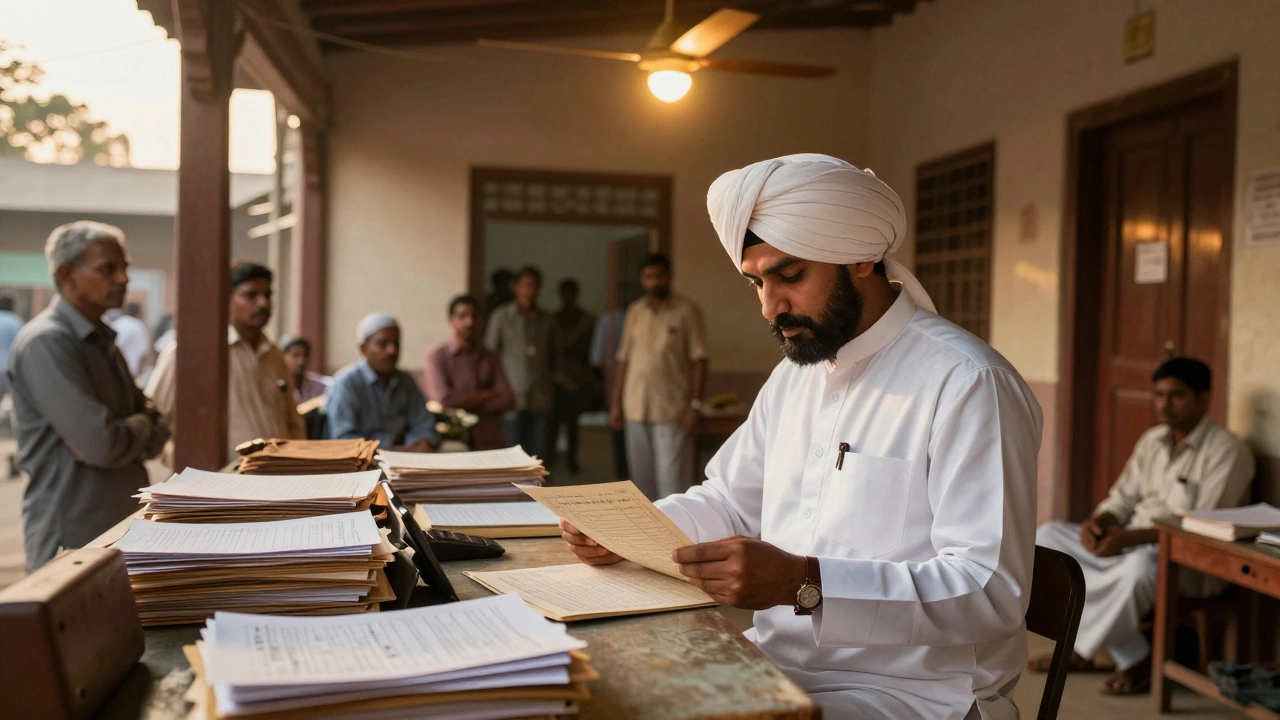
The Provincial Civil Service isn’t a single job title. It’s a whole system of state-level administrative roles that operate under each Indian state’s government. Think of it as the state’s version of the IAS, but focused on local needs instead of national policy. PCS officers work in districts, subdivisions, and tehsils, managing day-to-day governance that affects millions of people directly.
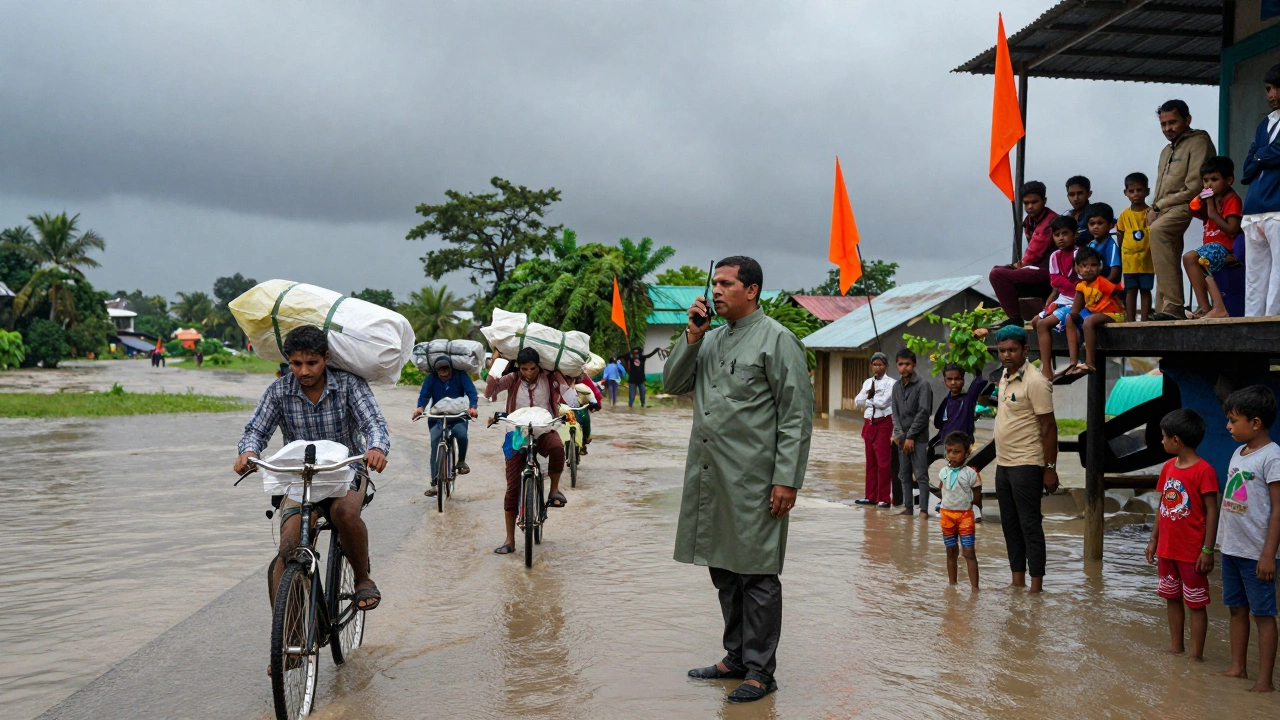
These officers are the ones who approve building permits, oversee school inspections, collect property taxes, manage rural development funds, and even coordinate relief during floods or droughts. They’re the face of the government in small towns and villages. Unlike IAS officers who rotate between state and central postings, PCS officers usually spend their entire careers within their home state, building deep local knowledge.
How Is PCS Different From IAS?
People often confuse PCS with IAS because both are civil services. But they’re not the same. IAS is a central service with national reach. PCS officers are state employees. The biggest difference? Promotion.
PCS officers can rise to the rank of IAS officer through a process called promotion quota. After serving for about 8-12 years with good performance, a PCS officer can be promoted to the IAS cadre. This means many IAS officers today started as PCS officers. It’s not a dead-end job-it’s a stepping stone.
Also, the exam pattern differs. The IAS exam is conducted by the Union Public Service Commission (UPSC) and is national in scope. The PCS exam is run by each state’s Public Service Commission-like the Uttar Pradesh Public Service Commission (UPPSC) or Bihar Public Service Commission (BPSC). That means the syllabus, language, and even interview focus vary by state.
What Are the Main Posts Under PCS?
PCS isn’t one job-it’s a hierarchy. The entry-level post is usually Deputy Collector or Sub-Divisional Magistrate (SDM). From there, officers move up to District Magistrate (DM), Divisional Commissioner, and eventually Secretary to the State Government.
- Deputy Collector (DC): Handles revenue collection, land disputes, and district-level administration.
- Sub-Divisional Magistrate (SDM): Manages a subdivision, which is a smaller unit within a district. Responsible for law and order, elections, and implementing state schemes.
- Assistant Commissioner: Works under the Deputy Collector, often in charge of specific departments like education or agriculture.
- District Magistrate (DM): The top administrative officer in a district. Has powers over police, revenue, and general administration.
Each role comes with more responsibility-and more pressure. A District Magistrate in Bihar or Madhya Pradesh might be dealing with 3 million people, hundreds of villages, and multiple crises at once.
How Do You Join the Provincial Civil Service?
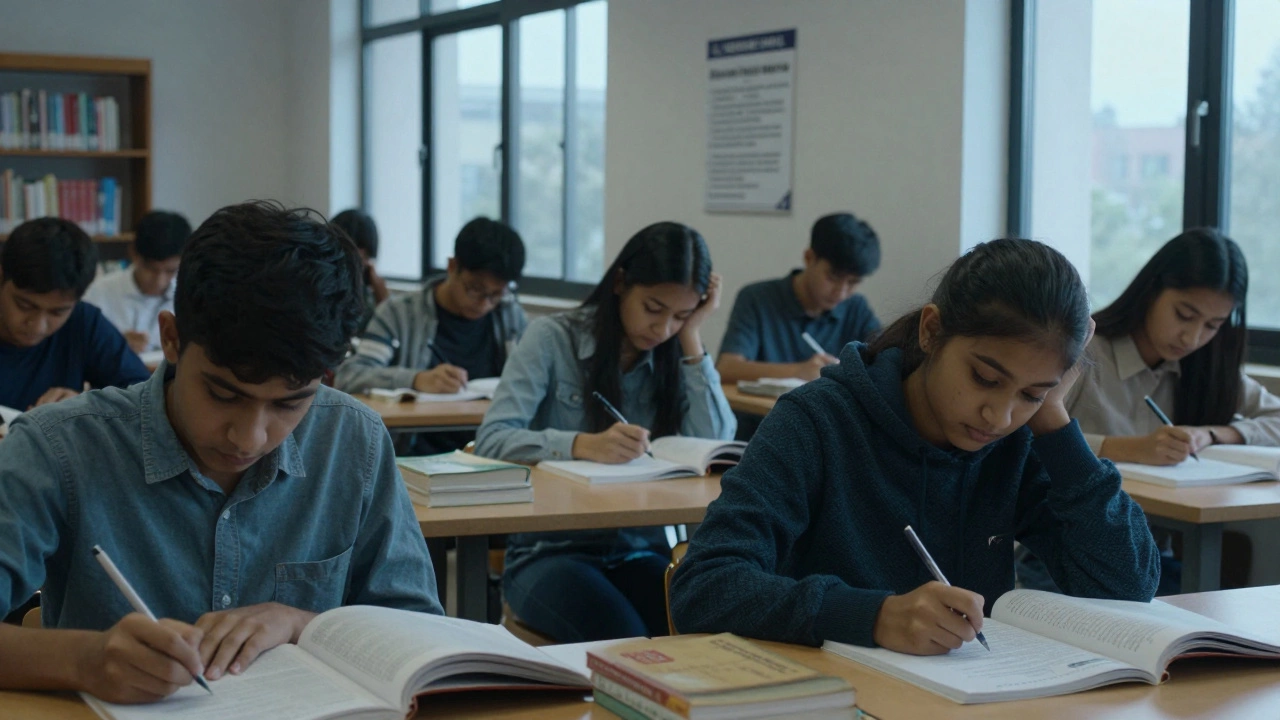
To become a PCS officer, you need to pass the state-level civil services exam. Each state runs its own exam, but they all follow a similar structure: preliminary, mains, and interview.
- Preliminary Exam: Multiple-choice questions covering general studies and aptitude. It’s a screening test.
- Mains Exam: Nine papers, including essays, history, polity, economics, and a regional language. This is where candidates show depth.
- Personality Test (Interview): A panel assesses your communication, ethics, decision-making, and awareness of local issues.
Some states, like Uttar Pradesh and Rajasthan, have extremely high competition. In 2024, UPPSC received over 1.2 million applications for just 1,200 PCS vacancies. That’s less than a 0.1% selection rate.
Most candidates prepare for 1-2 years. Many take coaching, but self-study with the right books and previous papers works too. The key? Focus on your state’s history, geography, and current affairs. The exam doesn’t just test knowledge-it tests whether you understand the problems of your own region.
Why Is PCS So Important for India’s Governance?
India has 28 states and 8 union territories. Each one has its own government, laws, and priorities. The IAS alone can’t handle all the work. That’s where PCS officers come in. They’re the ones who make sure policies actually reach the ground.
Take the PM-KISAN scheme, which gives direct cash to farmers. In rural Uttar Pradesh, it’s a PCS officer who verifies beneficiary lists, resolves complaints, and ensures money reaches the right people. If that system breaks down, the scheme fails. That’s the real power of PCS.
They’re also the bridge between citizens and the state. When a farmer can’t get a loan, when a school lacks books, when a road is unsafe-it’s the PCS officer who has to fix it. They don’t just manage systems; they manage people’s lives.
What Are the Challenges Facing PCS Officers Today?
It’s not an easy job. PCS officers often work 14-hour days with little support. Many districts have only one officer managing 100+ villages. Corruption, political pressure, and outdated systems make their work harder.
There’s also a growing gap between urban and rural postings. Officers in big cities like Lucknow or Jaipur get better infrastructure and resources. Those in remote areas might not even have reliable internet or transport. Yet they’re expected to deliver the same results.
And while technology is slowly being introduced-like digital land records and e-governance portals-many systems still rely on paper files and handwritten registers. Change is slow, but it’s happening.
Is PCS a Good Career Choice in 2026?
If you want stability, respect, and real impact-yes. PCS officers get a steady salary, housing, medical benefits, and a pension. But more than that, they get purpose.
Unlike corporate jobs where success is measured in profit, PCS success is measured in lives improved. Did the village get clean water? Did the school pass its inspection? Did the widow get her widow pension? Those are the wins that matter.
And with India’s population still growing, and states investing more in local governance, the demand for capable PCS officers isn’t going away. In fact, it’s increasing.
Many young people now see PCS as a way to serve their community-not just a job, but a calling. It’s not glamorous. But it’s necessary.
Which States Have the Most Active PCS Systems?
Not all states use the term PCS the same way. Some call it State Civil Service (SCS), others use different names. But the most prominent systems are in:
- Uttar Pradesh (UPPSC): Largest number of vacancies every year.
- Bihar (BPSC): High competition, strong focus on rural development.
- Rajasthan (RAS): Known for rigorous exams and emphasis on local culture.
- Madhya Pradesh (MPPSC): Strong emphasis on agriculture and tribal welfare.
- West Bengal (WBPSC): Includes both administrative and police cadres under one exam.
If you’re serious about PCS, start by checking your state’s Public Service Commission website. They release official notifications, syllabi, and previous papers every year.
Is PCS the same as IAS?
No, PCS stands for Provincial Civil Service and is a state-level service, while IAS is a central service with nationwide jurisdiction. PCS officers work under state governments, whereas IAS officers can be posted anywhere in India. However, top-performing PCS officers can be promoted to IAS after several years of service.
Can I apply for PCS from any state?
No. You must apply for the PCS exam of the state where you meet eligibility criteria-usually based on residency, language proficiency, or domicile. Each state’s Public Service Commission sets its own rules. You can’t apply for Uttar Pradesh PCS if you’re not a resident of Uttar Pradesh.
What is the salary of a PCS officer?
Starting salary for a PCS officer is around ₹56,100 per month under the 7th Pay Commission, with additional allowances for housing, transport, and risk. As they rise in rank, salaries can go up to ₹2,25,000 or more for senior positions like Divisional Commissioner or Secretary.
Do I need a degree to join PCS?
Yes. You need a bachelor’s degree from a recognized university to be eligible for any PCS exam. The degree can be in any subject-arts, science, commerce, or engineering. There’s no specific subject requirement, but a strong foundation in polity, history, and economics helps in the exam.
How many attempts are allowed for PCS?
The number of attempts varies by state and category. Most states allow 4-6 attempts for general candidates, with more for OBC and no limit for SC/ST candidates. Always check your state’s official notification, as rules change frequently.
Where Do You Go After PCS?
Many PCS officers stay in the state service their whole career. But others aim higher. The promotion route to IAS is real and happens every year. Around 10-15 PCS officers get promoted to IAS annually across India.
Some move into specialized roles-like Chief Secretary, Head of State Planning Commission, or even Director of Education or Health. Others transition into public policy, NGOs, or academia after retirement.
But for most, the reward isn’t the title. It’s seeing a village get electricity because of their work. It’s knowing a girl from a poor family got into college because the scholarship reached her on time. That’s what keeps them going.



Write a comment