
Beginner MIG Welder Selector
Find Your Perfect Beginner MIG Welder
Answer these quick questions to get personalized recommendations based on your projects and needs.
What type of projects will you do?
Do you have access to 240V power?
Where will you weld?
Do you need to weld on rusty or dirty metal?
Your Recommended MIG Welder
Key Features to Look For:
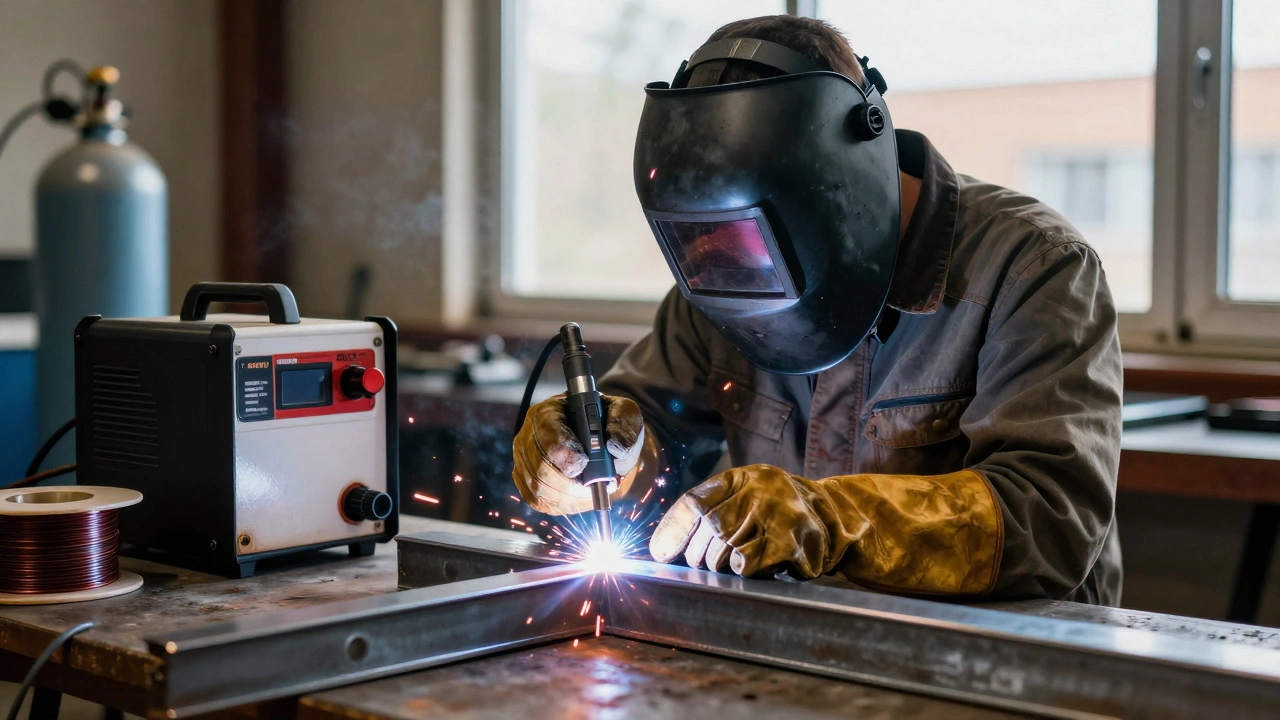
If you're new to welding and wondering where to start, the right welder can make all the difference. Too many beginners buy something too complex, too expensive, or just plain wrong for their skill level-and end up frustrated before they even make their first bead. The good news? There’s one type of welder that stands out for people just starting out: the MIG welder.
Why MIG Welding Is the Best Choice for Beginners
MIG stands for Metal Inert Gas. It’s also called GMAW-Gas Metal Arc Welding. What makes it perfect for new welders is how straightforward it is. You don’t need to coordinate two hands like you do with stick welding. You just hold the gun, pull the trigger, and the wire feeds automatically while shielding gas protects the weld from air contamination. It’s like using a glue gun, but for metal.
Compare that to stick welding, where you have to strike an arc, maintain the right distance, and constantly chip away at slag. Or TIG welding, which demands precise foot control, hand movement, and timing. MIG doesn’t require that level of multitasking. You can focus on moving the gun smoothly and watching the puddle form. That’s why over 70% of home hobbyists and entry-level welders start with MIG.
What You Can Actually Weld With a Beginner MIG Machine
A good entry-level MIG welder handles materials from 24-gauge sheet metal up to about 3/8 inch thick. That covers most DIY projects: fixing a broken gate, building a small trailer frame, repairing lawn equipment, or even making custom furniture. You won’t be welding thick steel beams right away-and you don’t need to.
Most beginner machines run on 110-volt household power. That’s a huge advantage. You don’t need a special outlet or an electrician to install a 240-volt line. Plug it in, turn it on, and you’re ready. Machines like the Hobart Handler 140, Lincoln Electric K2185-1, or Miller Electric Millermatic 140 are common picks because they’re reliable, easy to set up, and come with clear instructions.
What to Look for in a Beginner MIG Welder
Not all MIG welders are made equal. Here’s what actually matters when you’re shopping:
- Amperage range: Look for at least 30-140 amps. That gives you enough power for thin metal and enough headroom for thicker pieces.
- Wire feed speed control: Manual dials are fine. Digital controls are nice but not necessary.
- Gas vs. flux-core: Most beginner machines support both. For indoor use, gas (75% argon / 25% CO2) gives cleaner welds. For outdoor or rusty metal, flux-core wire works without gas-just don’t expect it to look as pretty.
- Portability: If you’re moving it around the garage or yard, weight matters. Under 50 pounds is ideal.
- Includes everything: Check if it comes with a welding helmet, gloves, wire, and a ground clamp. Some bundles save you $100+.
Avoid machines that claim to do everything-TIG, stick, and MIG-in one unit. They’re usually underpowered at each function and harder to use. Stick with a dedicated MIG welder. You’ll learn faster.
What Not to Buy as a Beginner
There are a few common traps:
- Ultra-cheap welders under $200: These often have poor wire feed, unstable arcs, and burn out quickly. You’ll waste more money replacing it than saving upfront.
- Stick welders for beginners: They’re cheaper, yes-but harder to control. The learning curve is steep. Save stick welding for later, after you’ve built confidence.
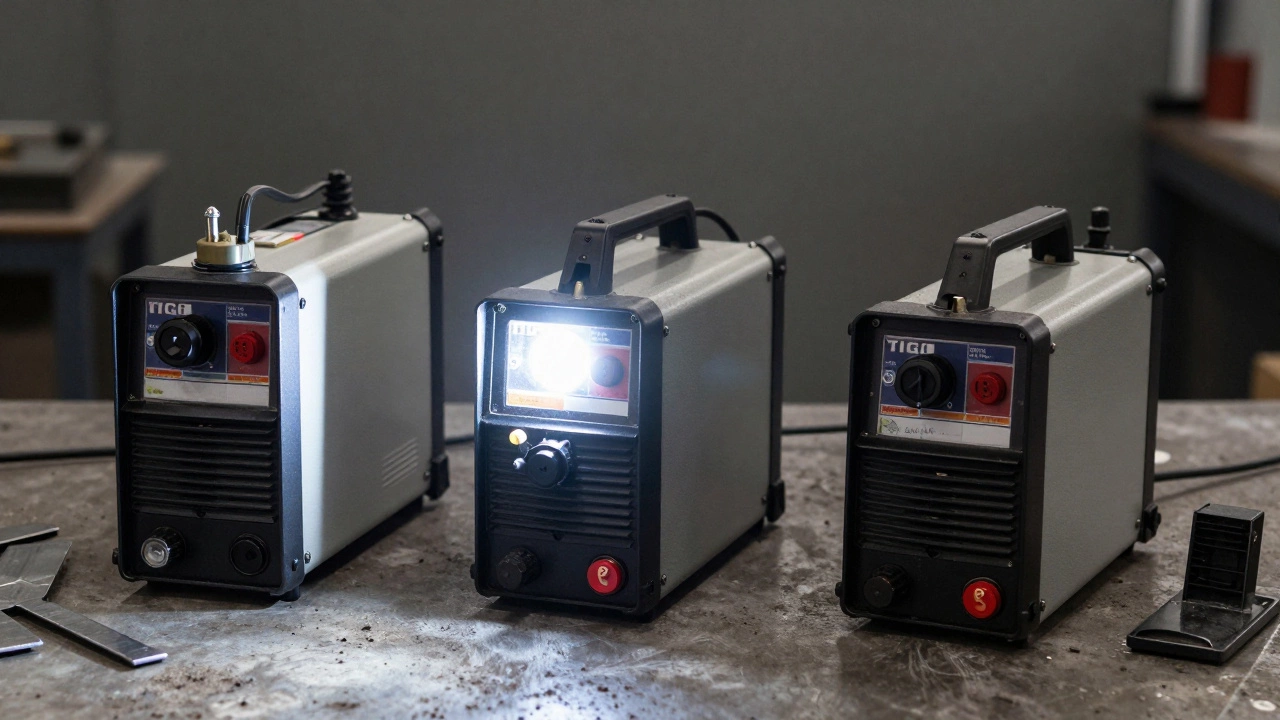
- High-end TIG welders: These cost $1,000+. They’re for professionals doing precision work on aluminum or thin stainless. Not for learning.
- Used industrial welders: A 240-volt, 300-amp machine from a factory? Too powerful. Too dangerous. Too complicated.
Spending $300-$500 on a solid MIG welder is the sweet spot. You get enough power, reliability, and features to grow with your skills for years.
Essential Gear to Go With Your Welder
Don’t skip the safety stuff. Even a small spark can ruin your clothes-or your skin.
- Auto-darkening helmet: Get one with at least a #9-#13 shade range. Manual helmets are cheaper but slow to react. You’ll miss your timing.
- Welding gloves: Leather, heat-resistant, and loose enough to move your fingers. Don’t use work gloves.
- Flame-resistant jacket or apron: Cotton works in a pinch, but denim and leather are better. Avoid synthetics-they melt.
- Wire brush and chipping hammer: For cleaning welds after you’re done.
- Clamps and magnets: Holding pieces steady is half the battle.
Many starter kits include a helmet and gloves. That’s a good deal. If you’re buying separately, budget at least $100 for safety gear.
Practice Makes Progress-Not Perfection
Don’t expect perfect welds on day one. Even pros started with crooked lines and holes. The goal isn’t beauty. It’s consistency. Practice on scrap metal. Try different speeds. Test different voltages. Watch how the puddle behaves. If it’s too hot, it burns through. Too cold, and it doesn’t fuse.
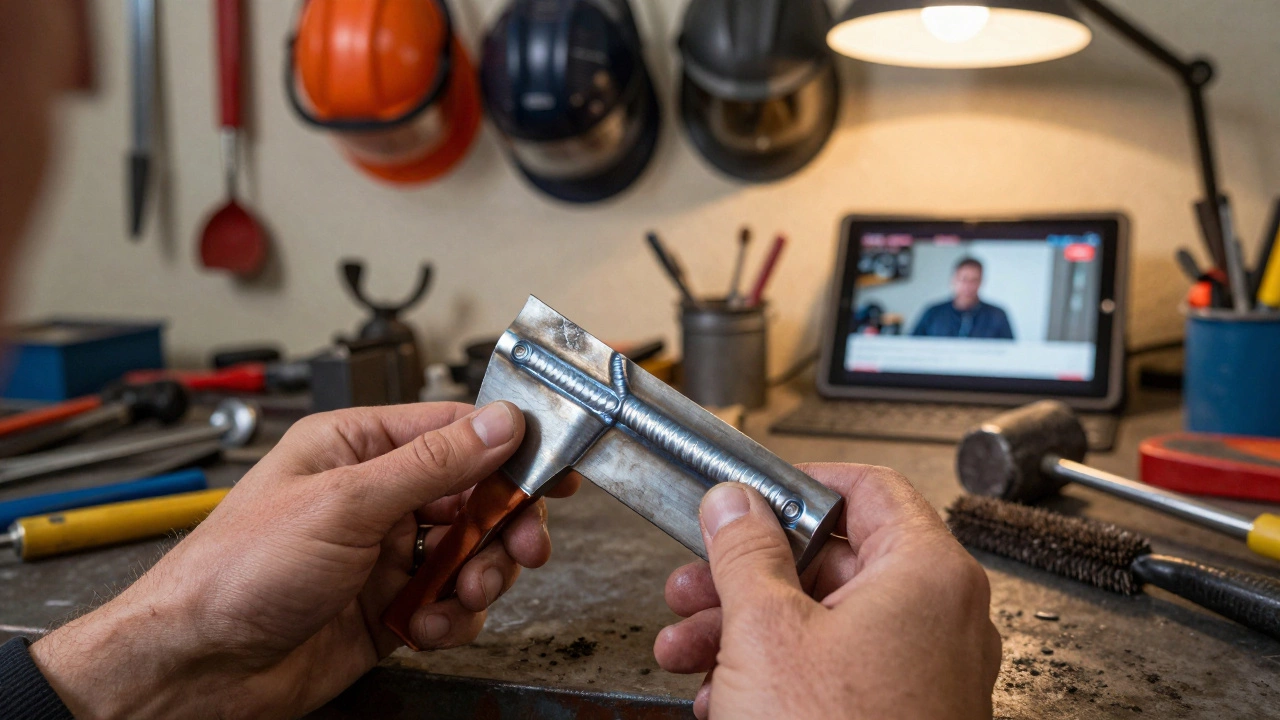
Set up a simple project: weld two pieces of steel together, then cut them apart. If the weld holds, you did it right. If it breaks at the joint, you need more heat or slower movement. That’s how you learn.
YouTube has thousands of free tutorials. Search for "MIG welding for beginners" and watch people who are just like you-no fancy tools, no studio lighting, just real practice.
When You’re Ready to Move Up
Once you’re comfortable with MIG-maybe after 20-30 hours of practice-you might want to try other methods. Stick welding is great for outdoor jobs and rusty metal. TIG is perfect for aluminum or thin stainless. But those come later. MIG is your foundation.
Many people who start with MIG end up running small repair shops or doing custom metalwork. It’s not just a hobby. It’s a skill that opens doors. But you don’t need to rush. Master the basics first.
Final Thought: Start Simple, Stay Safe
The best welder for a beginner isn’t the fanciest, most powerful, or cheapest one. It’s the one you’ll actually use. A reliable MIG welder, paired with basic safety gear and a willingness to practice, gives you everything you need to start. No experience required. No degree needed. Just metal, wire, and a little patience.
Can I use a MIG welder without gas?
Yes, you can. Many beginner MIG welders support flux-core wire, which doesn’t need external gas. The wire has a flux coating that creates its own shielding when it melts. It’s great for outdoor work or welding on dirty or rusty metal. But the welds will be messier and produce more spatter. For clean, smooth welds indoors, use gas (75% argon / 25% CO2).
Do I need 240-volt power for a beginner welder?
No. Most beginner MIG welders run on standard 110-volt household outlets. That’s one of their biggest advantages. You can plug them into any regular wall socket. You only need 240 volts if you’re planning to weld thick steel regularly or use a professional-grade machine. For DIY and home projects, 110-volt is more than enough.
Is MIG welding stronger than stick welding?
It depends on the setup and material. MIG welds tend to be cleaner and more consistent, especially on thin metal. Stick welding can penetrate deeper on thick, dirty, or rusty metal. Neither is inherently stronger-both can create welds that meet structural standards. For beginners, MIG is easier to control, which leads to more reliable results.
How long does it take to learn MIG welding?
You can make your first decent weld in under an hour. But becoming consistently good takes practice. Most beginners see real improvement after 10-20 hours of focused practice. That’s about two to four weekends of working on scrap metal. Don’t rush. Focus on smooth motion and steady speed, not speed.
What’s the most common mistake beginners make?
Moving too fast. New welders often think speed equals skill. But welding isn’t a race. If you move the gun too quickly, the weld won’t penetrate. If you move too slow, you burn through the metal. The sweet spot is a steady, controlled pace-like drawing a line with a marker. Watch the puddle. Let it form. Then move forward just enough to keep it going.
If you're ready to start welding, don't wait for the perfect moment. Buy a solid MIG welder, get your gear, and begin with scrap metal. The first weld might not look great. But the second one will be better. And the third? That’s when you realize you’re actually doing it.



Write a comment