
Workplace Safety Training Impact Calculator
Based on industry data showing 40-60% injury reduction with effective safety training programs.
Key Findings
Why This Matters
According to the National Safety Council, workplaces with comprehensive safety training see 50% fewer serious injuries. Regular training also reduces insurance costs and legal liability.
Industry-Specific Recommendations:
- High-risk industries should implement quarterly training with hands-on emergency response drills
- Medium-risk industries benefit from bi-annual refresher courses with PPE demonstrations
- Low-risk industries should maintain annual training with updated hazard identification modules
When someone walks into a safety training session, they often think it’s just about wearing hard hats and reading posters. But real safety training? It’s way deeper than that. It’s about changing how people think, react, and make choices every day on the job. Whether you’re working on a construction site, in a hospital, or behind a desk, safety training gives you the tools to avoid injury, save lives, and keep things running smoothly.
How Hazards Are Identified and Managed
One of the first things any safety course teaches is how to spot danger before it strikes. This isn’t guesswork. It’s a system. Workers learn to look for physical risks-like slippery floors, exposed wiring, or heavy machinery without guards-but also hidden ones: poor lighting, repetitive motion, or even stress from long shifts. Training walks you through real examples: a warehouse worker who twisted their back lifting a box the wrong way, or a lab tech who skipped gloves and got chemical burns. You don’t just memorize a list-you learn how to ask: What could go wrong here? Then you learn how to fix it. Controls range from simple fixes like adding non-slip tape to complex ones like installing ventilation systems. The goal? Stop hazards before they become incidents.
Emergency Response and First Aid
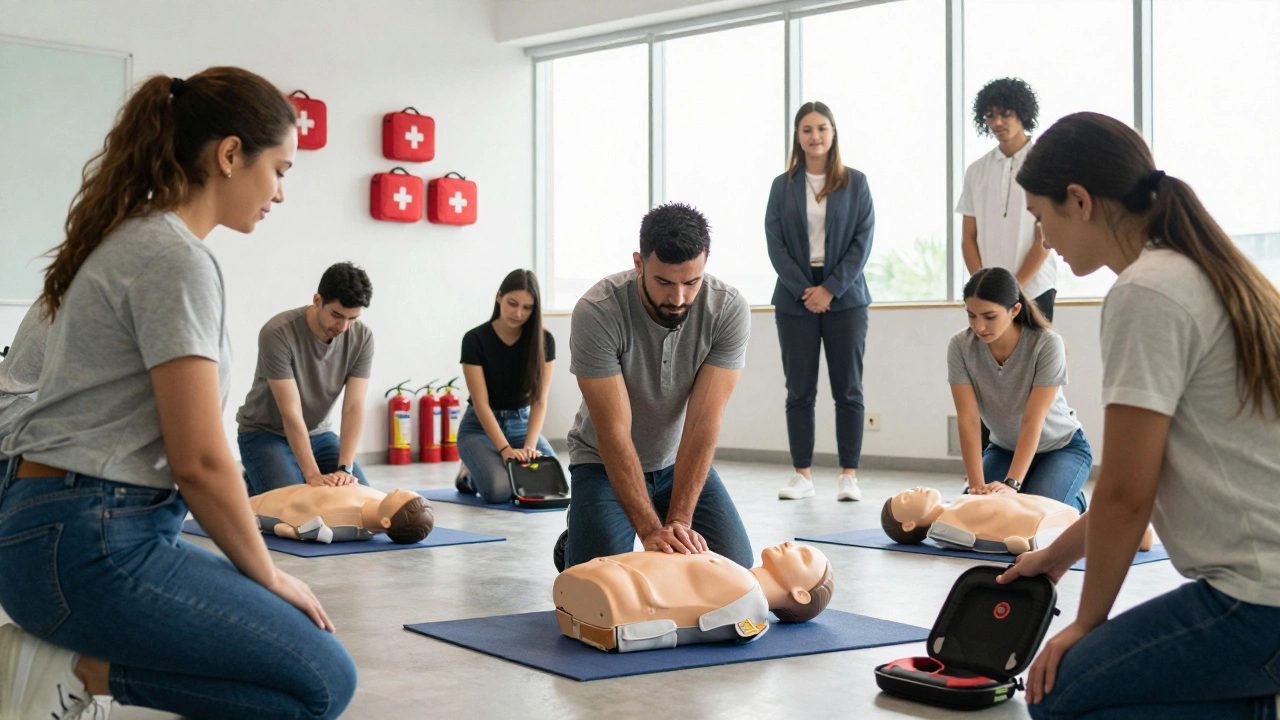
Accidents happen. Training doesn’t pretend they won’t. That’s why emergency response is a core part of every program. You’ll learn how to respond to fires, chemical spills, cardiac arrests, and serious falls. It’s not about being a hero. It’s about knowing the steps. For example, if someone collapses, you don’t panic. You check for responsiveness, call for help, and start CPR if trained. Most courses include hands-on practice with mannequins and real AED trainers. You’ll also learn how to use emergency equipment: fire extinguishers, eyewash stations, and spill kits. Companies that train their staff in first aid see 50% fewer serious injuries, according to the National Safety Council. It’s not optional-it’s practical survival.
Proper Use of Personal Protective Equipment (PPE)
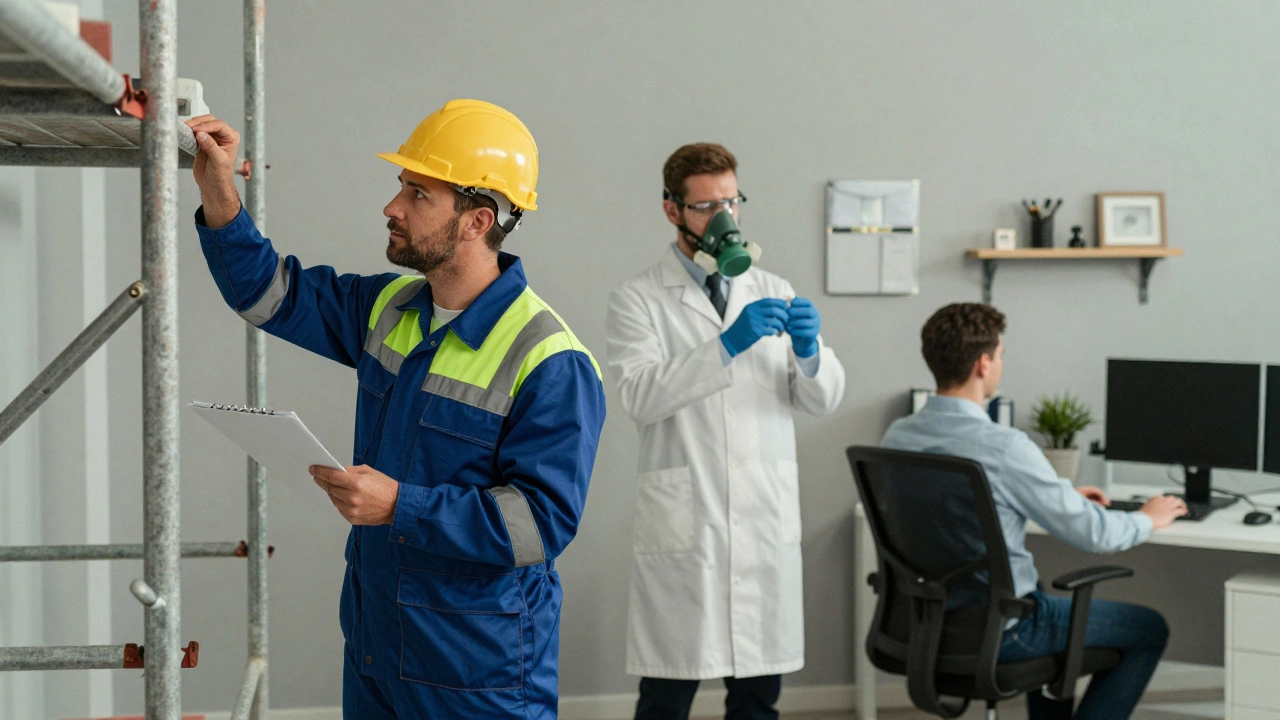
Hard hats, gloves, goggles, earplugs, respirators-these aren’t just gear. They’re your last line of defense. But if you wear them wrong, they don’t work. Safety training teaches you how to choose the right PPE for the job, how to put it on and take it off safely, and when to replace it. A common mistake? Wearing a mask that doesn’t seal properly. Or using torn gloves. Training shows you how to check for damage, how to fit a respirator to your face, and why you can’t reuse disposable items. You’ll also learn why some workers skip PPE: discomfort, forgetfulness, or thinking "it won’t happen to me." The training pushes back on that mindset. It’s not about rules-it’s about keeping you alive.
Regulations and Legal Responsibilities
Safety isn’t just common sense. It’s the law. Training covers the basics of OSHA (Occupational Safety and Health Administration) standards in the U.S., or equivalent rules like the Health and Safety at Work Act in the UK. You’ll learn what your employer is required to provide: safe tools, clear signage, training records. But you’ll also learn what you are required to do: follow procedures, report unsafe conditions, and speak up if something feels wrong. Many workers don’t realize they have legal protection to refuse unsafe work. Training makes that clear. It also explains what happens if rules are broken-fines, shutdowns, lawsuits. This isn’t scare tactics. It’s accountability.
Specific Risks by Industry
Safety training isn’t one-size-fits-all. A factory worker needs different knowledge than a nurse or an office employee. Construction workers learn about fall protection, crane signals, and trench safety. Healthcare workers focus on needlestick prevention, lifting patients safely, and handling infectious materials. Office staff get trained on ergonomics, electrical safety, and evacuation plans for high-rises. Even remote workers aren’t left out-training now includes how to set up a safe home workspace. Each industry has its own set of top hazards. Training tailors content so you’re not learning about welding sparks if you work in a library.

Communication and Reporting Culture
The best safety gear won’t help if no one speaks up. That’s why training builds a culture of communication. You’ll learn how to report near-misses-those close calls where something almost went wrong. Did a tool slip? Did a ladder wobble? Did a chemical leak but get cleaned up before anyone got hurt? Reporting those matters. It’s how companies catch patterns before someone gets seriously injured. Training shows you how to file reports without fear of blame. Many companies now use anonymous digital reporting tools. The message is clear: silence is more dangerous than mistakes.
How Often Is Safety Training Done?
One-time training? That’s not enough. Safety rules change. New equipment comes in. People forget. Most workplaces require annual refreshers. High-risk jobs like mining or chemical handling may need training every six months. New hires get orientation within their first week. And if a new hazard shows up-say, a new machine or a virus outbreak-training happens immediately. The best programs don’t wait for an accident to happen. They update training before one does.
What Happens If You Skip It?
Some people think safety training is a waste of time. They’ve done the job for years without an accident. But statistics don’t lie. The U.S. Bureau of Labor Statistics reports over 2.8 million nonfatal workplace injuries in 2025 alone. Most were preventable. Skipping training doesn’t make you experienced-it makes you vulnerable. And it puts others at risk too. One careless act can hurt coworkers, contractors, even visitors. Companies that cut corners on training face higher insurance costs, lost productivity, and legal liability. It’s not just about rules-it’s about responsibility.
Is safety training required by law?
Yes, in most industries. In the U.S., OSHA requires employers to provide safety training for employees exposed to hazards like fall risks, hazardous chemicals, or loud noise. Similar laws exist in the UK, Canada, Australia, and the EU. The exact rules vary by job type, but the principle is the same: if there’s a risk, there must be training.
Can safety training really prevent accidents?
Absolutely. Studies from the National Institute for Occupational Safety and Health (NIOSH) show that worksites with regular, well-run safety programs see 40-60% fewer injuries. The key is not just delivering the training, but making it practical, ongoing, and tied to real workplace conditions. Training that includes hands-on drills and real-life scenarios works best.
Do remote workers need safety training?
Yes. Even if you work from home, you still face risks-ergonomic strain from bad chairs, electrical hazards from extension cords, or mental stress from isolation. Modern safety training now includes modules on setting up a safe home office, managing screen time, and recognizing signs of burnout. Employers are legally responsible for these risks too.
What’s the difference between safety training and orientation?
Orientation introduces you to company policies, pay, and benefits. Safety training focuses specifically on how to avoid injury and respond to emergencies. Orientation might cover where the bathroom is. Safety training tells you what to do if the fire alarm goes off or if you cut your hand on a machine. They’re related, but not the same.
How long does safety training usually take?
It varies. Basic training for office workers might take 1-2 hours. For high-risk jobs like construction or manufacturing, it can be 8-40 hours over several days. Refresher courses are usually 1-4 hours annually. The length depends on the risks involved and how often the training is updated.



Write a comment