

Hairdressing Qualification Progression Calculator
Calculate Your Path to Level 6
Your Career Path
Next Steps
When you hear "Level 6 hairdresser," it doesn’t mean someone who’s just really good at cutting hair. It means they’ve reached the highest formal qualification in the UK hairdressing industry - the equivalent of a bachelor’s degree. This isn’t a title you earn after a few years of salon work. It’s a rigorous, theory-heavy, practice-based credential that transforms skilled stylists into industry leaders, educators, or salon owners.
What Does Level 6 Actually Mean?
In the UK, qualifications are organized under the Regulated Qualifications Framework (RQF). Level 6 sits right below a master’s degree. For hairdressing, this means you’re not just doing cuts and colour anymore - you’re designing treatments, managing teams, training apprentices, and even influencing product development. Think of it as the difference between a great chef and someone who runs a culinary school.
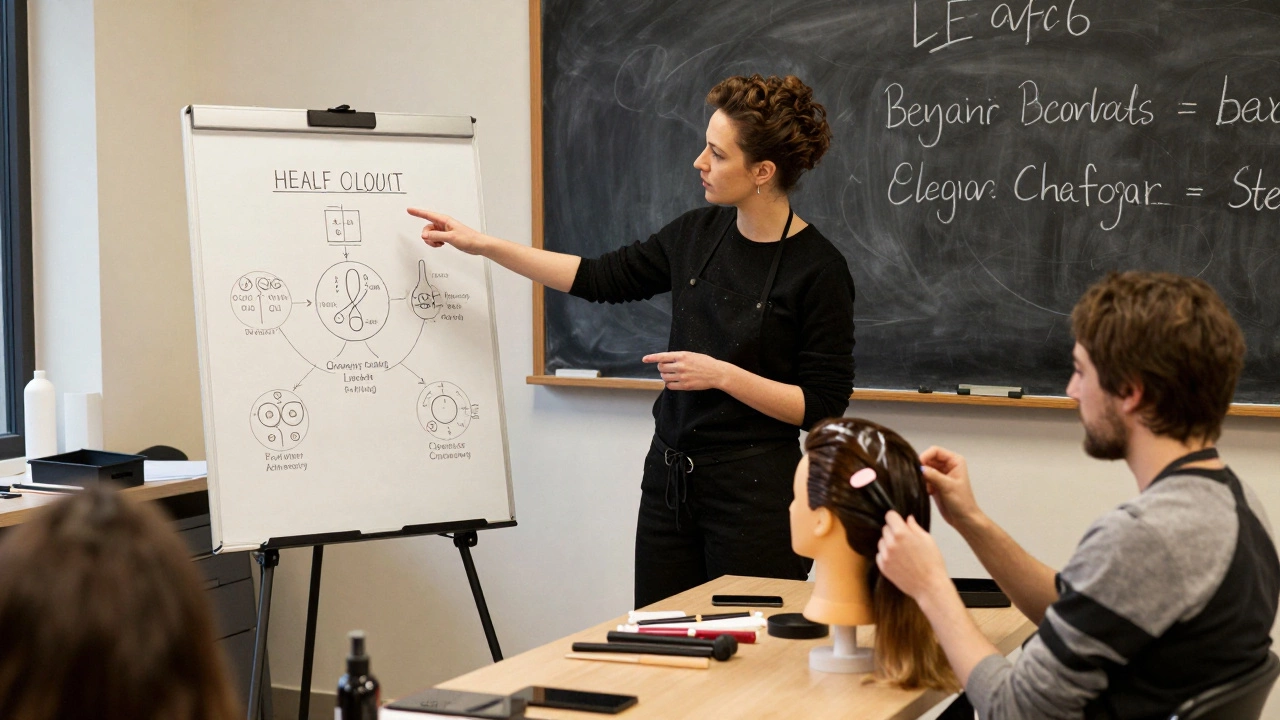
The Level 6 qualification is officially called the NVQ Level 6 Diploma in Hairdressing a nationally recognized, competency-based qualification in the UK that requires mastery of advanced hairdressing techniques, client management, and leadership skills. It’s not a short course. Most people take 12 to 24 months to complete it while working full-time. You’ll need to build a portfolio of real client work, write detailed case studies, and pass practical assessments with examiners from awarding bodies like City & Guilds or VTCT.
Why Is It So Hard to Get?
Level 6 isn’t about how many blow-drys you’ve done. It’s about proving you can handle complexity. Here’s what you’ll need to show:
- Designing and delivering advanced hair colour systems - including multi-tonal balayage, corrective colour, and colour theory applied to diverse hair textures
- Leading a team of stylists, managing schedules, and mentoring junior staff
- Conducting client consultations that go beyond style preferences - assessing scalp health, hair porosity, and long-term maintenance
- Writing research-based reports on industry trends, like how climate change affects hair product formulations
- Running training sessions for apprentices and documenting their progress
You can’t just walk into a college and sign up. Most providers require you to already hold a Level 3 NVQ (the standard professional qualification) and have at least three years of salon experience. Some even ask for a Level 4 or 5 qualification first. It’s designed for those already working at the top of their game.
Who Becomes a Level 6 Hairdresser?
It’s not for everyone. Most people who go for it have one of three goals:
- They want to open their own salon and need the credibility to attract investors or secure business loans
- They’re aiming to teach at a college or training centre - and Level 6 is mandatory for most teaching roles in further education
- They’re moving into product development, editorial styling, or brand consultancy - roles that require documented expertise
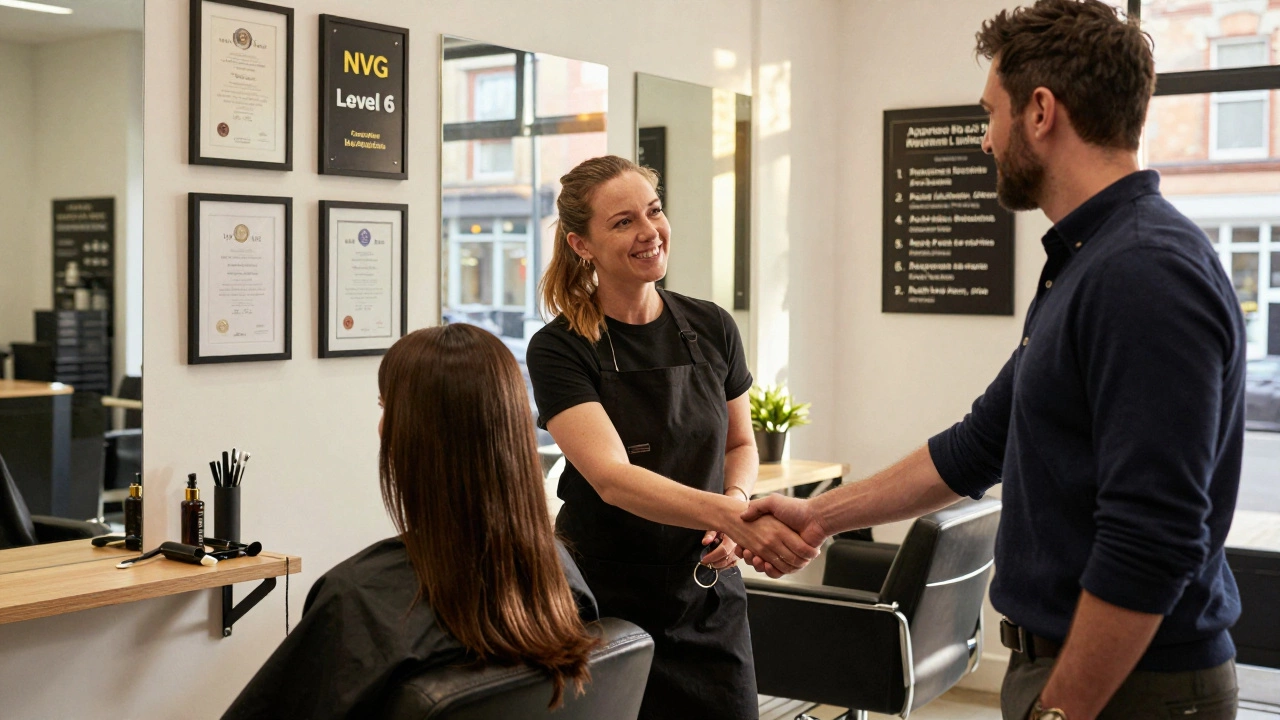
In Bristol, where I’ve seen this trend grow over the last five years, Level 6 holders are increasingly hired by high-end salons as creative directors. One salon owner told me they stopped hiring stylists with just Level 3 because they couldn’t handle client complaints about colour fading or inconsistent results. Level 6 stylists, on the other hand, can explain the science behind why a colour didn’t take - and how to fix it.
What Can You Do With It?
Here’s what Level 6 unlocks:
- Teaching qualifications - you can become a qualified assessor or internal verifier for other hairdressing students
- Eligibility for university courses - some universities accept Level 6 as entry into a BA in Fashion or Beauty Science
- Access to international certifications - many countries recognize UK Level 6 as equivalent to a bachelor’s degree
- Higher earning potential - Level 6 stylists in London salons can earn £45,000-£65,000 annually, compared to £28,000-£38,000 for Level 3
- Authority - you’re no longer just a stylist. You’re a professional with recognized expertise
It’s also a requirement if you want to become a registered member of the Hairdressing Council or apply for government-backed training grants to run your own apprenticeship programme.
How Is It Different From Level 3 or Level 4?
Let’s break it down:
| Level | Typical Role | Time to Complete | Key Focus | Next Step |
|---|---|---|---|---|
| Level 2 | Junior Stylist | 6-12 months | Basic cuts, shampooing, simple colour | Level 3 |
| Level 3 | Qualified Hairdresser | 1-2 years | Full service styling, advanced colour, client consultation | Level 4 |
| Level 4 | Senior Stylist / Team Leader | 1 year | Supervising staff, managing salon operations | Level 5 |
| Level 5 | Salon Manager / Trainer | 1 year | Business operations, staff training, compliance | Level 6 |
| Level 6 | Advanced Practitioner / Educator / Owner | 1-2 years | Research, innovation, leadership, teaching | Postgraduate study |
Level 3 gets you a job. Level 6 gets you influence.
Is It Worth the Effort?
It’s expensive. Course fees range from £3,000 to £6,000. You’ll need time off work for assessments. You’ll be writing essays, not cutting hair, for months. But if you’re serious about building something lasting - a brand, a school, a legacy - then yes. The UK’s hairdressing industry is changing. Clients now expect stylists who can explain chemical processes, recommend products based on scalp analysis, and train others. Level 6 proves you’re not just following trends - you’re shaping them.
One Level 6 graduate I spoke to in Bristol started a training programme for refugees entering the beauty industry. She now employs six apprentices. "I didn’t do it for the money," she said. "I did it because I wanted to be the person who could say, ‘Yes, you can do this too.’" That’s the real power of Level 6.
Where Can You Study It?
Not every college offers Level 6. You’ll need to find an awarding body-approved provider. In England, look for:
- City & Guilds - offers the Level 6 Diploma in Advanced Hairdressing
- VTCT - provides Level 6 in Hairdressing and Salon Management
- City of Bristol College - runs a Level 6 programme with industry partnerships
- South Gloucestershire and Stroud College - includes research modules and business development
Most courses are part-time, with one day a week in class and the rest spent in the salon. You’ll need a supportive employer who’s willing to let you take time off for assessments.
Final Thoughts
A Level 6 hairdresser isn’t just a better stylist. They’re a professional with the knowledge, authority, and credibility to lead the industry forward. If you’re thinking about it, ask yourself: Do I want to keep cutting hair - or do I want to change how hairdressing is taught, understood, and valued?
Is Level 6 the same as a degree?
Yes, Level 6 on the UK Regulated Qualifications Framework is equivalent to a bachelor’s degree. It’s not called a degree, but it holds the same academic weight. Many universities accept it for entry into postgraduate courses.
Can I do Level 6 without a Level 3?
No. Level 6 requires prior experience and qualifications. You must hold a Level 3 NVQ in Hairdressing and have at least three years of professional experience before you can even apply.
How much does a Level 6 hairdresser earn?
In London and major cities, Level 6 hairdressers typically earn between £45,000 and £65,000 per year. Those in leadership, education, or product roles can earn more. Outside major cities, salaries range from £35,000 to £50,000.
Do I need to go to college full-time?
No. Most Level 6 courses are designed for working professionals. You’ll usually attend college one day a week and complete the rest of your portfolio while working in a salon.
Can I become a teacher with Level 6?
Yes. Level 6 is the minimum requirement to become a qualified assessor or internal verifier in further education colleges. Many Level 6 hairdressers go on to teach NVQ courses at colleges across the UK.
Next Steps
If you’re thinking about Level 6, start by talking to your salon manager. Ask if they’ve supported other stylists through the process. Check with your local college - many offer free careers advice sessions for hairdressing professionals. And don’t wait until you feel "ready." Most people start when they’re still unsure. The qualification changes you more than you change it.


Write a comment