

Level 2 Hairdresser Career & Salary Estimator
Salary Calculator
Estimate your potential first-year earnings based on current UK market rates.
Estimated Annual Salary
Career Progression Timeline
Visualize your journey from entry-level to senior roles.
Junior Stylist
Focus on building speed, client retention, and mastering basic cuts/colors.
Senior Stylist
Pursuing Level 3, handling complex bookings, mentoring juniors.
Management / Specialist
Salon Manager, Education Lead, or Freelance expert.
Level 2 vs. Level 3 Comparison
| Feature | Level 2 Qualification | Level 3 Qualification |
|---|---|---|
| Primary Role | Execution of plans | Creative control & design |
| Technical Skills | Basic cuts, single-process color | Advanced geometry, balayage, correction |
| Client Interaction | Follow briefs accurately | Diagnose problems & create solutions |
| Autonomy | Low to Medium | High |
You walk into a salon. The person cutting your hair asks about your style preferences, checks your scalp health, and delivers a precise cut. But have you ever wondered what actually qualifies them to touch your scissors? In the UK, that qualification is usually a Level 2 hairdresser credential. It is the industry standard for entry-level professionals. It proves they can handle the basics safely and effectively.
If you are thinking about starting a career in hairdressing, or if you are just curious about who styles your hair, understanding this level is crucial. It is not just a piece of paper. It represents a specific set of skills, a legal framework for working with chemicals, and the foundation for all future expertise in the trade.
The Core Definition: What Does Level 2 Mean?
Level 2 Hairdressing is a vocational qualification that certifies an individual's competence in basic hairdressing services, including cutting, styling, and chemical treatments. It sits within the UK’s Regulated Qualifications Framework (RQF). Think of it as the 'driving license' for salons. You cannot legally work as a junior stylist without it in most professional settings.
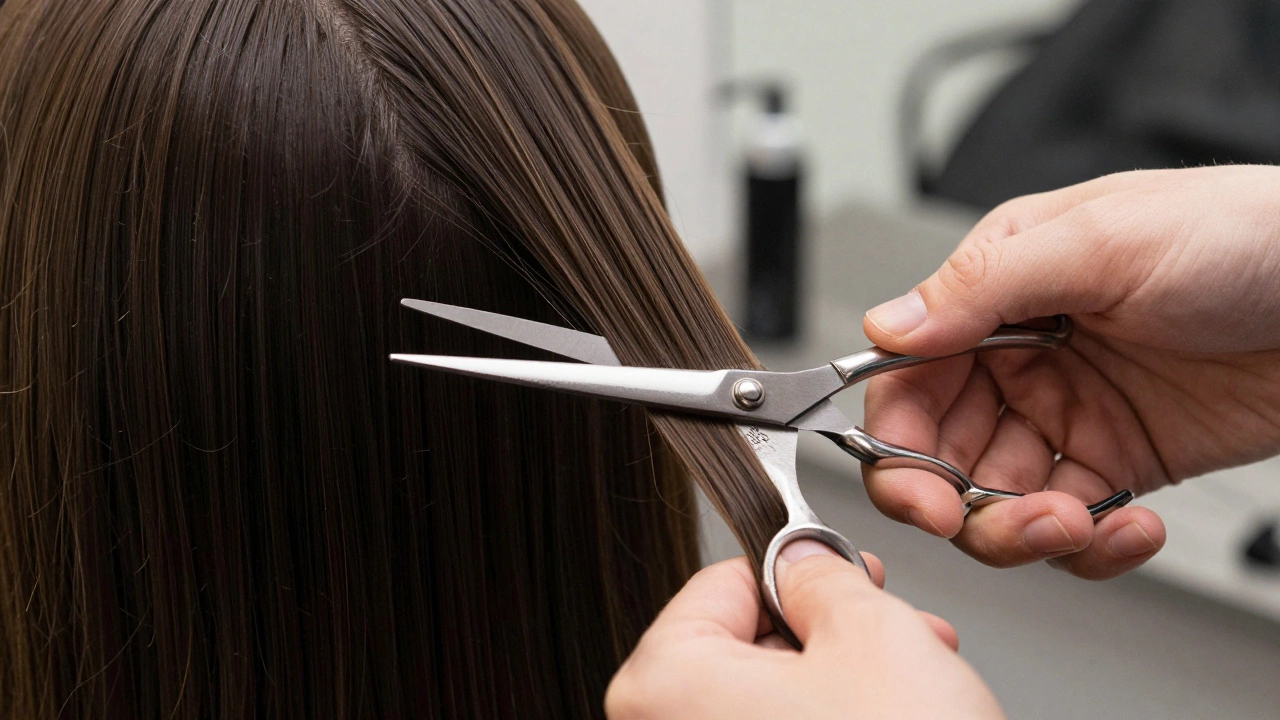
This qualification focuses on execution. A Level 2 hairdresser knows how to follow instructions from a senior stylist or client briefs accurately. They master the fundamental techniques: blunt cuts, layers, basic coloring, and blow-drying. They do not yet design complex color transformations or manage the business side of the salon. Their job is to deliver consistent, high-quality results on standard requests.
In practical terms, holding a Level 2 means you are qualified to:
- Cut and shape hair using various tools (scissors, thinning shears, razors).
- Apply permanent and semi-permanent color products safely.
- Perform basic waving and perming processes.
- Style hair for everyday wear and simple events.
- Maintain strict hygiene and health and safety standards.
How Do You Become a Level 2 Hairdresser?
There are two main routes to getting this qualification. Your choice depends on whether you prefer learning in a classroom setting or earning while you learn.
- Hairdressing Apprenticeships: This is the most common path. You work in a salon full-time (or part-time) under the supervision of experienced stylists. You study part-time at a college or training provider. You earn a wage while you learn. This route gives you real-world experience immediately. You deal with real clients, real pressures, and real feedback from day one.
- Full-Time College Courses: You attend a college or specialist hairdressing academy for a year. You spend most of your time in simulated salon environments. You practice on mannequins and each other. Towards the end of the course, you complete a work placement in a real salon. This route is better if you need more structured guidance before facing live clients.
Both routes lead to the same recognized qualification. In England, this is often an NVQ Level 2 in Hairdressing or an equivalent Diploma. In Scotland, it might be an SVQ. In Wales, it could be a BTEC. Despite the different names, the core competencies required are identical across the UK.
Key Skills and Competencies Assessed
Examiners do not just look at your final haircut. They assess your entire process. Here is what they scrutinize:
| Skill Area | Specific Requirements | Why It Matters |
|---|---|---|
| Cutting & Shaping | Blunt cuts, graduated cuts, layered cuts, texturizing | Foundation for all advanced styles |
| Coloring | Single-process color, highlights, lowlights, toning | Chemical knowledge prevents damage |
| Waving & Perming | Digital perms, cold waves, straightening | Structural change requires precision |
| Consultation | Client analysis, expectation management, aftercare advice | Builds trust and ensures satisfaction |
| Health & Safety | PPE usage, chemical storage, cross-contamination prevention | Legal requirement and client safety |
Notice the emphasis on consultation. Many beginners think hairdressing is just technical skill. It is not. A Level 2 hairdresser must learn to listen. If a client wants a bob but has heart-shaped face features that suit long layers, you need to advise them gently. This soft skill is tested just as rigorously as your scissor technique.
Level 2 vs. Level 3: What’s the Difference?
This is the most common question I hear. People assume Level 2 is 'junior' and Level 3 is 'senior.' That is partially true, but the distinction is deeper than just title.
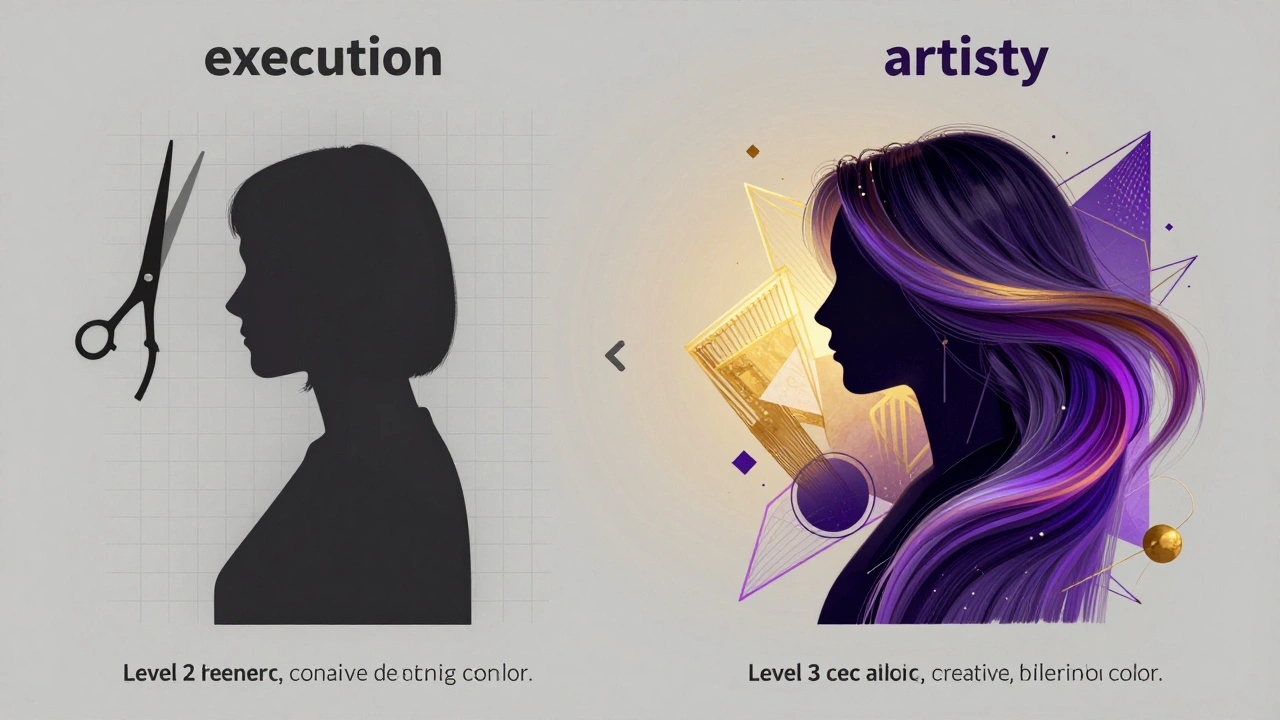
A Level 3 Hairdresser takes creative control. While a Level 2 follows a plan, a Level 3 creates the plan. Level 3 qualifications cover advanced color correction, complex highlighting techniques (like balayage and ombré), advanced cutting geometries, and salon management basics. Level 3 stylists can diagnose difficult hair problems and design solutions from scratch.
Think of it this way: A Level 2 hairdresser can perfectly execute a classic bob. A Level 3 hairdresser can decide that a client needs a textured lob with subtle ash tones to balance their skin undertones, and then create that look. Level 2 is about proficiency. Level 3 is about artistry and autonomy.
Salary Expectations and Career Progression
Money matters. So, what can you expect to earn as a newly qualified Level 2 hairdresser in the UK in 2026?
Salaries vary wildly by location. In London, you might start around £18,000-£22,000 per year. In Bristol or Manchester, it could be £15,000-£19,000. In smaller towns, it might be lower. However, these figures rarely tell the whole story. Most hairdressers earn through commission or share deals. Your income depends directly on your speed, efficiency, and ability to build a loyal client base.
Progression typically looks like this:
- Year 1-2: Junior Stylist (Level 2 qualified). Focus on building speed and client retention.
- Year 3-4: Senior Stylist (often pursuing or holding Level 3). Taking more complex bookings, mentoring juniors.
- Year 5+: Salon Manager, Education Lead, or Freelance Stylist. Managing operations, training staff, or running your own chair.
Some choose to specialize early. Becoming an expert in color correction or bridal styling can command higher prices even at Level 2, provided you have built a strong reputation.
Is a Level 2 Qualification Worth It?
Absolutely. Without it, your options are severely limited. You cannot work in a reputable salon. You cannot buy professional-grade chemicals legally. You lack the insurance coverage that protects you and your clients if something goes wrong. More importantly, you miss out on the structured learning that prevents bad habits. Self-taught stylists often struggle with consistency and safety protocols.
The investment of time and money pays off. The demand for skilled hairdressers remains steady. People always need haircuts. They always want color. By securing a Level 2 qualification, you are entering a resilient industry with clear pathways for growth. It is a trade that respects skill, creativity, and hard work.
Choosing the Right Course
Not all courses are created equal. When looking for a provider, check these three things:
- Salaried Placement Support: If you choose an apprenticeship, does the college help you find a salon? A good placement is half the battle.
- Facilities: Visit the salon suite. Are the chairs comfortable? Is the lighting good? Do they use current products? Outdated equipment leads to outdated skills.
- Pass Rates: Ask for recent exam results. High pass rates indicate effective teaching and support.
Also, consider the vibe. Hairdressing is social. You will spend hours with your classmates and mentors. Choose a environment where you feel supported and inspired.
Can I work as a hairdresser without a Level 2 qualification?
Technically, yes, but practically, no. Most reputable salons require proof of qualification for insurance and legal reasons. Working without it limits your job prospects significantly and may leave you uninsured against accidents or complaints. Some small, informal setups might hire unqualified helpers, but these roles offer little progression or protection.
How long does it take to complete a Level 2 Hairdressing course?
A full-time college course typically takes one academic year (around 9-10 months). An apprenticeship usually lasts between 12 to 18 months, depending on the pace of learning and the requirements of the specific awarding body. Part-time options exist but can extend the duration to two years or more.
Do I need GCSEs to start a Level 2 Hairdressing course?
Most colleges and apprenticeship providers do not require specific GCSE grades for entry into Level 2 vocational courses. However, you may need to demonstrate basic literacy and numeracy skills, as you will need to read product instructions carefully and calculate mixing ratios for colors. Some providers offer entry tests or interviews to assess suitability.
What is the difference between NVQ and BTEC in hairdressing?
Both are valid Level 2 qualifications. NVQs (National Vocational Qualifications) are competency-based, meaning you prove you can do the job in a real work setting. BTECs (Business and Technology Education Council) are more coursework and exam-based, often taught in a college setting. Employers generally view them as equivalent for entry-level positions.
Can I specialize in coloring after Level 2?
Yes, but you will need further training. Level 2 covers basic coloring. To become a color specialist, you should pursue Level 3 qualifications or short courses in advanced color theory, correction, and techniques like balayage. Many salons sponsor employees for these additional courses once they have proven their reliability at Level 2.



Write a comment