
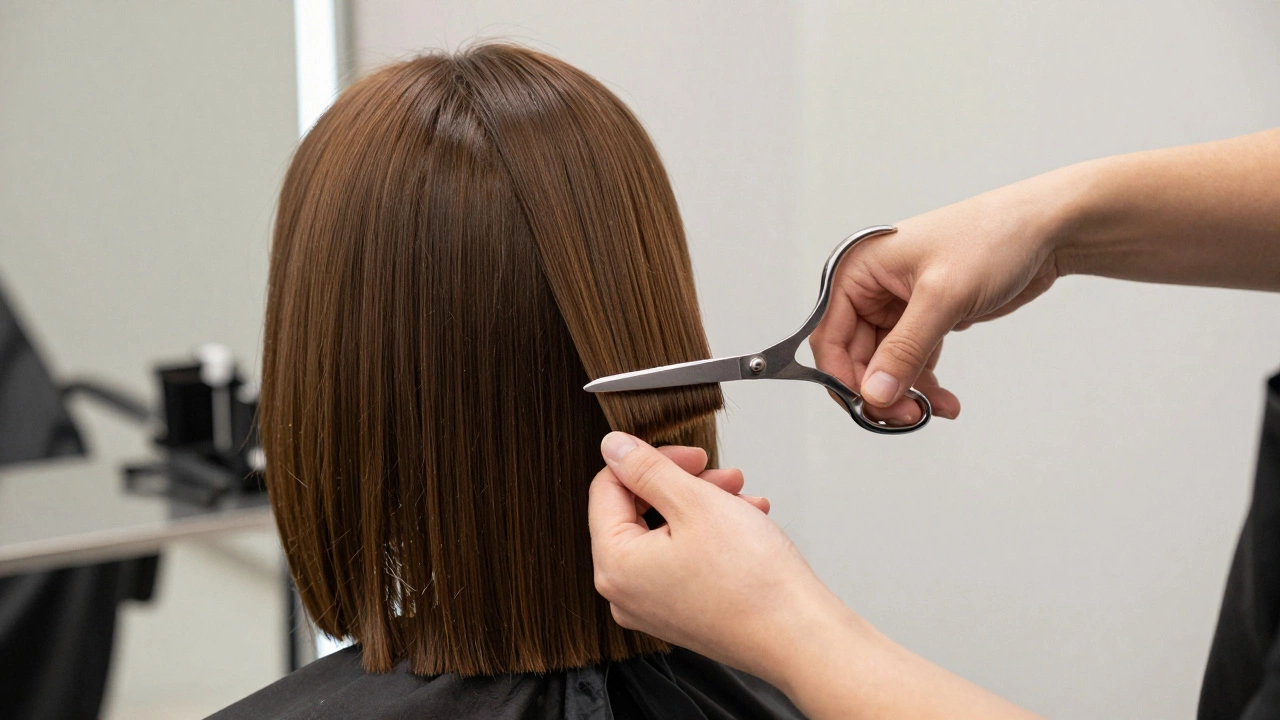
Haircut Elevation Simulator & Suitability Checker
Blunt Cut (Solid Form)
Hair is held straight down, perpendicular to the head. Creates a heavy, sharp line with no layers.
- Elevation: 0 Degrees
- Weight Line: Heavy at perimeter
- Visual Effect: Smooth, sleek, uniform
- Best For: Straight/Wavy Hair
The Straight Answer: It’s a Blunt Cut
You’ve heard the term “0 degree” in a salon or a training college. You want to know what that actually means for your hair. The short answer is simple: a 0 degree haircut is most commonly known as a blunt cut.
In the world of professional hairdressing, we use degrees to describe the angle at which we hold the hair while cutting it. When you hold the hair straight down, perpendicular to the head (at 0 degrees), and cut across it horizontally, you create a solid, heavy line with no layers. This technique removes weight evenly from the ends, creating maximum density and shine.
If you are studying for your NVQ Level 2 in Hairdressing or just trying to understand what to ask your stylist, knowing this terminology is crucial. It’s not just about the name; it’s about understanding the shape, the maintenance, and whether this style will actually work for your hair type.
Understanding the Geometry: What Does 0 Degrees Mean?
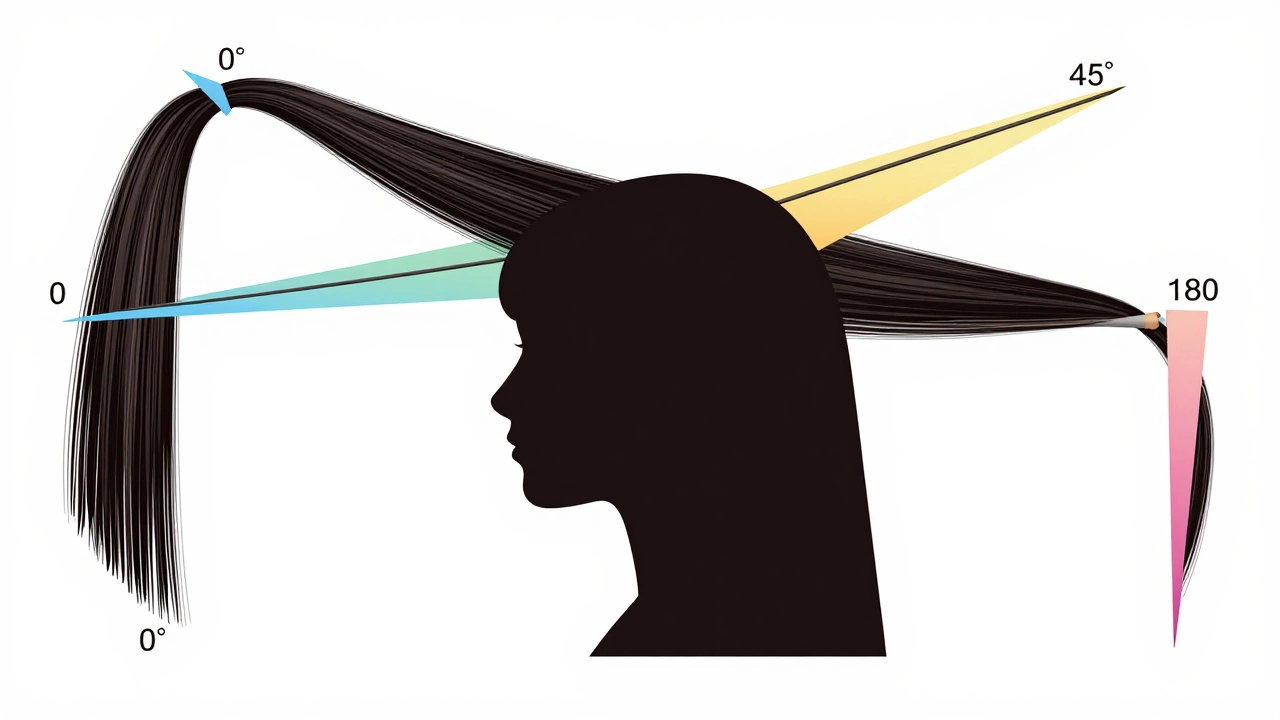
To really get this right, you need to look at the mechanics. Hair cutting is essentially geometry applied to biology. The "degree" refers to the elevation of the hair section relative to the head shape.
- 0 Degrees (Low Elevation): The hair falls naturally toward the shoulders. You cut parallel to the floor. This creates a solid form. All lengths are the same (or nearly the same). This is the classic bob or lob.
- 45 Degrees (Medium Elevation): The hair is pulled out halfway between the head and vertical. This introduces slight layering and movement.
- 90 Degrees (High Elevation): The hair is pulled straight out from the head. This creates significant layering and removes weight from the bottom.
- 180 Degrees (Overdirection): The hair is pulled straight up. This creates long layers and volume on top.
When a stylist says they are cutting at 0 degrees, they are committing to a single length. There is no graduation (stacking) and no layering. The result is a clean, sharp line. For students in hairdressing courses, mastering the 0-degree cut is often the first major milestone because it requires precision. If your hands shake or your tension is uneven, the line will be jagged, and there are no layers to hide it.
Solid Form vs. Graduated Form: Clearing Up Confusion
Newcomers to the trade often confuse "solid form" with "graduated form." Both can technically be cut at low angles, but the outcome is different.
| Feature | Solid Form (0 Degree / Blunt) | Graduated Form (Stacked) |
|---|---|---|
| Elevation | 0 degrees (straight down) | Usually 45-90 degrees at the nape |
| Weight Line | Evenly distributed, heavy at the perimeter | Built up at the back (stacked) |
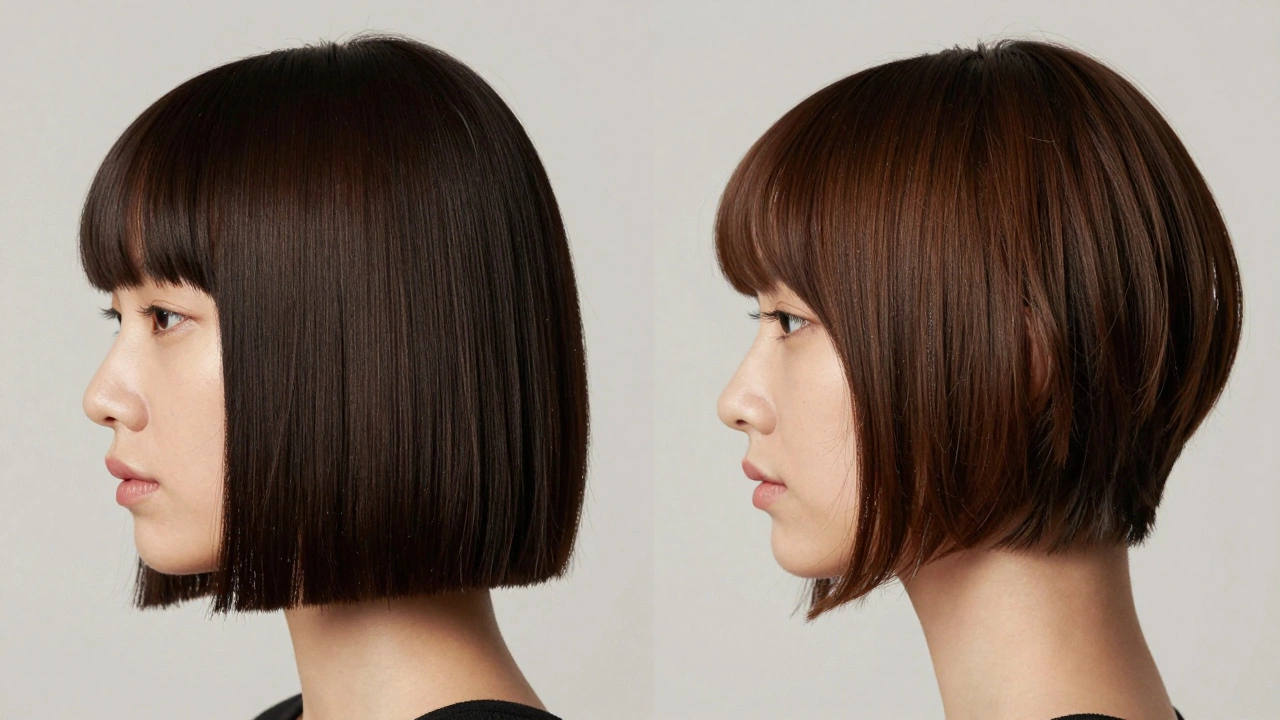
| Visual Effect | Smooth, sleek, uniform thickness | Volume at the crown, shorter at the nape |
| Common Names | Blunt cut, One-length, Bob | Stacked bob, A-line (sometimes) |
| Maintenance | High (line must stay sharp) | Medium (shape holds itself better) |
A true 0-degree cut is solid form. It does not have the "stack" of a graduated bob. If you see a bob that is shorter in the back and longer in the front, that is an A-line cut, which uses overdirection, not a pure 0-degree solid form. Understanding this distinction helps you communicate exactly what you want. If you say "blunt," you usually mean solid form. If you say "layered," you are moving away from 0 degrees.
Who Should Get a 0 Degree Haircut?
Not every head shape or hair texture suits a blunt cut. Because the style relies on a clean line, it exposes every imperfection in the cut and every irregularity in the hair texture.
Best for:
- Straight to Wavy Hair: These textures fall smoothly, allowing the line to sit perfectly. Fine hair benefits hugely from this cut because the lack of layers makes the hair look thicker and fuller.
- Oval and Heart Face Shapes: The strong horizontal line balances these face shapes well. A chin-length blunt cut can define the jawline beautifully.
- People Who Want Low-Styling Effort: Once blow-dried straight, a blunt cut often looks finished without much product.
Be Careful With:
- Tightly Curly or Coily Hair: While curly haircuts exist, a traditional 0-degree blunt cut is difficult to achieve visually because curls shrink and bounce differently. Cutting curly hair at 0 degrees often results in a triangular shape when dry unless specialized techniques (like DevaCut or Rezo Method) are used.
- Thin, Sparse Hair: While it adds illusion of thickness, if the hair is too fine, the weight of the unlayered hair can drag it down, making it look flat against the scalp.
- Round Faces: A blunt line at the chin can widen the appearance of a round face. Side-swept bangs or softening the ends slightly might be better options.
Why Do Stylists Use Degree Terminology?
If you are taking NVQ courses or vocational training in Bristol or anywhere else in the UK, you will hear this language constantly. It’s not just jargon to sound smart; it’s a universal code.
Imagine a senior stylist telling a junior assistant, "Take off the weight at 45 degrees." If they said, "Layer it a bit," the result could vary wildly. "45 degrees" gives a precise instruction on how to hold the comb and where to place the scissors. It ensures consistency across different stylists and salons.
For clients, learning this basic vocabulary empowers you. Instead of bringing a vague picture, you can say, "I want a solid form cut, 0 degrees, with a blunt fringe." This tells the stylist exactly what structural integrity you are looking for. It reduces the risk of misunderstanding, which is the number one cause of bad haircuts.
Maintaining the Sharp Line
A 0-degree haircut is high-maintenance in terms of precision, even if it’s low-effort in terms of daily styling. Because there are no layers to blend growth, the regrowth line is very obvious.
Key Maintenance Tips:
- Regular Trims: You’ll likely need a trim every 6 to 8 weeks to keep the line sharp. If you wait too long, the ends will start to split, and since all the hair is one length, the split ends will travel up the shaft faster than in layered hair.
- Heat Protection: Blunt cuts look best when straight and sleek. Heat styling is common, so always use a heat protectant spray to prevent damage that ruins the smooth finish.
- Conditioning: Keep the ends hydrated. Dry, brittle ends will fray and ruin the clean edge of the cut.
- Brush Choice: Use a paddle brush or vented brush when blow-drying to ensure the hair lays flat and follows the line of the cut.
Alternatives to Consider
If you love the idea of a blunt cut but are worried about the maintenance or your hair type, consider these variations that still use low-elevation techniques but offer more forgiveness:
- Softened Blunt Cut: The stylist cuts at 0 degrees but then uses point-cutting techniques on the ends. This breaks up the hard line slightly, adding texture while keeping the overall solid form. Great for wavy hair.
- The Lob (Long Bob): A blunt cut that hits at the collarbone or mid-neck. It’s easier to grow out than a short bob and less severe on the face.
- Face-Framing Layers: Keep the back at 0 degrees (solid) but add light layers around the face (higher elevation). This gives you the thickness of a blunt cut with the softness of layers where it matters most.
Frequently Asked Questions
Is a 0 degree haircut the same as a bob?
Not necessarily. A bob is a length (usually chin-length or above), while 0 degrees is a cutting technique. However, most classic bobs are cut using 0-degree elevation to create that signature solid, heavy line. So, while all 0-degree cuts aren't bobs (you can have a long 0-degree cut), most bobs are 0-degree cuts.
Can I get a 0 degree haircut if I have curly hair?
It depends on your curl pattern. For loose waves, yes, it works well. For tight curls, a traditional 0-degree cut may look uneven when dry due to shrinkage. Specialized curly hair cutting methods often cut the hair while it is dry or stretched, rather than using standard wet-cutting degrees, to ensure the shape works with the curl pattern.
Why do hairdressers talk about degrees?
Degrees provide a standardized way to communicate cutting techniques. It ensures that when a stylist says "45 degrees," every other trained stylist knows exactly how much elevation to use. It removes ambiguity and helps in replicating styles accurately, which is essential in professional training and salon environments.
Does a 0 degree haircut make thin hair look thicker?
Yes, generally. By removing layers, you keep the full density of the hair at the ends. This creates a solid mass of hair that appears fuller and healthier. Layered hair can sometimes look wispy or sparse at the ends, whereas a blunt cut maximizes the visual weight of the hair.
How often should I trim a 0 degree haircut?
To maintain the sharp, clean line, trims every 6 to 8 weeks are recommended. Because there are no layers to camouflage growth, the regrowth line is very visible. Regular trims also prevent split ends from traveling up the hair shaft, which is more noticeable in one-length styles.
What is the difference between a blunt cut and a stacked cut?
A blunt cut (0 degrees) has a solid, even line with no buildup. A stacked cut involves graduation, where the hair is cut at higher elevations (usually 45-90 degrees) at the nape to create volume and a curved shape. Stacked cuts are shorter in the back and longer towards the front, while blunt cuts are typically one length all around.
Is a 0 degree haircut easy to style?
For straight hair, yes. It often requires just a blow-dry with a round brush to smooth the cuticle and enhance shine. However, it demands precision; if your hair is frizzy or unruly, the blunt line can highlight those issues. It’s less forgiving than layered cuts, which can hide texture irregularities.


Write a comment