

Safety Knowledge Quiz
The Big 3 Safety Challenge
Test your knowledge of the essential workplace safety principles. Answer all questions correctly to demonstrate mastery of the Big 3 safety rules.
1. Hazard Identification
2. Risk Control
3. Proper PPE Use
Results
Score: 0/3
Every year, millions of workers around the world avoid serious injury or death-not because they got lucky, but because they followed three simple, non-negotiable safety rules. These aren’t fancy protocols or expensive gadgets. They’re the big 3 in safety: hazard identification, risk control, and proper PPE use. If you work in construction, manufacturing, healthcare, or even an office with a forklift in the loading bay, these three things are your first and last line of defense.
1. Hazard Identification: See It Before It Hits You
Before you can fix a problem, you have to know it exists. That’s hazard identification in a nutshell. It’s not about waiting for an accident to happen and then blaming someone. It’s about looking around before you start work and asking: What could go wrong here?
Think about a warehouse worker rolling a pallet of boxes. The hazard isn’t just the weight. It’s the uneven floor, the flickering light over the aisle, the frayed strap on the pallet truck, or the colleague walking backward while texting. All of it adds up.
The Health and Safety Executive (HSE) in the UK found that over 60% of workplace accidents could have been prevented if hazards had been spotted and reported early. That’s not a guess-it’s data from incident logs across 1,200 sites in 2024. Workers who do daily safety walks, even for five minutes, cut their risk of injury by nearly half.
It doesn’t take a safety officer to spot hazards. You just need to be curious. If something feels off, it probably is. If you’re unsure, stop and ask. No one gets in trouble for pointing out a risk. They get praised for it.
2. Risk Control: Stop It Before It Starts
Spotting a hazard is only half the job. The real work is controlling it. Risk control means taking action to make the hazard less dangerous-or removing it entirely.
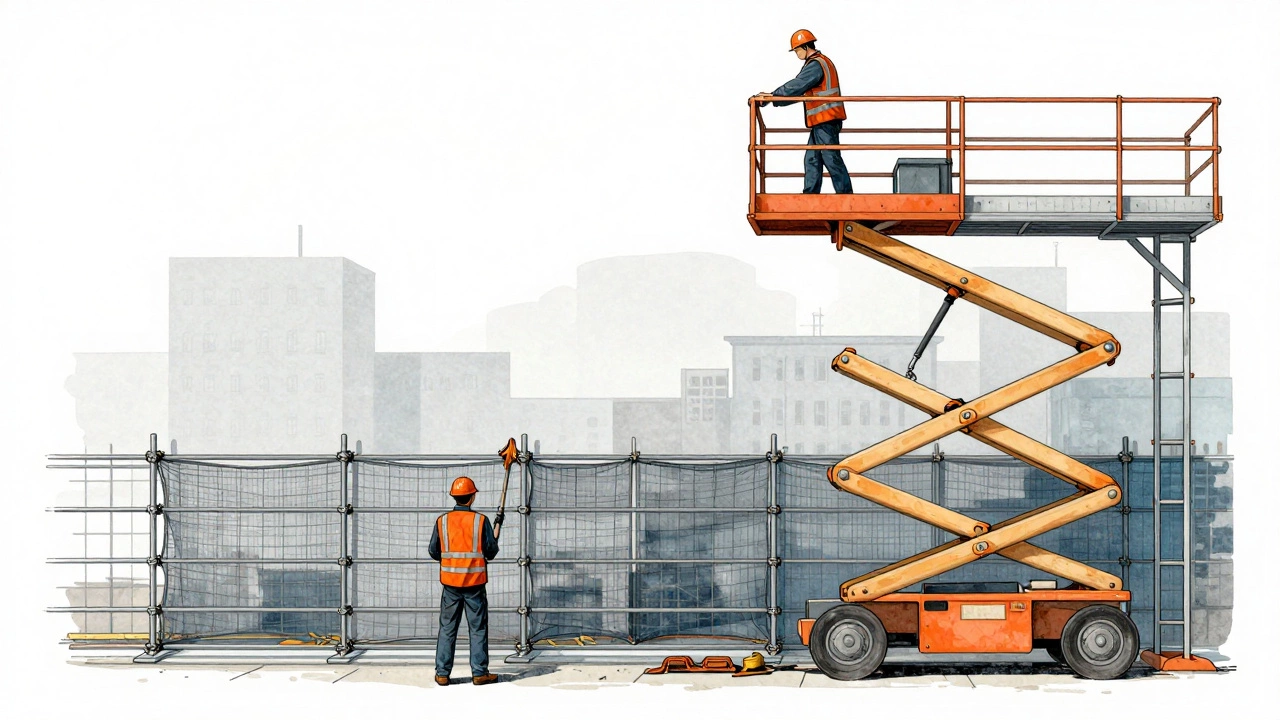
Let’s say you’re working on a roof. The hazard? Falling. The risk control? Not just wearing a harness. It’s putting up guardrails first. Then using a safety net below. Then, only after those are in place, attaching your harness. That’s called the hierarchy of controls, and it’s the gold standard in safety.
The hierarchy goes like this:
- Elimination - Remove the hazard completely. Can you do the job from the ground? Do it there.
- Substitution - Swap the dangerous thing for a safer one. Use water-based paint instead of solvent-based.
- Engineering Controls - Change the environment. Install machine guards, ventilation systems, or automated lifts.
- Administrative Controls - Change how people work. Rotate tasks, limit exposure time, add signage.
- PPE - Last resort. Gloves, helmets, earplugs. This is where most people stop-but it’s the weakest layer.
Companies that follow this order see 70% fewer incidents than those who rely only on PPE. In 2023, a construction firm in Bristol switched from relying on hard hats alone to installing edge protection on all scaffolds. Their fall-related injuries dropped from 12 to 1 in six months.
3. Proper PPE Use: Wear It Right, or Don’t Bother
Personal Protective Equipment (PPE) is the last line of defense. And too often, it’s treated like a costume.
Wearing a hard hat with the strap undone? That’s not safety-it’s theater. Using gloves that are torn or too big? You’re not protected-you’re just carrying a risk around.
According to a 2024 audit by the British Safety Council, 43% of workers admitted to not wearing PPE correctly because it was ‘uncomfortable’ or ‘too hot.’ That’s not a minor issue. It’s a death sentence waiting to happen.
Proper PPE use means three things:
- Right gear for the job - Don’t use gardening gloves when handling chemicals. Don’t wear flip-flops on a site.
- Correct fit - A mask that leaks isn’t a mask. Safety glasses that slide down your nose won’t protect your eyes.
- Consistent use - Put it on before you start. Take it off only when you’re done and safe.
One factory in Bristol started doing daily PPE checks at shift change. Workers helped each other adjust straps, check seals, and report damaged gear. Within a year, near-miss reports went up by 300%-because people were paying attention. And serious injuries? Down 80%.
Why These Three? Not Five, Not Ten
You’ll hear about ‘the five pillars of safety’ or ‘seven steps to zero accidents.’ Those are useful frameworks-but they’re not the foundation.
The big 3 are the core because they’re universal. No matter your job-whether you’re cleaning hospital floors, welding steel, or stacking shelves-you need to:
- See what’s dangerous
- Do something about it
- Protect yourself when you can’t remove the danger
These aren’t rules written by bureaucrats. They’re rules born from real injuries, real deaths, and real survivors who said: ‘I wish someone had told me this sooner.’
When a new worker starts on a site, they’re handed a 50-page manual. But they don’t need to memorize it. They need to remember these three things. Everything else is detail. These three are the structure.
What Happens When You Skip One?
Let’s say you’re a warehouse worker who ignores hazard identification. You don’t notice the oil leak near the forklift ramp. You skip risk control-you don’t report it. You put on your steel-toe boots, but you think, ‘I’m fine, I’m careful.’
Then you step on the oil. You fall. Your ankle snaps. Your back hits the concrete. You’re out for six months. Your employer pays for your medical bills. The company pays for the downtime. The team has to pick up your work.
That’s not an accident. That’s a failure of the big 3.
Now imagine you did the opposite: You saw the oil. You put down absorbent pads. You taped off the area. You told your supervisor. You wore your boots and non-slip shoes. That’s how safety works. Not perfectly. But reliably.

Real People. Real Results.
At a food processing plant in Bristol, workers started a simple habit: Every morning, before clocking in, they stood in a circle and shared one hazard they’d seen the day before. No names. No blame. Just facts.
One person mentioned a loose wire near the conveyor belt. Another said the emergency stop button was covered in flour. A third noticed a worker wasn’t wearing ear protection near the mixer.
Within three months, the plant went from 14 safety incidents in six months to zero. Not because they bought new machines. Not because they hired more supervisors. Because they started talking-and listening.
It’s Not About Compliance. It’s About Care.
Safety isn’t about ticking boxes for an inspector. It’s about going home at night with your body intact. It’s about your teammate making it to their kid’s school play. It’s about not being the person who says, ‘I didn’t think it would happen to me.’
The big 3 in safety are simple. But they’re not easy. They require attention. They require courage. They require you to speak up-even when it’s awkward.
So the next time you walk into a workspace, ask yourself:
- What’s the hazard I can’t see right now?
- What can I do to stop it before it starts?
- Am I wearing the right gear, and am I wearing it right?
If you answer those three questions honestly every day, you’re not just following rules. You’re building a culture where no one has to get hurt to learn a lesson.
What are the big 3 in safety?
The big 3 in safety are hazard identification, risk control, and proper use of personal protective equipment (PPE). These are the foundational practices that prevent most workplace injuries, no matter the industry. They’re not optional extras-they’re the core of every effective safety program.
Why are these called the big 3 and not something else?
Because they cover the entire lifecycle of a safety risk: seeing it, stopping it, and protecting yourself if you can’t stop it. Other frameworks add layers-like training or documentation-but those are support systems. The big 3 are the action points that directly prevent harm. If you get these right, you don’t need a long checklist.
Is PPE really the last resort?
Yes. PPE protects you after all other controls have failed. Relying on gloves, masks, or helmets alone is like wearing a seatbelt but ignoring the fact your brakes are worn out. The best safety programs fix the problem at the source-like installing guards on machines or redesigning workflows-before asking people to wear gear.
Can the big 3 apply to office workers?
Absolutely. Office hazards include tripping over cords, repetitive strain from poor ergonomics, or stress from unrealistic deadlines. Hazard ID? Spot the loose cable. Risk control? Tape it down or reroute it. PPE? Maybe wrist supports or an ergonomic chair. Safety isn’t just hard hats and vests-it’s about protecting your body wherever you are.
What if my workplace doesn’t train me on this?
You don’t need permission to be safe. Start by observing: What’s risky here? Then take small steps-clean up your area, report a hazard, wear your glasses if you need them. If others see you doing it, they’ll follow. Real safety culture starts with one person who decides to do the right thing-even when no one’s watching.

Write a comment