

OSHA 10 Exam Score Calculator
Calculate Your OSHA 10 Exam Score
The OSHA 10 exam requires 7 correct answers (70%) out of 10 questions to pass. Enter how many questions you answered correctly and see if you passed.
Enter your correct answers to see your score and passing status.
People ask if the OSHA 10 test is hard because they’re worried about failing-especially if they’ve never taken a safety course before. The truth? It’s not hard if you pay attention. Most people pass on their first try, even if they’re not tech-savvy or haven’t studied in years. The test doesn’t trick you. It doesn’t ask obscure questions. It just checks if you actually listened to the material.
What the OSHA 10 test actually covers
The OSHA 10-hour course is designed for entry-level workers in construction, manufacturing, and general industry. The final exam is based entirely on the 10 hours of training you’ve already done. There’s no surprise content. No hidden material. Everything you need to know is right there in the course.
The test typically has 10 multiple-choice questions. You need to score at least 70% to pass. That means you can miss three questions and still walk away with your card. The questions are straightforward: identifying hazards, knowing safety procedures, recalling OSHA standards like fall protection or lockout/tagout, and understanding your rights as a worker.
For example, you might see a question like: “What’s the minimum height that requires fall protection in construction?” The answer is 6 feet. Or: “Who is responsible for providing safety training?” The answer is the employer. These aren’t trick questions. They’re facts you hear during the course.
Why most people pass without stress
Many workers think they need to cram the night before. That’s not how it works. The course is designed to be absorbed slowly. You watch videos, read handouts, and take short quizzes after each section. These aren’t graded-they’re practice. And that’s the key.
One electrician from Ohio told me he passed because he took notes on his phone during the course. He didn’t memorize. He just remembered what stood out. “The part about ladder safety stuck with me because I’d nearly fallen last year,” he said. That’s how it works. Real-life connections make the info stick.
Online courses let you pause, rewind, and rewatch. If you’re unsure about a topic, go back. Spend five extra minutes on it. Don’t rush through just to finish. The test isn’t timed. You can take as long as you need. There’s no pressure to move fast.
What makes the test feel hard
The test only feels hard if you skip the course. Some people sign up, log in once, and try to pass by guessing. That never works. OSHA 10 isn’t a pop quiz. It’s a confirmation you paid attention.
Another reason people struggle? They confuse OSHA 10 with OSHA 30. The 30-hour course is longer, more detailed, and has a harder exam. But OSHA 10? It’s the bare minimum. It’s meant for workers who need basic awareness-not supervisors or safety managers.
Also, some third-party providers use confusing language in their quizzes. They might say “Which of the following is NOT a common hazard?” instead of “Which is a hazard?” That trips people up. But the real OSHA 10 test uses clear, plain language. If your course feels overly complicated, switch providers. Look for ones that use OSHA’s own materials.
How to prepare-without studying
You don’t need flashcards or practice tests. But here’s what helps:
- Watch the entire course. Don’t skip videos, even if they seem boring.
- Take notes on anything that sounds like a rule. “Must wear hard hat here,” “No loose clothing near machinery,” “Report unsafe conditions.”
- Pay attention to numbers. 6 feet for falls, 15 seconds for emergency eyewash, 12 inches for guardrail gaps. These show up often.
- Ask questions during live sessions. If you’re confused, someone else is too.
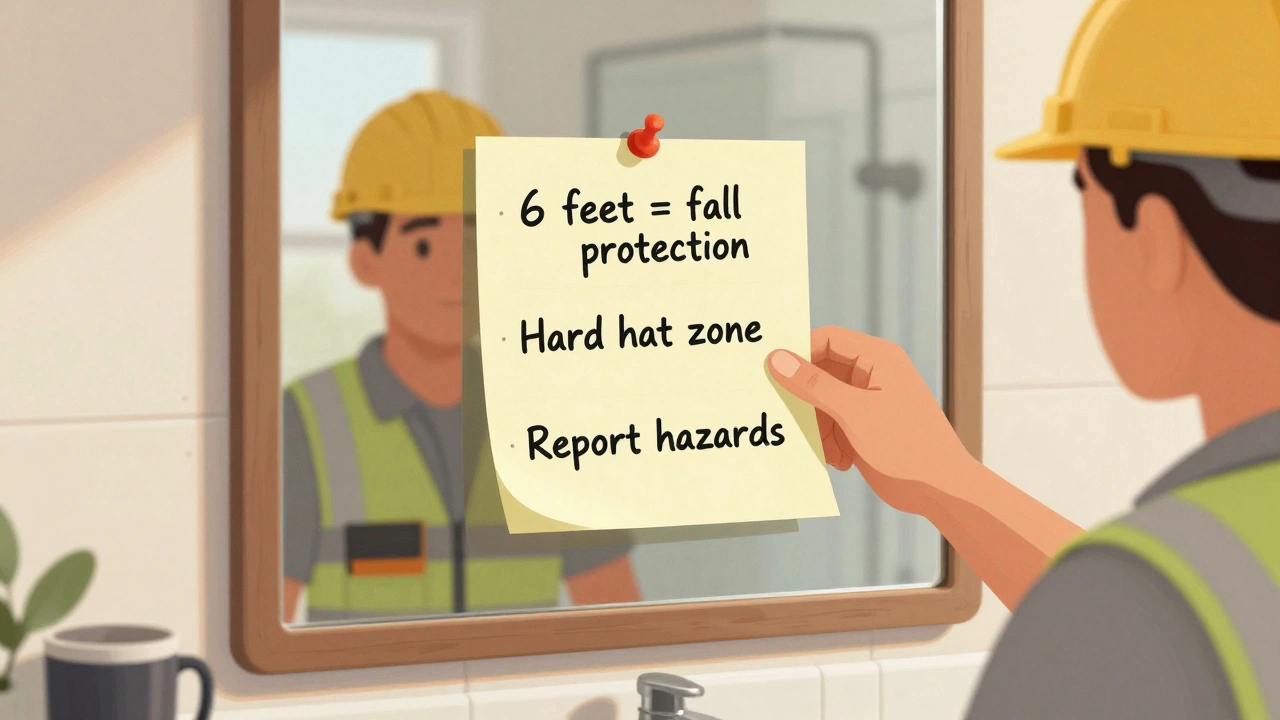
One warehouse worker in Texas passed by writing down three key rules on a sticky note and putting it on her mirror. She read it every morning. She didn’t memorize. She just kept seeing the same info until it clicked.
What happens if you fail
Most providers let you retake the test. You usually get two or three tries. If you fail all attempts, you’ll have to retake the whole course. That’s rare. Most people pass on the second try after going back over the material.
The key isn’t to panic. If you fail, it’s not because you’re bad at tests. It’s because you missed something small. Go back. Watch the section on hazard communication again. Or review the part about electrical safety. You’ll find the gap.
And remember: you’re not being judged. This isn’t school. It’s about keeping you alive on the job. The goal isn’t to fail you-it’s to make sure you know how to stay safe.
Who should take OSHA 10
OSHA 10 is for entry-level workers. If you’re new to construction, warehousing, manufacturing, or even landscaping, you’ll likely need it. Some employers require it before you start. Others just recommend it.
It’s not for safety managers, supervisors, or engineers. Those people need OSHA 30. It’s also not for healthcare workers-that’s a different standard (like OSHA Bloodborne Pathogens). Don’t confuse the two.
If you’re working on a site with heavy equipment, ladders, or power tools, OSHA 10 is your baseline. It’s the first layer of protection.
Real stories from people who passed
A 58-year-old carpenter from Michigan said he thought he’d fail because he hadn’t been in school since the 80s. He watched the course on his tablet while eating lunch. Took notes on napkins. Passed on the first try. “I just remembered the stuff that mattered to me,” he said.
A college student working part-time at a warehouse failed his first attempt because he didn’t watch the whole course. He skipped the last module on emergency exits. On the second try, he watched it. Passed with 90%.
These aren’t outliers. They’re normal people who treated the course like a conversation, not a test.
Final advice: Don’t overthink it
The OSHA 10 test isn’t hard. It’s designed to be passed by anyone who pays attention. It’s not about intelligence. It’s about care. If you care enough to sit through the course, you’ll pass.
Don’t waste money on expensive prep books or practice exams. The official course materials are enough. Use your time wisely-watch, listen, take one note. That’s it.
And when you get your card? Keep it in your wallet. Not because you need to show it every day. But because it’s proof you took a step to protect yourself-and that matters more than any grade.



Write a comment