

Hairdressing Earnings Calculator
Calculate Your Potential Earnings
Your Estimated Income
Weekly Earnings: £0
Monthly Earnings: £0
Annual Earnings: £0
Industry Insight: As mentioned in the article, many stylists earn £30,000-£40,000 in mid-career stages with consistent client base and service quality.
Pro Tip: Top earners often focus on premium services (extensions, treatments) which can increase service price by £100-£300.
Is hairdressing a good career? If you’ve ever stood behind a chair, scissors in hand, watching a client’s face light up when they see their new look, you know there’s something special about this job. But is it stable? Is it worth the training? Can you actually make a living? Let’s cut through the fluff and talk about what hairdressing really looks like in 2025.
It’s not just about cutting hair
Most people think hairdressing is about styling and coloring. It’s not. It’s about listening. It’s about reading body language. It’s about remembering that Mrs. Patel hates her fringe cut too short, or that Jamal always wants his fade tighter on the left side. You’re not just a technician-you’re a therapist, a confidant, a problem solver. Clients come in stressed, celebratory, heartbroken, or just bored. Your job is to give them back their confidence, one snip at a time.
That’s why the best stylists don’t just learn how to blend color or layer a bob. They learn communication. They learn how to manage time, handle difficult clients, and stay calm when someone walks in at 9 a.m. demanding a full head of platinum blonde after years of dark brown. Hairdressing courses today don’t just teach technique-they teach emotional intelligence. In Bristol, top schools like The Hair Academy now include client psychology modules in their Level 2 and 3 NVQ programs.
The money isn’t what you think
Let’s get real about pay. Entry-level assistants in salons might start at £18,000-£20,000 a year. That sounds low. But here’s what most people don’t tell you: once you’re qualified and building your own client list, earnings jump fast. A mid-level stylist in a busy urban salon can easily make £30,000-£40,000. In London, Manchester, or Bristol, top stylists with loyal followings pull in £50,000-£70,000+-sometimes more.
How? Commission. Tips. Product sales. Many salons pay 40-60% commission on services. If you book 15 clients a week at £45 each, that’s £315 before tax. Add £15 in product sales per client? That’s another £225. Multiply that by four weeks? You’re looking at over £2,000 a month before deductions. And that’s without even doing extensions, keratin treatments, or bridal work-which often charge £100-£300 extra.
Some stylists even open their own studios. One graduate from the City of Bristol College ran a small boutique salon from her home after just three years. She now employs two assistants and brings in £85,000 annually. It’s not magic-it’s consistency, branding, and word-of-mouth.
The training isn’t a waste of time
You don’t need a university degree. You need a Level 2 NVQ in Hairdressing (usually 12-18 months) and then a Level 3 (another 6-12 months). Most people start as a junior assistant while studying part-time. The cost? Around £2,500-£4,000 total, depending on the provider. Some employers even pay for your training if you sign a short-term contract.
And it’s not just theory. You’re working real clients from day one. You’ll learn how to handle bleach mishaps, how to fix a client’s color that went wrong at another salon, how to talk someone out of a trend that won’t suit them. These are skills you can’t get from YouTube. Real experience under supervision builds muscle memory and judgment.
Many schools now offer apprenticeships funded by the government. In 2025, over 6,000 people in England started a hairdressing apprenticeship through the Skills Funding Agency. That’s not a niche path-it’s a mainstream route into a skilled trade.
The downsides? They’re real
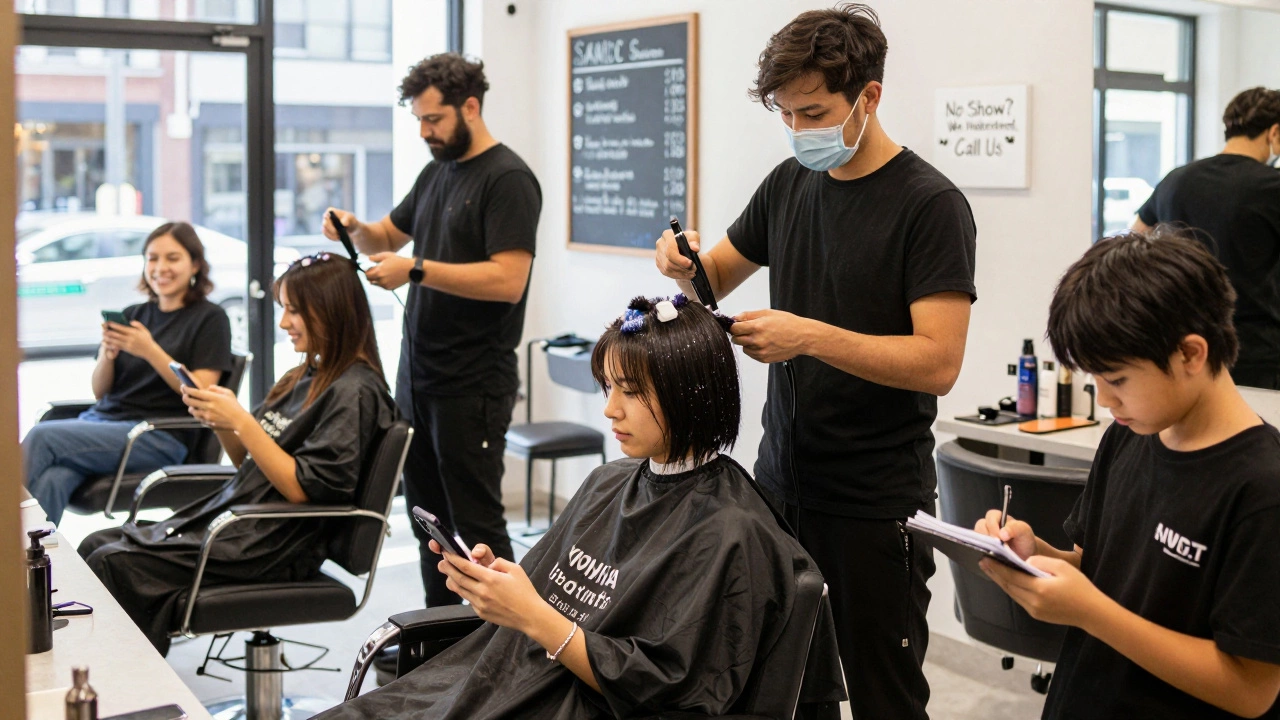
Let’s not sugarcoat it. This job is hard on your body. You’re on your feet 8-10 hours a day. Your shoulders ache. Your hands get dry from chemicals. You miss holidays, birthdays, and family dinners during peak season-Christmas, proms, weddings. The average stylist works 45-50 hours a week, even if they’re not always cutting hair. Admin, stock, social media, and training eat up time too.
And yes, the industry is competitive. There are more stylists than ever. But that’s not a bad thing-it means clients have choices, and that pushes you to get better. The ones who thrive are the ones who keep learning. They take advanced courses in balayage, keratin treatments, men’s grooming, or even scalp health. Those who stop growing? They get left behind.
Also, not every salon is great. Some treat staff like disposable labor. You’ll hear horror stories about being forced to sell products you don’t believe in, or being blamed for no-shows. That’s why choosing the right salon matters. Look for places that invest in training, have clear commission structures, and treat their staff with respect. Ask current employees how often they get paid. Ask if they’re allowed to take breaks. These are red flags or green flags.
Who succeeds here?
You don’t need to be a natural artist. You don’t need to be loud or flashy. You need to be reliable. You need to care. You need to show up on time, even when you’re tired. You need to be willing to learn every day-even after 10 years in the chair.
The best stylists I’ve met aren’t the ones with the most Instagram followers. They’re the ones who remember their clients’ kids’ names. Who send birthday texts. Who notice when someone’s been through a rough patch and quietly offer a free conditioning treatment. That’s what keeps people coming back.
And the industry is changing. Men’s grooming is booming. Gray hair styling is now a specialty. Scalp treatments and hair health consultations are becoming standard. If you’re willing to adapt, you’re not just surviving-you’re growing.
It’s not a job. It’s a craft.
Hairdressing isn’t a career you fall into. It’s one you choose because you like making people feel better. Because you like the rhythm of the scissors, the smell of shampoo, the quiet satisfaction of a job well done. It’s not glamorous in the way movies show it. But it’s deeply human.
And in a world where so much is automated, where AI writes emails and robots serve coffee, hairdressing remains one of the last truly personal trades. You can’t outsource a good haircut. You can’t automate trust. You can’t replace the way someone feels when they walk out of your chair looking in the mirror and smiling.
If you’re willing to put in the work, the hours, the learning, and the emotional energy-then yes, hairdressing is a good career. Not because it’s easy. But because it matters.
How long does it take to become a qualified hairdresser?
Most people complete a Level 2 NVQ in 12-18 months, followed by a Level 3, which takes another 6-12 months. Many do this while working as an assistant, so the total time from start to qualified stylist is usually 2-3 years. Apprenticeships combine on-the-job training with classroom learning and often speed up the process.
Can you make a good income as a hairdresser?
Yes, but it depends on your skill, location, and work ethic. Entry-level assistants earn £18,000-£20,000. Qualified stylists in busy salons typically earn £30,000-£40,000. Top stylists with loyal clients and extra services (extensions, treatments, bridal work) regularly earn £50,000-£70,000+. Many open their own studios and earn even more.
Do you need to be creative to be a hairdresser?
Creativity helps, but it’s not the most important skill. More important is listening, understanding what clients want, and knowing what will work for their face shape, hair type, and lifestyle. Many successful stylists aren’t trendsetters-they’re great at refining classic styles and making them look flawless.
Is hairdressing a stable career?
Yes. People will always need haircuts. Even in economic downturns, clients still come in-they just might cut back on color or treatments. The demand for skilled stylists remains steady, especially as men’s grooming and hair health services grow. It’s one of the most recession-resistant trades.
What’s the biggest mistake new hairdressers make?
Trying to do too much too soon. New stylists often feel pressure to master every technique at once-color, cutting, extensions, perms. But mastery comes one skill at a time. Focus on perfecting your basic cuts and client communication first. The advanced stuff will come naturally as you gain experience and confidence.
Start with a solid course. Find a salon that values training. Build your reputation slowly. And remember-you’re not just changing hair. You’re changing how people feel about themselves. That’s worth more than a paycheck.



Write a comment