

Carpentry Skill Progression Estimator
Based on the article's research: 1,000 hours to intermediate level (approx. 1 year at 20 hrs/week), and 3-5 years for mastery.
Estimate your skill development timeline using weekly practice hours.
Estimated Progress
Based on industry standards from the article
People often look at a beautifully crafted wooden table or a hand-built bookshelf and wonder: Is carpentry a skill or talent? Some say you’re born with it - that you either have the touch or you don’t. Others insist it’s all practice, patience, and repetition. The truth? It’s both. But here’s what most people miss: talent opens the door. Skill builds the house.
What’s the difference between skill and talent?
Talent is natural. It’s the kid who picks up a hammer and instinctively knows where to strike. It’s the person who looks at a rough piece of timber and sees the shape hiding inside. You don’t learn talent. You either have it or you don’t. But talent alone doesn’t make a carpenter. It just makes a promising beginner.
Skills are learned. They’re built over years of cutting, measuring, sanding, and failing. A skilled carpenter knows how to read a tape measure down to the 1/32 of an inch. They understand wood grain, moisture content, and how a board will warp in winter. They’ve made a hundred mistakes - and learned from every one.
Think of it like driving. Some people have a natural sense of space and timing - they parallel park on the first try. But even those people still need to learn traffic laws, how to shift gears, and how to handle a skid. Carpentry is the same. Talent helps you start. Skill keeps you going.
Why carpentry courses exist - and why they work
There’s a reason carpentry courses exist in every trade school, community college, and vocational center. They’re not for people who already know how to build a cabinet. They’re for people who want to learn - whether they’ve never held a chisel or have been fumbling with power tools for years.
A good carpentry course doesn’t teach you how to be talented. It teaches you how to be consistent. You learn:
- How to use a circular saw without tearing the wood
- Why a 45-degree miter cut doesn’t always fit
- How to joint and plane rough lumber by hand
- What type of glue works for outdoor furniture
- How to read blueprints - not guess at them
These aren’t tricks. They’re fundamentals. And they’re not something you can pick up from YouTube videos alone. You need feedback. You need to see someone do it right. You need to fail - and have someone tell you why.
One student in a 12-week course in Manchester went from barely knowing a screwdriver from a hammer to building a full-sized dining table. He didn’t have talent. He had discipline. He showed up. He asked questions. He practiced every night. By week 10, his cuts were cleaner than half the instructors’.
The myth of the ‘natural’ carpenter
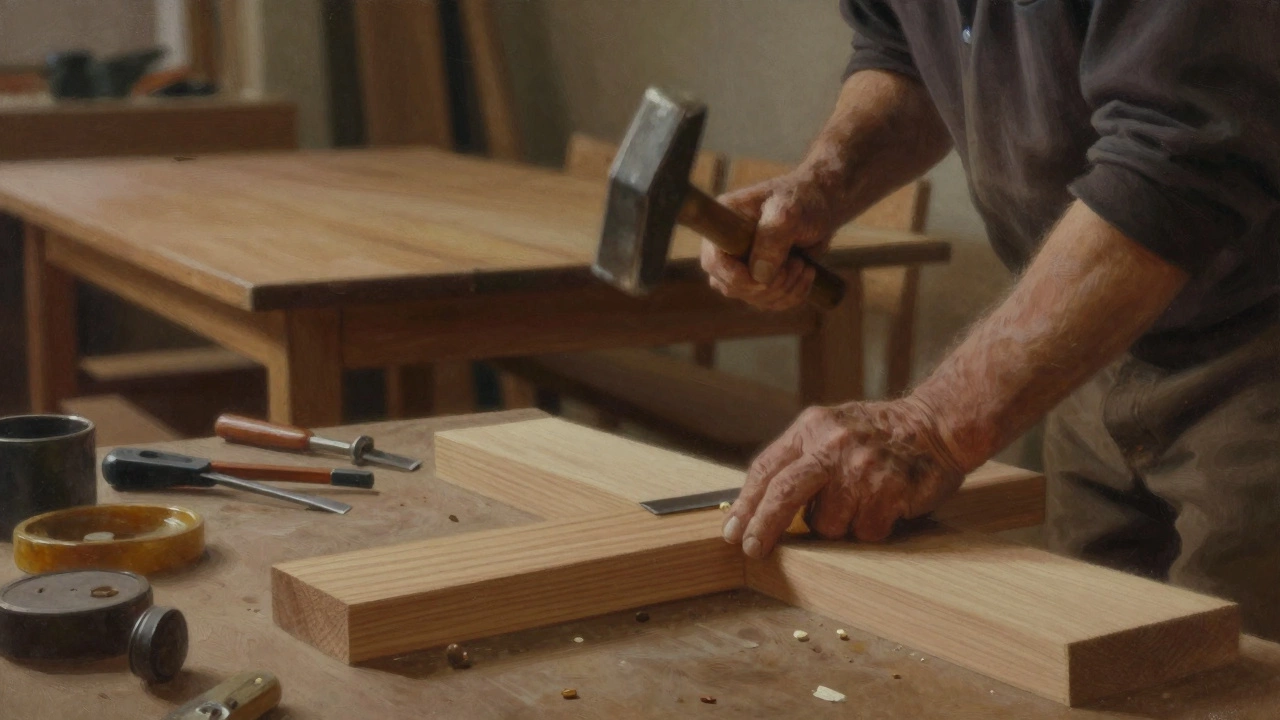
You’ve seen the videos: a guy with a beard, a flannel shirt, and a chainsaw, carving a bowl out of a log in 10 minutes. It looks like magic. But those videos are edited. They skip the 37 failed attempts. They don’t show the broken tools, the splinters, the weeks spent sanding the same surface over and over.
Real carpenters don’t work like that. They measure twice. They mark every cut. They check their levels. They clean up their workspace. They label their scraps. They don’t wait for inspiration. They show up even when they’re tired.
A survey of 200 professional carpenters in the UK in 2025 found that 78% had no formal training before age 25. But 92% had completed at least one structured course by age 30. The ones who skipped training? Most quit within five years. The ones who kept learning? They’re still working - and getting better.
What you can learn - and what you can’t
Here’s the hard truth: you can’t learn creativity. You can’t learn taste. You can’t learn the way some people just “get” proportion or balance. That’s where talent plays a role. But you can learn:
- How to make a joint that lasts 50 years
- How to fix a mistake without starting over
- How to estimate material costs accurately
- How to use a router without burning your fingers
- How to work safely around dust, noise, and heavy tools
These aren’t glamorous. But they’re what separates a hobbyist from a professional. And they’re all teachable.
Even the most talented woodworkers need training. Look at Norm Abram - one of the most famous carpenters in American TV history. He didn’t just pick up a saw and start building. He apprenticed under a master builder for three years. He learned the old ways - the hand-tool techniques, the traditional joinery, the patience it takes to let glue dry.
How to start - even if you think you’re not ‘talented’
If you’re reading this and thinking, “I’m not artistic,” or “I don’t have a good eye,” here’s your permission slip: you don’t need to. You need to show up.
Start with these three steps:
- Take a beginner carpentry course. Look for one that includes hands-on time with real tools. Avoid online-only classes unless they offer mentor feedback.
- Build one thing - just one. A simple shelf. A stool. A birdhouse. Don’t aim for perfection. Aim for completion.
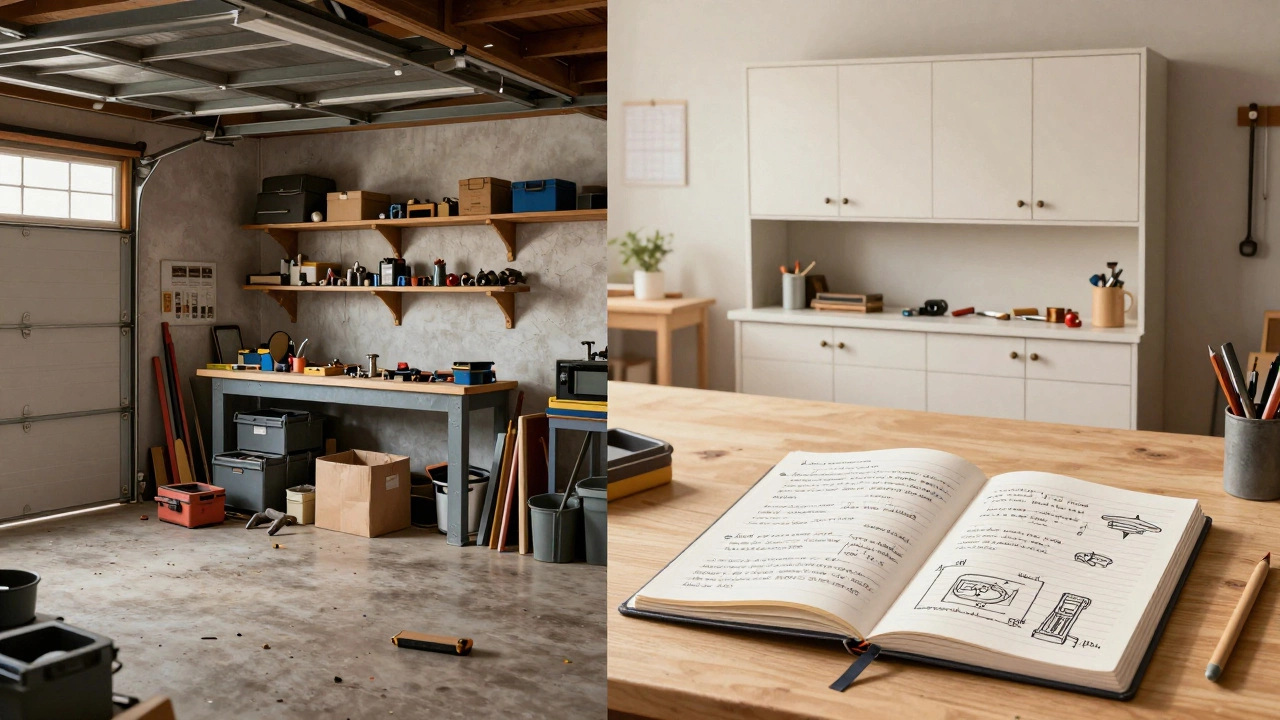
- Keep a log. Write down what went wrong. What tools you used. What you’d do differently. This is how you turn experience into knowledge.
After six months of consistent practice, most people can build a piece of furniture that looks professional. Not because they’re talented. Because they practiced.
The real secret: carpentry is problem-solving
The best carpenters aren’t the ones with the smoothest hands or the shiniest tools. They’re the ones who can look at a warped board and figure out how to make it straight. They’re the ones who can turn a mistake into a design feature.
That’s not talent. That’s experience. That’s skill.
Every cut you make teaches you something. Every misaligned joint teaches you patience. Every splinter teaches you caution. You don’t need to be born with a woodworker’s soul. You just need to be willing to keep trying.
So is carpentry a skill or talent? It’s a skill you build - with a little help from talent. But talent? It’s optional. Skill? That’s non-negotiable.
Can you learn carpentry if you’re not naturally good with your hands?
Absolutely. Many professional carpenters started with no hand-eye coordination at all. One man in a Glasgow apprenticeship program couldn’t even hold a hammer without shaking. After 18 months of daily practice, he was building custom cabinets. Skill comes from repetition, not innate ability.
Do you need a degree to become a carpenter?
No. Most carpenters learn through apprenticeships or vocational courses. A degree isn’t required - but certification (like an NVQ Level 2 in Carpentry) is highly valued by employers. It proves you’ve met industry standards, not just guessed your way through a project.
How long does it take to become skilled at carpentry?
It takes about 1,000 hours of focused practice to reach a solid intermediate level. That’s roughly 20 hours a week for a year. To become truly skilled - able to tackle complex projects - most professionals spend 3-5 years working daily. There’s no shortcut. But every hour counts.
Is it too late to start carpentry if I’m over 40?
Not at all. The average age of students in UK carpentry courses is now 37. Many people switch careers after 40 and find carpentry rewarding - both mentally and financially. Physical strength isn’t as important as precision, patience, and persistence.
What’s the best way to practice carpentry at home?
Start small. Build a toolbox, a coat rack, or a planter box. Use scrap wood from local builders or reclaimed lumber. Focus on accuracy over speed. Use a square, a level, and a tape measure every time. Practice measuring twice, cutting once. These habits become second nature - and that’s what separates good carpenters from great ones.
Final thought: carpentry doesn’t care how talented you are
It only cares if you show up. If you keep trying. If you learn from your mistakes. If you measure twice and cut once.
The best carpenter in the room isn’t the one with the flashiest tools. It’s the one who’s still there after everyone else went home - sanding, adjusting, fixing, and trying again.
You don’t need talent to be a carpenter. You just need to care enough to keep going.



Write a comment