
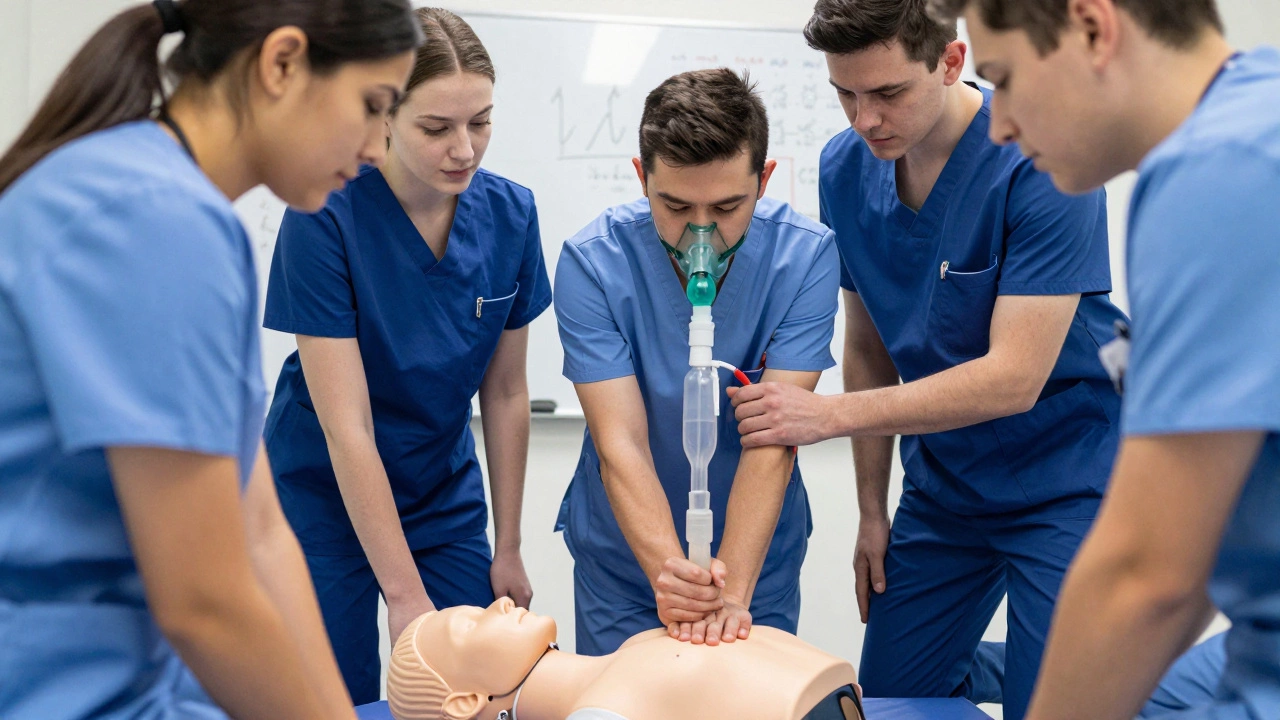
CPR vs BLS: Which Certification Do You Need?
Your Recommended Certification
Standard CPR/AED (Heartsaver)
Based on your profile, this is the ideal starting point.
- Focus: Single-rescuer survival skills
- Key Skills: Compressions, Rescue Breaths, AED Use
- Duration: 2–4 hours
- Why: Designed for laypeople to act quickly without medical equipment or teams.
Basic Life Support (BLS)
This advanced certification is required for your professional role.
- Focus: Team dynamics & Advanced Airway Management
- Key Skills: Bag-Valve-Mask (BVM), Closed-loop Communication, High-Quality CPR
- Duration: 3–5 hours
- Why: Essential for healthcare providers working in clinical settings with teams.
You’re staring at two course options on a training provider’s website: CPR is Cardiopulmonary Resuscitation, the basic emergency procedure for cardiac arrest. It sounds straightforward. Push hard, push fast, maybe use that plastic tube thing if you have one. Then there’s BLS, or Basic Life Support, an advanced certification often required for healthcare providers. The acronym looks similar, but the price tag is higher, the class runs longer, and everyone says it’s “more serious.” So, the big question hanging in the air: Is BLS actually harder than standard CPR?
The short answer is yes, but not because the chest compressions are physically tougher. The difference isn’t just about doing more; it’s about doing things with precision, speed, and coordination under pressure. If standard CPR is learning to drive a car alone, BLS is learning to drive a manual transmission while navigating traffic and talking to a passenger who needs help.
What Exactly Are You Learning?
To understand why one feels harder than the other, we need to look at what each certification actually covers. Standard CPR, often called "CPR/AED" or "Heartsaver CPR," is designed for the general public. Think teachers, lifeguards, office workers, or parents. The goal is simple: keep someone alive until professional help arrives.
In a typical CPR class, you learn how to recognize cardiac arrest, call for help, perform high-quality chest compressions, give rescue breaths, and use an Automated External Defibrillator (AED). The focus is heavily on the mechanics of keeping blood flowing to the brain. It’s repetitive, physical, and relatively intuitive once you get the rhythm down.
Basic Life Support (BLS), on the other hand, is built for healthcare professionals. This includes nurses, doctors, EMTs, paramedics, dentists, and even some respiratory therapists. The American Heart Association (AHA) and the Red Cross design these courses with a specific mindset: you are part of a team, and you are likely working in a clinical setting where equipment is available.
BLS includes everything in standard CPR, but it adds layers of complexity. You aren’t just pushing on a chest; you’re managing an airway with bag-mask devices, coordinating with other rescuers, and interpreting data from monitors. The skill set shifts from "do this to survive" to "do this effectively as part of a medical response."
| Feature | Standard CPR (Heartsaver) | Basic Life Support (BLS) |
|---|---|---|
| Target Audience | General public, laypeople | Healthcare providers, clinicians |
| Primary Focus | Single-rescuer survival skills | Team dynamics and advanced airway management |
| Airway Tools | Mouth-to-mouth, pocket mask | Bag-valve-mask (BVM), oxygen flow control |
| Teamwork | Minimal (call for help) | Essential (closed-loop communication) |
| Duration | 2-4 hours | 3-5 hours |
| Renewal Frequency | Every 2 years | Every 2 years |
The Physical Challenge: Compressions Aren't the Hardest Part
If you’ve ever done a fitness bootcamp, you know that chest compressions are exhausting. Both CPR and BLS require you to maintain a rate of 100-120 compressions per minute, pushing down at least 2 inches deep for adults. Physically, the act of compressing is identical in both courses. So, if BLS is harder, it’s not because your arms will hurt more.
The physical difficulty in BLS comes from the added task of ventilation using a Bag-Valve-Mask (BVM), also known as a Ambu bag. In standard CPR, you might practice mouth-to-mouth or using a simple barrier device. In BLS, you have to squeeze a rubber bag while maintaining a seal over the patient’s face with a mask, all while ensuring the chest rises appropriately. Doing this one-handed while switching compression roles with a partner is a coordination nightmare for beginners. It requires fine motor skills under physical stress, which many students find surprisingly challenging.
Furthermore, BLS scenarios often involve choking relief for adults, children, and infants, as well as opioid overdose recognition and Narcan administration. While these are critical skills, they add cognitive load. You have to switch contexts quickly, assessing whether the person is choking, overdosing, or in cardiac arrest, and adjusting your technique accordingly.
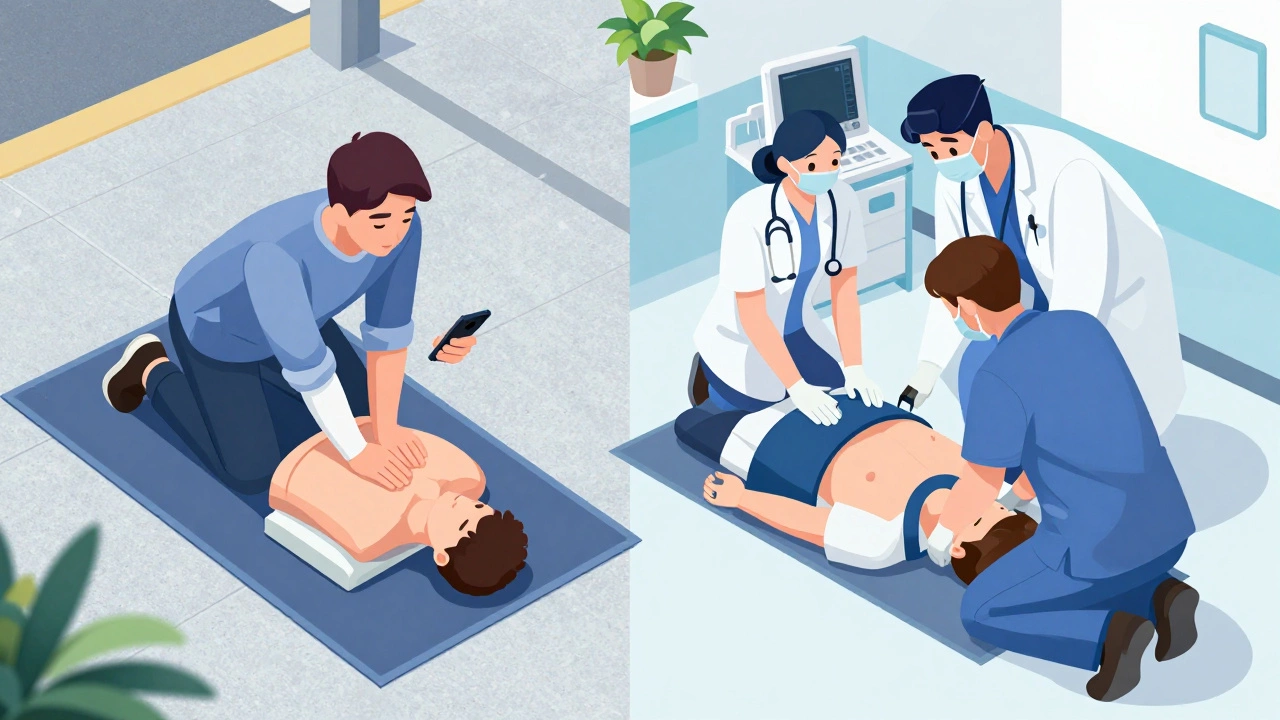
The Mental Load: Team Dynamics and Communication
This is where the real gap widens. Standard CPR assumes you are likely alone. You shout for help, you dial 911, and you start compressions. Your main interaction is with the dispatcher and the AED voice prompts.
BLS, however, is fundamentally about teamwork. Healthcare emergencies rarely happen in isolation. You’ll be working alongside colleagues who may be less experienced or more stressed than you. The course introduces concepts like "closed-loop communication" and "clear role assignment."
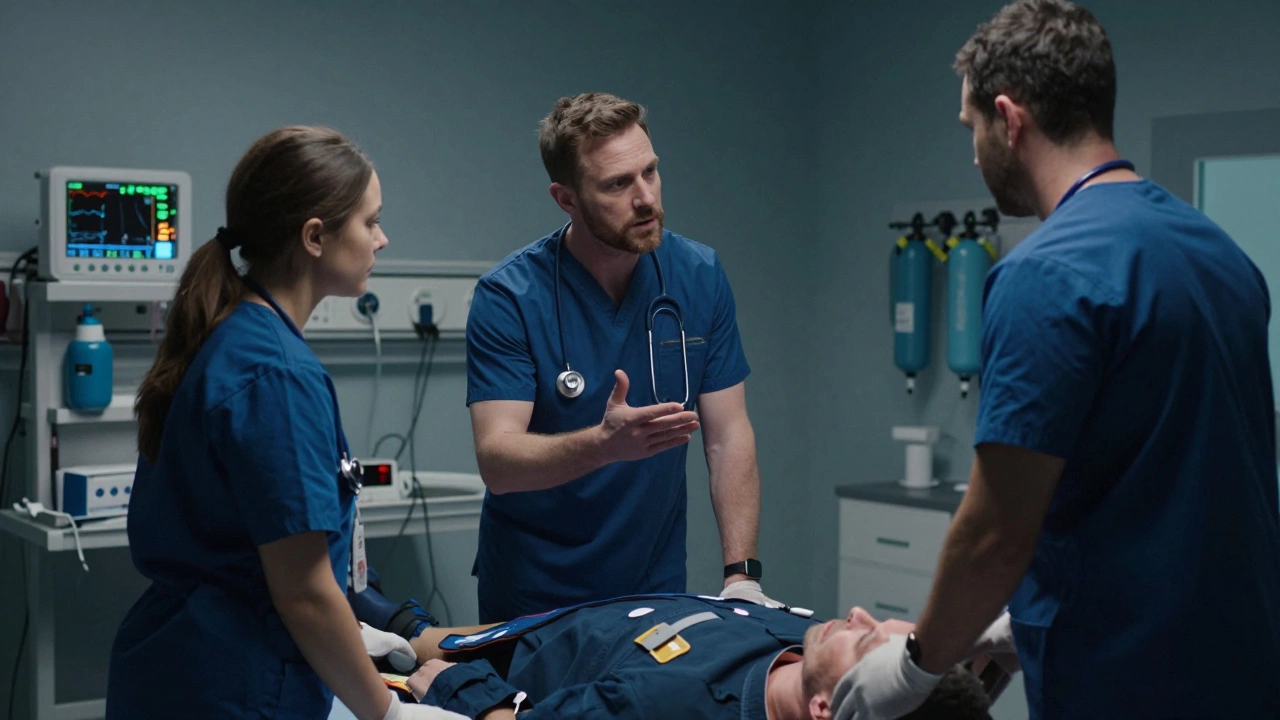
Imagine this scenario: You are leading the resuscitation effort. One person is compressing, another is managing the airway, and a third is watching the monitor. In BLS, you must clearly announce when you want to switch roles, confirm that the new compressor has taken over, and ensure the airway manager is ventilating correctly. If you miss a cue or speak ambiguously, the chain of survival breaks. This mental multitasking-keeping track of time, counting compressions, monitoring teammates, and following protocols-is significantly harder than the solo focus of standard CPR.
Many students struggle with the psychological aspect of being the "team leader" in a simulation. Even though it’s a mannequin, the expectation to command authority and coordinate actions can feel intimidating. Standard CPR doesn’t ask you to lead; it asks you to act. BLS asks you to lead.
Why Does This Difference Matter?
Understanding the difficulty gap helps you choose the right certification. If you are a teacher, a coach, or just a concerned citizen, standard CPR is sufficient. It empowers you to save a life without overwhelming you with clinical details. Adding BLS-level skills to a layperson’s toolkit can sometimes lead to hesitation or confusion in a chaotic real-world scenario where no team exists.
However, if you work in healthcare, BLS is non-negotiable. Hospitals, clinics, and emergency services require it because the stakes are different. When a patient crashes in an ER, seconds count, and errors in team coordination can be fatal. Employers expect you to handle bag-valve masks, interpret pulse oximetry readings, and integrate seamlessly into a code blue team. The "difficulty" of BLS is essentially the price of entry for professional competence in emergency care.
Moreover, BLS serves as the foundation for more advanced certifications like ACLS (Advanced Cardiovascular Life Support) and PALS (Pediatric Advanced Life Support). These courses build directly on the team dynamics and airway management skills learned in BLS. Skipping BLS or treating it lightly makes tackling ACLS nearly impossible, as those courses assume you already master the basics of efficient, coordinated resuscitation.
How to Prepare for the Challenge
If you’re signed up for BLS and worried about the difficulty, don’t panic. Most people pass easily with a little preparation. Here’s how to make the process smoother:
- Practice the Bag-Valve-Mask Early: If you have access to a training dummy or a BVM kit, practice creating a seal. Use the "E-C clamp" technique (forming an E with your thumb and index finger on the mask, and clamping the jaw with your other three fingers). This small trick makes ventilation much easier.
- Focus on Communication: During team drills, speak loudly and clearly. Say "I am switching to compressor" instead of just moving in. Confirm when others finish tasks. Good communication reduces stress for everyone.
- Don’t Rush Compressions: It’s tempting to go faster when tired, but quality matters more than speed. Aim for depth and full recoil. Let the metronome guide you.
- Review the Guidelines: Familiarize yourself with the latest AHA or Red Cross guidelines before class. Knowing the sequence of events (Check responsiveness → Call for help → Start compressions → etc.) frees up mental space during the actual skills test.
Remember, the instructors aren’t trying to fail you. They want to ensure you can perform these skills safely in a real emergency. If you struggle with a skill, ask for extra practice time. Most training centers are happy to let you repeat a station until you feel confident.
Common Misconceptions About BLS Difficulty
There’s a myth that BLS involves drugs, IV lines, or complex medical procedures. That’s not true. Those skills belong in ACLS or nursing-specific courses. BLS stays focused on the "B" in Basic: breathing, circulation, and team support. Another misconception is that you need prior medical knowledge to pass. While helpful, it’s not required. The course teaches you everything you need to know for the certification. Many first-year nursing students or new EMTs take BLS with zero prior experience and succeed by focusing on the mechanical and communicative aspects.
Also, don’t confuse "harder" with "impossible." The skills are designed to be learnable within a few hours. The challenge lies in retaining them under pressure. Regular refreshers and practice are key to maintaining proficiency.
Can I take BLS if I already have a CPR certificate?
Yes, absolutely. In fact, it’s highly recommended. Your existing CPR knowledge gives you a head start on compressions and AED use. The BLS course will build on that foundation by adding airway management and team dynamics. Some providers may allow you to skip the basic lecture portion, but you’ll still need to demonstrate the BLS-specific skills.
Do I need BLS if I’m not a healthcare worker?
Generally, no. Standard CPR/AED certification is sufficient for most non-medical roles like teaching, coaching, or corporate safety officer positions. BLS is specifically tailored for clinical environments where teams respond to emergencies. Taking BLS as a layperson won’t hurt, but it may include unnecessary information that could confuse you in a real-life solo emergency.
How long does it take to complete BLS training?
Most BLS courses last between 3 to 5 hours, depending on the format and provider. Online blended learning options allow you to complete the theory portion at home, reducing classroom time to just 1-2 hours for skills practice and testing. Traditional in-person classes typically run for a full half-day.
Is the BLS exam difficult?
The exam is practical rather than theoretical. You’ll be assessed on your ability to perform high-quality compressions, manage an airway with a BVM, and communicate effectively in a team scenario. As long as you follow the steps, maintain proper depth and rate, and speak clearly, passing is straightforward. There are usually no written multiple-choice questions in standard BLS courses, though some providers may include a brief quiz.
Does BLS expire?
Yes, BLS certification is valid for two years, just like standard CPR. After that, you must retake the course to renew your credentials. Many healthcare employers require proof of current BLS status before allowing you to work with patients or enter clinical areas.



Write a comment