

IT Certification Budget Calculator
Select your desired certification path to see a realistic breakdown of exam fees, study materials, and maintenance costs.
Estimated Total Cost
Walking into a computer shop or logging into a learning platform to buy an IT certification feels like stepping into a minefield of hidden fees. You see a shiny badge promising a career boost, but the price tag is nowhere to be found. Instead, you find “starting from” prices, mandatory training bundles, and renewal fees that sneak up on you later. If you are wondering how much it actually costs to get certified in IT in 2026, the short answer is: it depends entirely on which path you choose.
The range is massive. You can spend as little as £130 for a basic entry-level exam if you study on your own, or you can drop over £4,000 on a bootcamp for a high-end cloud architecture credential. To help you budget accurately, we need to break down the three main cost buckets: the exam voucher itself, the preparation materials, and the often-overlooked maintenance fees.
The Hidden Structure of Certification Costs
Most people make the mistake of looking only at the exam fee. They think, "I’ll just pay the £250 for the test and figure out the rest later." But the exam fee is usually only 30% to 50% of your total investment. The other half goes toward preparation and long-term validity.
| Cost Component | Estimated Range (GBP) | Notes |
|---|---|---|
| Exam Voucher | £130 - £450 | One-time payment per exam attempt |
| Study Materials | £50 - £300 | Books, practice tests, online courses |
| Instructor-Led Training | £500 - £2,500+ | Optional but recommended for complex certs |
| Maintenance/CPE Fees | £0 - £120/year | Required to keep cert active |
Understanding these components helps you avoid sticker shock. For example, some vendors require you to take their official training before you can even book the exam. Others let you self-study with free resources. Knowing which model you are dealing with saves both time and money.
Entry-Level Certifications: The Affordable Starting Point
If you are new to tech, you likely want something foundational. These certifications prove you understand the basics of hardware, networking, or operating systems. They are designed to be accessible, so the costs reflect that.
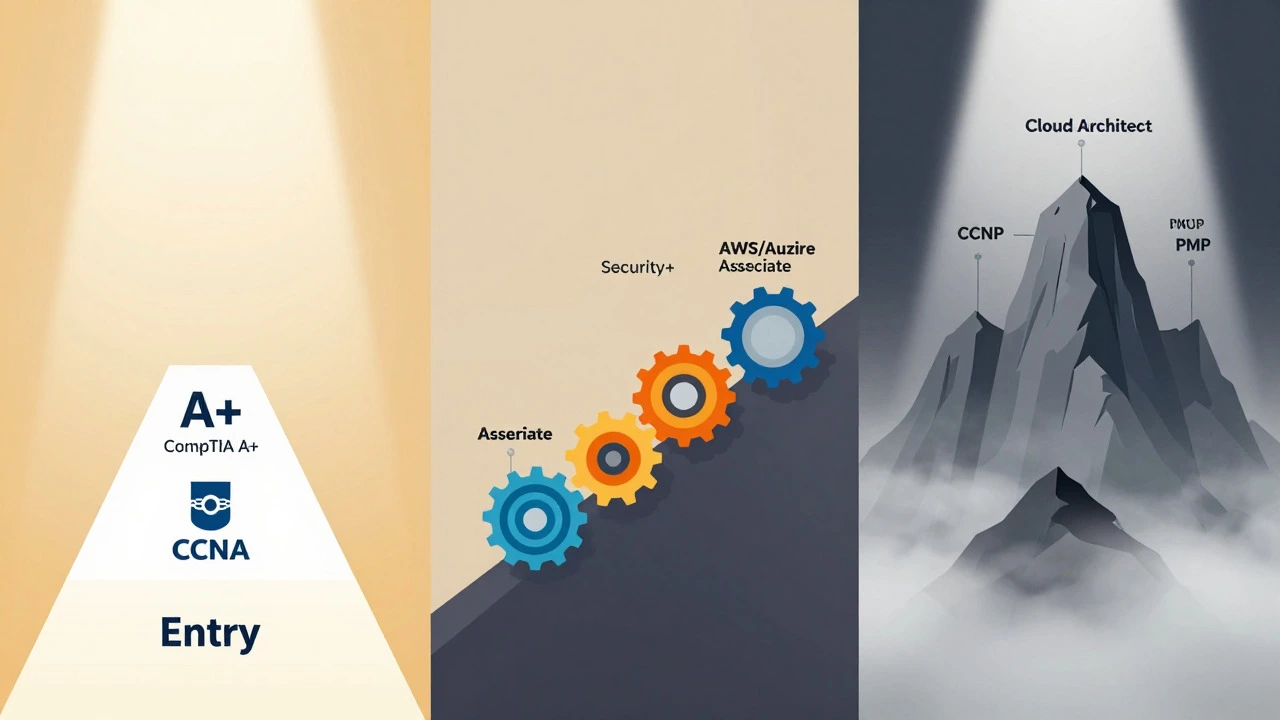
CompTIA A+ is the industry-standard entry-level certification for IT support professionals. In 2026, each exam costs approximately £250. Since you must pass two exams (Core 1 and Core 2), the total voucher cost is around £500. However, CompTIA frequently offers bundle discounts where you can save about 10-15% if you register for both at once. This brings the cost down to roughly £425.
For those interested in networking fundamentals, the Cisco Certified Network Associate (CCNA) is a widely recognized certification covering network fundamentals, IP connectivity, and security fundamentals. The single exam fee is higher, sitting at around £370. While this is more expensive upfront than CompTIA A+, it carries significant weight in hiring decisions because it validates practical skills rather than just theoretical knowledge.
Self-study is very viable here. Many candidates use free YouTube tutorials, community forums like Reddit’s r/networking, and affordable practice test banks. If you stick to digital books and open-source labs, you can keep your preparation costs under £100.
Mid-Level Specializations: Where Prices Rise
Once you have experience, you move into specialized roles like cybersecurity, system administration, or project management. These certifications are harder, so the exams are more expensive, and the material is denser.
CompTIA Security+ is a baseline cybersecurity certification that validates core competencies required for any cybersecurity role. The exam voucher is similar to A+, costing about £380. However, the preparation often requires hands-on lab environments to understand threat detection and mitigation. Renting virtual labs can add £50 to £100 to your monthly budget during study periods.
On the cloud side, AWS Certified Solutions Architect - Associate is a popular certification for designing distributed systems on Amazon Web Services. The exam fee is approximately £195. While this seems cheap compared to enterprise certs, AWS moves fast. The curriculum changes regularly, meaning older study guides become obsolete quickly. You may need to invest in newer, updated courses, which can cost between £150 and £300.
Microsoft’s Microsoft Certified: Azure Administrator Associate is a certification focused on implementing, managing, and monitoring Microsoft Azure environments. The exam costs around £165. Microsoft often provides free sandbox credits for students and sometimes for general users, which can offset the cost of setting up practice environments.
Advanced and Vendor-Specific Credentials
At the expert level, certifications become niche and highly valuable. Companies paying for these credentials expect deep, architectural-level knowledge. Consequently, the barriers to entry-including cost-are higher.
Cisco Certified Network Professional (CCNP) is an advanced certification for network engineers requiring expertise in enterprise infrastructure and data center technologies. As of 2026, CCNP consists of one core exam and one concentration exam. Each exam costs around £450. So, the total voucher cost is nearly £900. Most professionals do not self-study for CCNP; they often attend official training courses, which can push the total investment past £2,000.
In the cloud space, Google Cloud Professional Cloud Architect is a senior-level certification for designing and managing robust, secure, scalable, and highly available solutions on Google Cloud Platform. The exam fee is steep at approximately £320. But the real cost is the complexity. Candidates often report spending hundreds of hours building real-world projects to pass. If you hire a mentor or join a premium study group, add another £500 to your budget.
Project management also has its heavyweight: Project Management Professional (PMP) is the gold standard for project managers globally, administered by the Project Management Institute. The PMP exam fee is £405 for PMI members and £555 for non-members. Becoming a member costs £129 annually, but it includes access to the PMBOK guide and other resources. So, joining makes financial sense if you plan to take the exam soon.
Training vs. Self-Study: Making the Right Choice
Your biggest decision isn’t just which certification to pursue, but how to prepare. This choice drastically impacts your final bill.
- Self-Study: Cheapest option. Requires discipline. Resources include Udemy courses (£15 on sale), O’Reilly books (£40 each), and free documentation. Total prep cost: £50-£150.
- Online Bootcamps: Mid-range. Structured learning with instructor support. Platforms like Coursera or edX charge £30-£50 per month. A 3-month program might cost £100-£150. Some offer financial aid.
- In-Person/Official Training: Most expensive. Cisco NetAcad, CompTIA Authorized Partners, and AWS Training offer classroom-style experiences. Prices range from £1,000 to £3,000. Often includes exam vouchers.
If you are already working in IT, ask your employer. Many companies have budgets for professional development. Getting reimbursed for exam fees and training is common in mid-to-large tech firms. Always check your employee handbook before paying out of pocket.

Ongoing Costs: Maintenance and Renewal
Getting the certification is only step one. Keeping it valid is step two-and it costs money too. Most IT certifications expire after three years. To renew them, you must earn Continuing Education Units (CEUs) or Continuing Professional Education (CPE) credits.
CompTIA requires 90 CPE credits every three years. You can earn these through work experience, attending webinars, or taking new courses. There is no direct fee for earning credits, but there is a maintenance fee when you renew. For CompTIA, this is roughly £120 every three years. It’s a small price compared to retaking the exam.
Microsoft and AWS have different models. Microsoft requires you to maintain active subscription-based skills or retake exams periodically. AWS does not charge a renewal fee, but you must re-certify every three years by passing the current version of the exam. This means you pay the full exam fee again-no discount for being a previous holder.
Failing to maintain your certification means losing the badge and the credibility associated with it. Factor these recurring costs into your long-term career budget.
Tips to Reduce Your Certification Budget
You don’t have to pay full price. Here are proven ways to cut costs without sacrificing quality:
- Wait for Sales: Exam providers run promotions. CompTIA often has 20% off vouchers during Cybersecurity Awareness Month (October). AWS and Microsoft occasionally offer free exam attempts for students or through university partnerships.
- Use Employer Funding: Propose the certification as a business case. Show how it will improve team efficiency or client trust. Many UK employers claim tax relief on training expenses.
- Leverage Free Labs: Instead of buying expensive simulation software, use free tiers from cloud providers. AWS Free Tier, Azure Free Account, and GCP Free Trial give you $300-$500 in credit to build real projects.
- Join Communities: Discord servers, LinkedIn groups, and Reddit communities share free study guides, flashcards, and interview questions. Networking can also lead to mentorship, saving you from costly mistakes.
- Bundle Exams: If possible, register for multiple exams at once. Discounts apply, and you lock in today’s pricing before potential increases.
Remember, the cheapest path isn’t always the fastest. Sometimes spending extra on a good course saves weeks of confusion and failed attempts. Balance cost with your learning style and timeline.
Is it worth paying for official training for IT certifications?
It depends on your experience level. For entry-level certs like CompTIA A+, self-study is usually sufficient. For advanced ones like CCNP or AWS Solutions Architect, official training provides structured labs and expert insights that can save months of trial and error. If your employer pays, definitely take it.
Do I need to retake the exam if I fail?
Yes. Most certification bodies charge the full exam fee for each attempt. Some offer a discounted retake voucher if you purchase it within 30 days of failing, but this varies by vendor. Always check the specific policy before scheduling.
Are there free IT certifications available?
Few reputable certifications are completely free. However, some vendors offer free introductory badges or digital certificates for completing basic modules. For example, Microsoft Learn offers free digital badges for completing learning paths. These aren’t equivalent to proctored exams but can boost your resume early on.
How much should I budget for my first IT certification?
Plan for £300-£600 total. This covers the exam voucher (£250-£400) and essential study materials (£50-£200). Avoid overspending on unnecessary books or courses until you’ve tried self-study first. Adjust based on whether your employer contributes.
Can I negotiate the cost of IT certification with my employer?
Absolutely. Frame the certification as an investment in your role’s effectiveness. Present a clear ROI: improved productivity, better client outcomes, or compliance benefits. Many UK companies have annual training budgets specifically for this purpose. Start the conversation early in the fiscal year.



Write a comment