
Welding Physical Fitness Assessment
Assessment Guide
This assessment evaluates your physical fitness level relative to the demands of welding jobs. It takes about 3 minutes and provides personalized recommendations to help you prepare.
How many 40-pound objects can you lift without straining?
How long can you stand and work without getting fatigued?
Can you bend and twist without pain?
How steady is your hand when holding a 2-pound object for 5 minutes?
How does your breathing feel when walking up a flight of stairs (5 steps)?
Welding isn’t just about holding a torch and melting metal. It’s a job that demands strength, endurance, and control-day after day, in uncomfortable positions, under extreme heat, and often in tight or awkward spaces. If you’re thinking about becoming a welder, or you’re already in the trade and wondering if you’re physically up to it, the answer isn’t simple. You don’t need to be an athlete, but you do need to be fit enough to handle the real, daily grind of the job.
What Does a Welder Actually Do All Day?
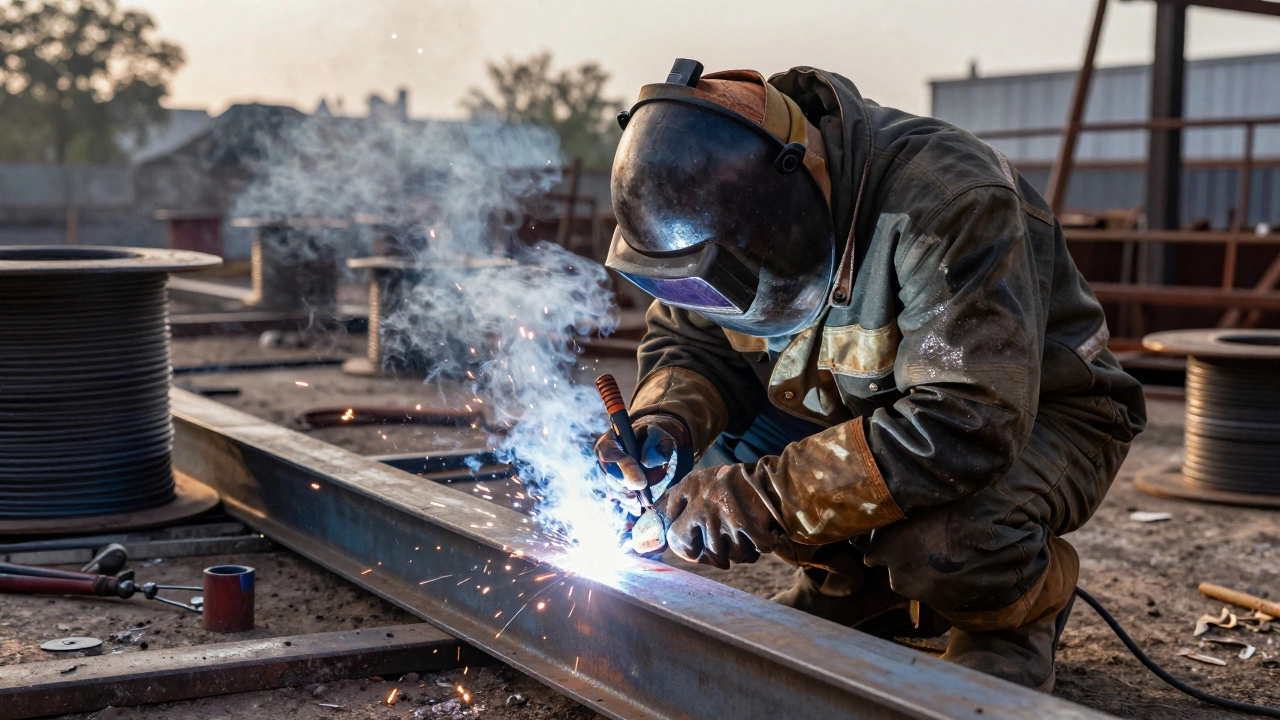
Picture this: you’re on a construction site at 7 a.m., wearing a heavy welding helmet, gloves, and fire-resistant coveralls that weigh nearly 5 pounds on their own. You spend the next eight hours bending over steel beams, crawling under machinery, standing on ladders, lifting 40-pound spools of wire, and holding your arms steady for minutes at a time while you weld a joint that can’t afford to be crooked. You’re not sitting at a desk. You’re moving, balancing, and pushing your body through motions most people avoid at the gym.
Welders don’t just weld. They cut, grind, clean, measure, and position materials. They climb, kneel, squat, and twist. They work in confined spaces where there’s no room to stand upright. They handle hot metal that can weigh hundreds of pounds and need to be moved into place before it cools. One wrong move, and the weld fails-or worse, someone gets hurt.
Physical Demands You Can’t Ignore
Let’s break down the real physical requirements:
- Strength: You’ll lift and carry welding equipment, steel plates, and filler rods. A typical spool of welding wire weighs 30-50 pounds. Steel beams can weigh hundreds. You don’t need to bench press 300 pounds, but you need to lift 50 pounds repeatedly without straining your back.
- Stamina: Shifts are long. Eight to twelve hours on your feet, in hot environments, with little time to sit down. Your body needs to keep going without crashing by midday.
- Flexibility and Balance: You’ll weld overhead, under tables, inside pipes, and in corners. If you can’t bend your knees, twist your torso, or hold a steady position for five minutes, you’ll struggle to make clean welds.
- Hand-Eye Coordination: Welding isn’t just brute force. It’s precision. A shaky hand means a weak weld. Even small tremors can ruin a joint. This isn’t something you can fake with a helmet on.
- Endurance in Extreme Conditions: You’ll work in temperatures over 100°F with a heavy suit on. You’ll sweat through your clothes. Your lungs will feel heavy from fumes. Your eyes will burn from UV exposure. If you’re out of shape, you’ll get exhausted faster-and make mistakes.
A 2023 study from the Journal of Occupational Health and Safety found that welders with higher levels of cardiovascular fitness reported 40% fewer work-related injuries and 35% less fatigue over a standard shift. Those who skipped regular physical activity were twice as likely to report chronic back or shoulder pain within their first three years on the job.
It’s Not About Being Muscular-It’s About Being Functional
You don’t need to look like a bodybuilder. You don’t need to run marathons. But you do need to move well. Think of it like being a carpenter or a plumber. You need functional fitness: the ability to lift, reach, bend, and hold without pain or strain.
Here’s what works for most welders:
- Bodyweight squats and lunges to build leg strength and knee stability
- Planks and dead bugs to strengthen your core-this keeps your back safe when you’re twisting or leaning over
- Farmer’s carries (walking with heavy weights in each hand) to build grip and endurance
- Stretching routines for shoulders, hips, and hamstrings to maintain mobility
One welder in Bristol, Mark T., who’s been on the job for 17 years, says he started doing 15 minutes of bodyweight exercises every morning after he turned 35. "I used to come home every night with a stiff back. Now I don’t. I’m not strong, but I’m strong enough. And that’s what matters."

What Happens If You’re Not Fit?
Skipping fitness isn’t just about discomfort-it’s a safety risk.
- Back injuries: Poor lifting technique and weak core muscles lead to herniated discs. This is the number one reason welders leave the trade early.
- Shoulder and wrist strain: Holding welding tools for hours causes tendonitis. If your muscles can’t support the weight, your joints take the hit.
- Fatigue-related errors: When you’re tired, your focus slips. A shaky weld, a missed gap, a bad joint-it all adds up to structural failure. In shipbuilding or pipeline work, that’s not just expensive. It’s dangerous.
- Long-term disability: Chronic pain from repetitive strain can force welders into early retirement. The average age of retirement for welders without fitness habits is 52. With regular movement and conditioning, it’s closer to 60.
There’s no official fitness test for welders-but employers notice. Foremen can tell who’s been lifting weights and who’s been sitting on the bench. You won’t get passed over because you’re not ripped. But you will get passed over if you can’t carry your gear, climb the ladder, or finish the shift without complaining.
Can You Build Fitness While Learning to Weld?
Yes. Many welding schools now include basic physical conditioning as part of their curriculum. At the Bristol Welding Academy, new students get a 10-minute mobility warm-up before every practical session. They teach simple routines for posture, breathing, and core control-because they’ve seen too many students quit after two weeks from back pain.
Start small:
- Walk 20 minutes a day. It builds endurance and helps with circulation.
- Do 10 squats and 10 wall push-ups every morning.
- Stretch your shoulders and hips before and after welding.
- Drink water. Dehydration makes you tired faster and increases cramp risk.
- Get enough sleep. Recovery matters as much as training.
You don’t need a gym membership. You don’t need fancy equipment. You just need consistency.

Who Should Avoid Welding?
Some people shouldn’t become welders-not because they’re lazy, but because their bodies can’t handle the job safely:
- Those with severe heart conditions or uncontrolled high blood pressure
- People with chronic back or joint issues that limit movement
- Anyone who gets dizzy or short of breath climbing a flight of stairs
- Those with unmanaged asthma or respiratory issues-welding fumes are no joke
If you have any of these conditions, talk to a doctor before starting training. There are other trades-pipe fitting, fabrication, inspection-that may be better suited.
Final Thought: Fitness Is Part of the Trade
Welding isn’t a job you can half-do. It’s a physical craft. The better your body is at handling the demands, the longer you’ll stay in the trade, the better your welds will be, and the safer you’ll be.
Being fit doesn’t mean you have to run a marathon. It means you can lift your gear, move without pain, stay focused under heat, and go home at the end of the day without feeling broken. That’s not optional. That’s the job.
If you’re serious about welding, treat your body like your most important tool. Because it is.
Do welders need to be strong?
You don’t need to be a powerlifter, but you do need enough strength to lift 40-50 pounds repeatedly, hold tools steady for long periods, and move heavy materials. Core strength and endurance matter more than raw muscle.
Can overweight people become welders?
Yes, many welders start out overweight. The job itself can help you get fit-it’s physically demanding. But if you’re struggling to climb ladders, walk long distances, or breathe while wearing gear, you’ll face more fatigue and injury risk. Start moving now, even if it’s just walking daily.
Is welding bad for your body?
Welding can be hard on your body if you don’t take care of it-back pain, joint strain, and respiratory issues are common. But with proper technique, fitness, and safety gear, most welders avoid long-term damage. Fitness isn’t optional-it’s protective.
What’s the best way to prepare physically for welding school?
Start with bodyweight exercises: squats, planks, wall push-ups, and walking. Stretch your shoulders and hips daily. Practice carrying heavy objects (like a 20-pound bag of sand) to simulate welding equipment. Build stamina before you start-don’t wait until you’re on the job.
Do welding gloves make you weaker?
No, but they do reduce grip sensitivity. That’s why hand strength and dexterity matter. If your hands are weak, you’ll grip too hard and tire out faster. Grip trainers and finger stretches help. Most experienced welders develop strong hands naturally from daily use.
Welding is one of the most hands-on, physically demanding trades out there. If you’re ready to put in the work-on the job and with your body-you’ll thrive. If you’re not, you’ll burn out fast. The metal doesn’t care how you feel. But your body does.


Write a comment