

Safety Career Salary Estimator
Estimated Compensation
Select options and click calculate to see your estimated earning potential.
You don't have to be a CEO to make six figures. In fact, if you look closely at the health and safety sector, some of the most lucrative roles in corporate America are hidden behind titles like Director or Principal Consultant. People often think safety is just about handing out high-vis vests and checking fire extinguishers. That’s a myth. At the top end, this field is about risk management, legal compliance, and protecting millions in assets.
So, what is the actual ceiling? If you are aiming for the absolute highest salary in the safety field, you are looking at roles that sit right next to the C-suite. We are talking about annual compensation packages ranging from $150,000 to over $300,000, depending on the industry and location. But getting there requires more than just a basic certificate. It demands strategic thinking, deep regulatory knowledge, and the ability to speak the language of business risk.
The Peak: Who Earns the Most?
When we talk about the highest salaries, we aren't talking about entry-level coordinators. We are looking at senior leadership positions. The title that consistently tops the list is the Director of Health, Safety, and Environment (HSE). This person doesn't just enforce rules; they design the entire safety culture of an organization.
In large corporations, particularly in high-risk industries like oil and gas, mining, or pharmaceuticals, the Director of HSE can earn between $180,000 and $250,000 annually. Add in bonuses and stock options, and that number easily climbs past $300,000. Why so much? Because one major accident can cost a company tens of millions in lawsuits, fines, and halted production. You are being paid to prevent catastrophic financial loss.
Another top earner is the VP of Safety or Chief Safety Officer. These roles exist primarily in massive multinational companies. They report directly to the CEO or COO. Their job is global strategy. They ensure that safety standards in a factory in Texas align with regulations in Germany and Brazil. The complexity of managing international compliance drives the salary up significantly.
Industry Matters More Than You Think
Your salary isn't just determined by your title; it's heavily influenced by where you work. A safety manager in retail might make $70,000, while a safety manager in chemical manufacturing could make $130,000 for similar responsibilities. The difference? Risk exposure.
Here is how the top-paying industries stack up:
- Oil and Gas / Energy: This is traditionally the highest payer. The risks are life-threatening, and the regulatory scrutiny is intense. Senior safety roles here often come with hazard pay or significant relocation bonuses.
- Pharmaceuticals and Biotech: Strict FDA regulations mean that safety protocols must be flawless. The margin for error is zero, so they pay well for experts who know the law inside out.
- Construction and Engineering: Large-scale infrastructure projects require dedicated safety directors. While base salaries might be slightly lower than energy, project-based bonuses can boost total compensation.
- Technology and Manufacturing: As factories become more automated, the focus shifts to ergonomics and machine safety. Tech giants hire safety professionals to manage office wellness and data center physical security, offering competitive tech-sector wages.
Key Roles on the Path to High Earnings
You don't start as a Director. To reach those top salaries, you usually climb a ladder of increasingly complex roles. Understanding these steps helps you plan your career trajectory.
| Job Title | Average Base Salary | Top End (Bonus/Equity Included) | Key Responsibility |
|---|---|---|---|
| Safety Coordinator | $50,000 - $65,000 | $75,000 | Data collection, site inspections |
| Safety Manager | $80,000 - $110,000 | $140,000 | Team leadership, policy implementation |
| HSE Director | $130,000 - $180,000 | $250,000+ | Strategic planning, budget control |
| Principal Safety Consultant | $120,000 - $160,000 | $200,000+ | Advising multiple clients, specialized expertise |
| Risk Management Specialist | $90,000 - $130,000 | $170,000 | Financial risk assessment, insurance liaison |
Note that Principal Safety Consultants can also hit very high numbers. If you work for a firm like Deloitte or KPMG, or run your own boutique consultancy, you charge hourly rates that add up quickly. Senior consultants often bill $150 to $300 per hour. If you have a niche specialty, like process safety management or crisis response, you can command premium fees.

Certifications That Boost Your Paycheck
In the safety world, paper matters. Certifications are not just checkboxes; they are proof of competence that justify higher salary bands. If you want to break into the six-figure club, certain credentials are non-negotiable.
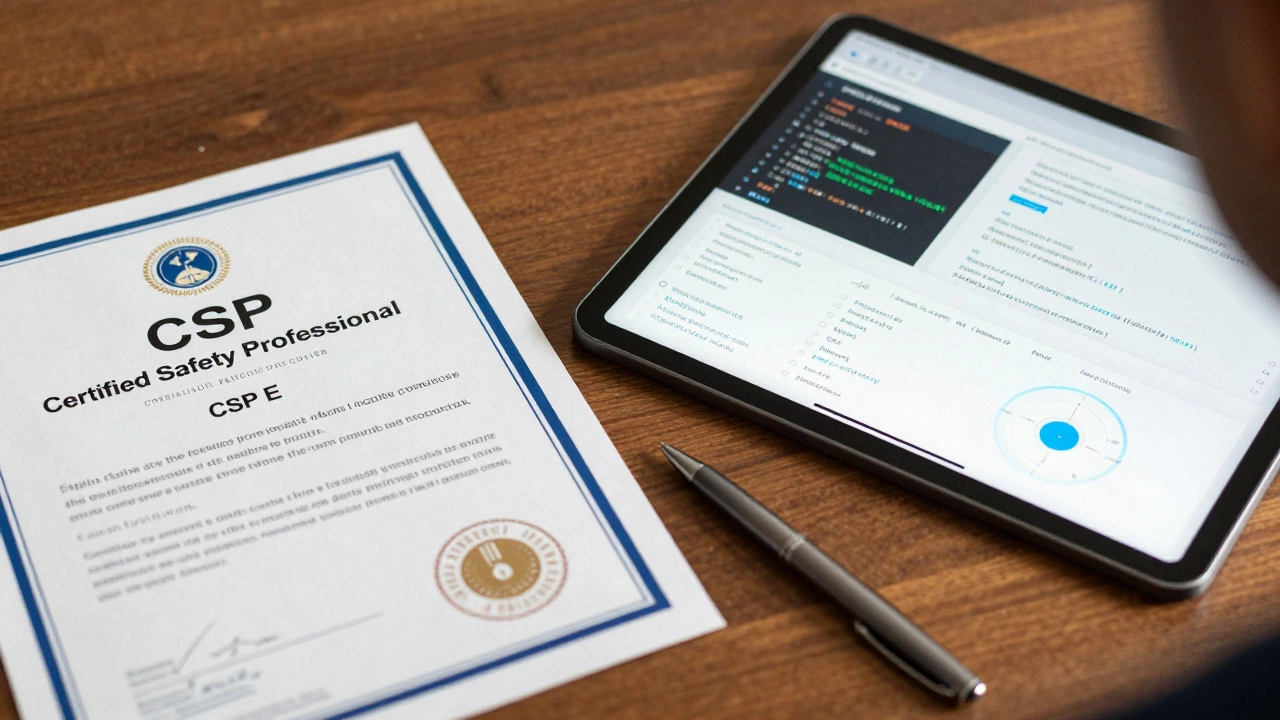
The gold standard is the Certified Safety Professional (CSP). Issued by the Board of Certified Safety Professionals (BCSP), this certification requires years of experience and passing a rigorous exam. Employers view CSPs as ready for leadership roles. Studies consistently show that CSP holders earn 15-20% more than their non-certified peers.
Other valuable certifications include:
- CIH (Certified Industrial Hygienist): Essential for roles involving toxic substances, air quality, and noise. Highly valued in manufacturing and healthcare.
- CHMM (Certified Hazardous Materials Manager): Critical for logistics, waste management, and environmental compliance.
- NEBOSH Diploma: While originally UK-based, this is gaining global recognition and is highly respected in international firms.
- PMP (Project Management Professional): Not strictly a safety cert, but many high-paying safety roles involve managing large safety improvement projects. Having PMP shows you can handle budgets and timelines.
Skills Beyond the Clipboard
Why do some safety managers stay stuck at $80,000 while others jump to $150,000? It comes down to soft skills and business acumen. The highest earners are not just inspectors; they are communicators.
You need to be able to explain to the CFO why spending $50,000 on new ventilation systems will save them $500,000 in potential OSHA fines and workers' comp claims. You need to influence behavior without having direct authority over every employee. Leadership, negotiation, and data analysis are the three pillars of high-earning safety professionals.
Data analysis is huge right now. Companies are moving away from lagging indicators (like injury counts) to leading indicators (like near-miss reporting trends). If you can use tools like Python, Tableau, or advanced Excel to predict accidents before they happen, you become indispensable. This blend of technical safety knowledge and data science is a rare and expensive skill set.
Geographic Variations
Where you live plays a role too. Salaries adjust for the cost of living and local labor markets. In the US, states with heavy industrial bases tend to pay more. Texas, California, and New York often lead the pack. However, remote work is changing this dynamic. Some consulting firms now allow safety auditors to work remotely, meaning you can keep a high-paying job while living in a lower-cost area, effectively increasing your disposable income.
In the UK, the landscape is slightly different. Here, the IOSH (Institution of Occupational Safety and Health) membership is key. Senior roles in London or the North Sea oil sector can command £80,000 to £120,000+. The principles remain the same: higher risk environments and larger organizations pay more.
How to Get There: A Realistic Roadmap
If you are starting out, don't get discouraged. The path to the top takes time, but it is clear.
- Get the Basics: Start with a degree in occupational health and safety or a related field. If you don't have one, get certified early (like OSHA 30 or NEBOSH General Certificate).
- Gain Field Experience: Spend 3-5 years on the ground. You cannot manage safety if you haven't walked the floor. Understand the real-world challenges workers face.
- Specialize: Pick a niche. Process safety, construction, healthcare, or data analytics. Generalists are replaceable; specialists are hired.
- Get Certified: Aim for the CSP or CIH as soon as you are eligible. This signals readiness for promotion.
- Move Up or Out: Either move up within your company to a management role, or move to a higher-risk industry where the budget for safety is larger.
The highest salary in the safety field belongs to those who treat safety as a business strategy, not just a compliance checklist. If you can protect people and profits simultaneously, the market will reward you generously.
What is the average salary for a safety officer in 2026?
The average salary for a mid-level safety officer ranges from $70,000 to $90,000 annually in the United States. Entry-level positions may start around $50,000, while experienced officers with certifications can exceed $100,000.
Which industry pays the most for safety professionals?
The oil and gas industry typically offers the highest salaries due to the high-risk nature of the work and strict regulatory requirements. Pharmaceuticals and chemical manufacturing also rank among the top payers.
Is a master's degree worth it for a safety career?
For entry-level roles, a bachelor's degree or certifications are sufficient. However, for executive roles like Director of HSE or VP of Safety, a Master's in Occupational Health and Safety or an MBA can significantly boost your earning potential and credibility.
Do safety consultants make more than in-house managers?
Senior safety consultants can earn more than in-house managers, especially if they are independent contractors or partners in a firm. However, in-house roles often offer better benefits, stability, and bonus structures tied to company performance.
What certifications are required for the highest paying safety jobs?
The Certified Safety Professional (CSP) is the most recognized credential for high-paying roles. Other valuable certifications include Certified Industrial Hygienist (CIH) and Certified Hazardous Materials Manager (CHMM).



Write a comment