
UK Safety Qualification Finder
Select your current or desired job role below to find the legally recognized safety qualification required in the UK.
Construction Worker
Manual labor, site work, tradesperson
Manager / Supervisor
Overseeing teams, legal responsibilities
Safety Specialist
Dedicated H&S advisor, auditor
Office / General Staff
Non-construction roles, general awareness
Working at Height
Scaffolding, MEWPs, ladders
First Aider
Emergency response duties
Recommended Qualification
Certificate Name
Description goes here.
Why this is required:
Issued By:
Issuer
Cost Responsibility:
Employer Pays
Under UK law (PUWER/MSHW), mandatory training must be provided free of charge.There is a massive misunderstanding floating around the internet about OSHA certification, which is a widely misunderstood term often used to describe safety training that does not actually exist as a formal credential issued by the government. If you are searching for this because your employer asked for it, or because you saw a cheap online course promising one, stop right there. You might be about to waste money on a piece of paper that holds no legal weight in the United Kingdom.
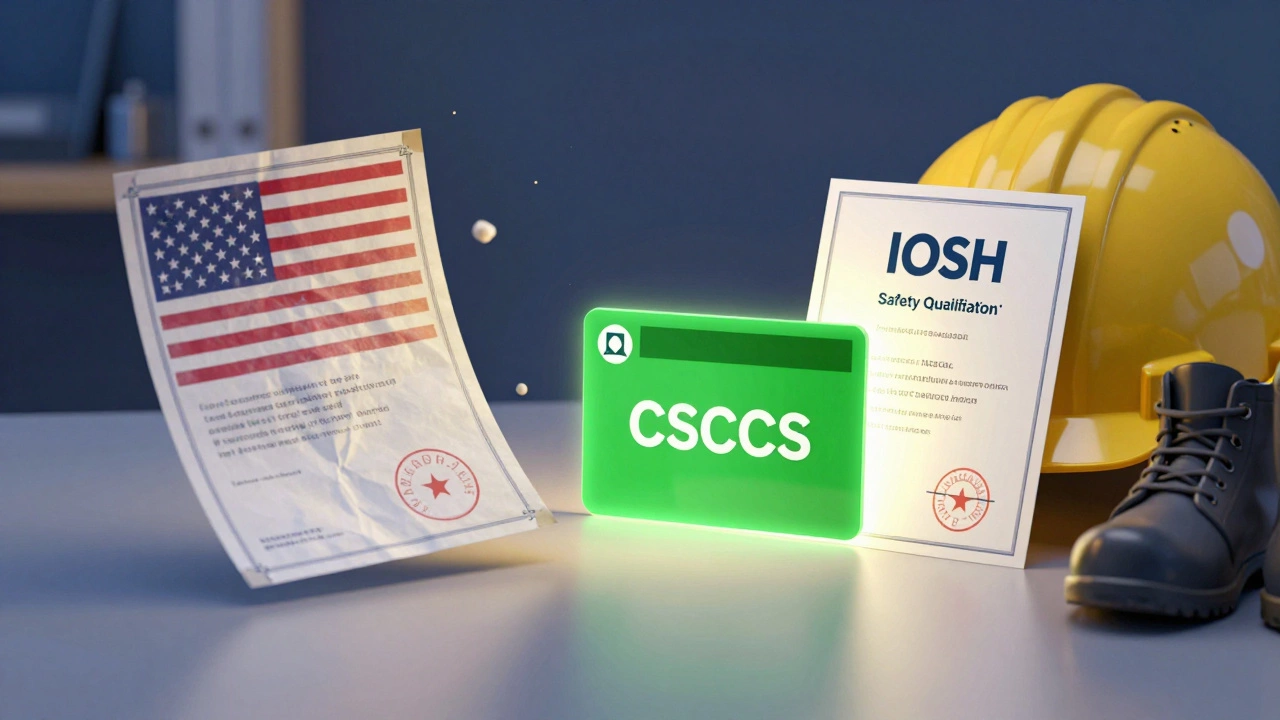
The confusion stems from the fact that OSHA stands for the Occupational Safety and Health Administration. This is a federal agency based in Washington D.C., USA. It regulates workplace safety across America. It has absolutely no jurisdiction in the UK. There is no such thing as an "OSHA certificate" issued by any British authority. So, why does everyone keep talking about it?
The Myth of the "OSHA Certificate" in the UK
In the US, companies like National Safety Council or private training providers offer courses that lead to an "OSHA Outreach Card" (often called a 10-hour or 30-hour card). These cards prove you attended a class. They do not mean the government certified you as an expert. Even in the US, these are voluntary training records, not licenses.
In the UK, private training providers have latched onto this American terminology to sell courses. They will market "OSHA Level 1" or "OSHA Construction Safety" certificates. Here is the hard truth: these certificates are privately awarded. They are not recognized by the Health and Safety Executive (HSE), which is the UK’s regulatory body equivalent to OSHA. If you show up to a job site in Bristol or London with an "OSHA certificate," a competent site manager will likely ask what it is and realize it doesn't meet local statutory requirements.
You need to understand the difference between training and certification. Training is learning how to stay safe. Certification is a formal recognition of competence, often required by law. In the UK, we don't use OSHA standards; we follow UK Health and Safety Law, specifically the Health and Safety at Work etc. Act 1974.
What You Actually Need: Recognized UK Qualifications
If you want to work in construction, manufacturing, or facilities management in the UK, you need qualifications that employers and insurers recognize. The gold standard comes from two main bodies: IOSH (Institution of Occupational Safety and Health) and NEBOSH (National Board for Employment Safety and Health).
IOSH Managing Safely is a popular choice for managers who need to understand their legal responsibilities without becoming full-time safety officers. It covers risk assessment, hazard identification, and accident investigation. It’s practical, short, and widely respected.
NEBOSH General Certificate is more rigorous. It’s designed for people who want to specialize in health and safety. It involves written exams and practical assessments. If you aim to become a dedicated safety advisor, this is the route to take. It proves you can handle complex safety scenarios, not just tick boxes.
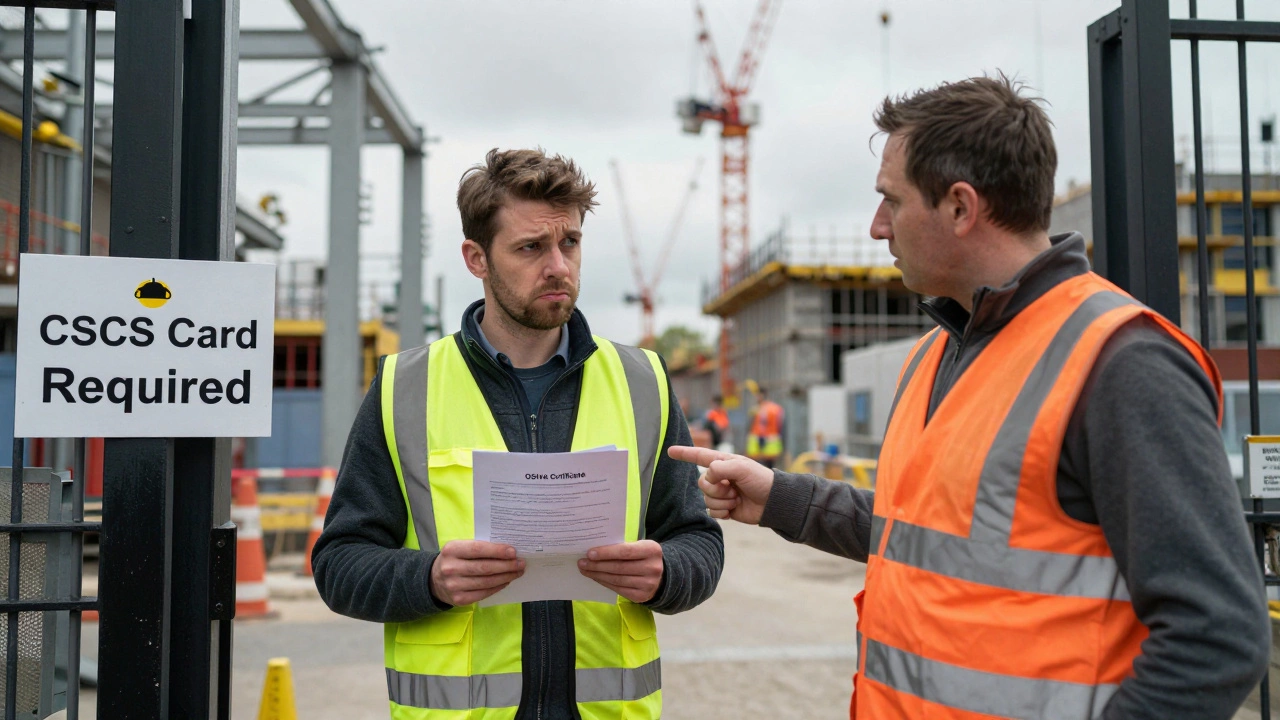
For manual workers and tradespeople, the CSCS Card (Construction Skills Certification Scheme) is essential. To get a green CSCS card, you usually need to pass the CITB Health, Safety and Environment Test. This test checks your basic knowledge of site risks. Unlike the fake "OSHA" certs, the CITB test is industry-standard. Without it, you won’t get past the gate on most major construction sites.
Common Safety Courses vs. Fake OSHA Labels
Many legitimate safety topics are being mislabeled as "OSHA" to sound more international or prestigious. Let’s look at what you should actually book instead.
| Misleading "OSHA" Title | Actual UK Requirement / Equivalent | Who Issues It? |
|---|---|---|
| OSHA 10-Hour Construction | CITB Health, Safety and Environment Test + CSCS Card | CITB / CSCS |
| OSHA Fall Protection | Work at Height Training (IPAF or PASMA) | IPAF / PASMA / Approved Providers |
| OSHA First Aid | Emergency First Aid at Work (EFAW) | St John Ambulance / Red Cross / First Aid for England |
| OSHA Fire Safety | Fire Marshal / Fire Warden Training | IOSH Approved / Local Fire Authority Standards |
| OSHA Confined Spaces | Confined Space Awareness / Rescue | HSE Compliant Trainers |
Notice the pattern? The UK has specific, regulated standards for each risk. For example, if you work with scaffolding towers, you need PASMA (Prefabricated Access Modular Space Management Association) training. If you operate a mobile elevated work platform, you need IPAF (International Powered Access Federation) certification. Neither of these would ever call themselves "OSHA."
Why Do Companies Still Ask for "OSHA"?
Sometimes, HR departments or small business owners are simply confused. They might have read an article online or heard a contractor mention OSHA and assumed it was a global standard. Other times, it’s a red flag. Some unscrupulous training providers sell "OSHA" certificates for £50 online. They know people are looking for quick fixes.
If your employer insists on an "OSHA certification," politely ask them to clarify which specific competency they need. Say something like: "I noticed you mentioned OSHA. Since we’re operating under UK law, would you prefer I complete the CITB test or an IOSH Managing Safely course instead?" This shows you are proactive and knowledgeable. It also saves the company from hiring someone with a useless certificate.
In multinational companies, especially those with US headquarters, they might genuinely require US-style compliance for roles that involve traveling to America. In that case, you might need actual US OSHA outreach training. But for day-to-day work in the UK, it’s irrelevant.
How to Verify a Training Provider
Before you pay for any safety course, check the provider. Look for accreditation. Does the course lead to a qualification from City & Guilds, Qualsafe, or directly from IOSH/NEBOSH?
Avoid providers who:
- Use the word "OSHA" prominently in the title but cannot explain its relevance to UK law.
- Offer instant digital certificates without any assessment or exam.
- Do not list their accreditors on their website.
- Charge significantly less than the market average for recognized qualifications.
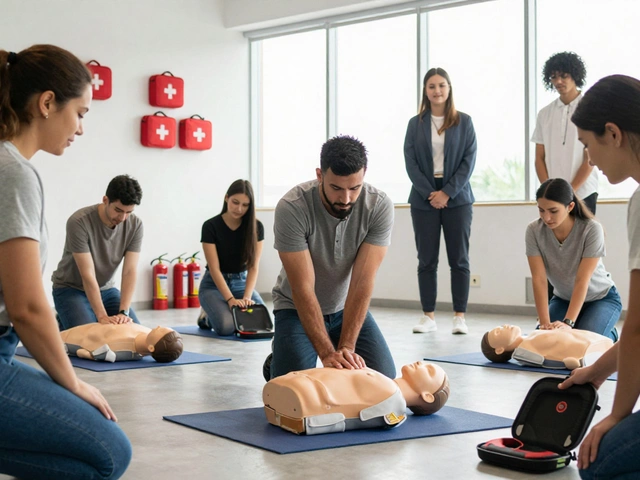
Legitimate training takes time. A proper first aid course lasts two days. A NEBOSH certificate requires weeks of study. If it sounds too good to be true, it probably is.

The Legal Reality: What Employers Must Provide
Under the Provision and Use of Work Equipment Regulations 1998 (PUWER), employers must ensure anyone using equipment is trained. Under the Management of Health and Safety at Work Regulations 1999, they must assess risks and provide information and training. They cannot force you to pay for mandatory training. If a job requires specific safety training, the employer should cover the cost.
This is another reason to avoid cheap "OSHA" online courses. If you buy one yourself, you’re out of pocket for a credential that may not satisfy your employer’s legal duty of care. Always discuss training needs with your line manager or HR department first.
Next Steps for Your Career
If you are starting out, focus on the basics. Get your CSCS card if you are in construction. Take an Emergency First Aid at Work course-it’s useful everywhere. If you move into management, invest in IOSH Managing Safely. It boosts your CV and demonstrates professional commitment.
Ignore the noise about OSHA unless you plan to work in the United States. Stick to UK-recognized bodies. Your safety, your career, and your wallet will thank you.
Is OSHA certification valid in the UK?
No. OSHA is a US federal agency. Its certifications and outreach cards have no legal standing or recognition in the UK. UK employers require qualifications from bodies like IOSH, NEBOSH, or CSCS/CITB.
What is the UK equivalent of OSHA?
The Health and Safety Executive (HSE) is the UK's regulatory body for workplace health and safety, similar to OSHA in the US. However, HSE does not issue personal "certificates" for general safety awareness; it sets the laws that others must follow.
Can I get an OSHA certificate online?
You can find websites selling "OSHA" certificates online, but these are privately issued and not recognized by any government body in the UK. They hold no value for employment purposes here.
Which safety certificate is best for beginners in the UK?
For construction workers, the CSCS card (via the CITB test) is essential. For office workers or general employees, an Emergency First Aid at Work certificate or IOSH Managing Safely (for managers) are excellent starting points.
Does my employer have to pay for safety training?
Yes. Under UK law, employers must provide necessary health and safety training at no cost to the employee. If training is mandatory for your role, you should not have to pay for it.
What is the difference between IOSH and NEBOSH?
IOSH offers shorter, more practical courses like "Managing Safely" aimed at managers and supervisors. NEBOSH offers more comprehensive, academic-level qualifications for those wanting to specialize in health and safety careers.


Write a comment