
Beauty Treatment Earnings Calculator
Monthly Botox Earnings
£0
Monthly Filler Earnings
£0
Total Monthly Earnings
£0
Profit Margin
0%
Training Payback
0 months
If you’re wondering which beauty treatment brings in the most cash, the answer isn’t what you might expect. It’s not facials, waxing, or even manicures. The real money in beauty therapy right now comes from medical-grade, non-surgical procedures that blend science with aesthetics. In 2026, Botox and dermal fillers are still the top earners in the beauty industry-by a wide margin.
Why Botox and Fillers Dominate the Market
Think about it: a single Botox session costs between £250 and £450 in the UK, depending on location and clinic prestige. Most clients return every 3 to 4 months. That’s 3 to 4 visits per year per client. A therapist doing just 10 sessions a week can easily hit £12,000 to £18,000 monthly before overhead. Fillers like hyaluronic acid follow the same pattern-£300 to £600 per treatment, with repeat visits every 6 to 12 months.
Unlike waxing or massages, these treatments aren’t one-offs. They’re habits. Clients don’t just try them once-they build loyalty. A study from the British Association of Aesthetic Plastic Surgeons in late 2025 showed that 78% of clients who tried Botox in 2023 had at least two more sessions by the end of 2025. That’s recurring revenue you can count on.
What Makes It So Profitable?
Three things: low product cost, high markup, and minimal time investment.
A vial of Botox costs a clinic around £120. It can treat 3 to 5 clients, depending on dosage. That’s £24 to £40 in product cost per client. You charge £350. The rest is profit. Fillers are similar-a £180 syringe can serve 1 to 2 clients. You charge £500. That’s a 250% to 400% markup.
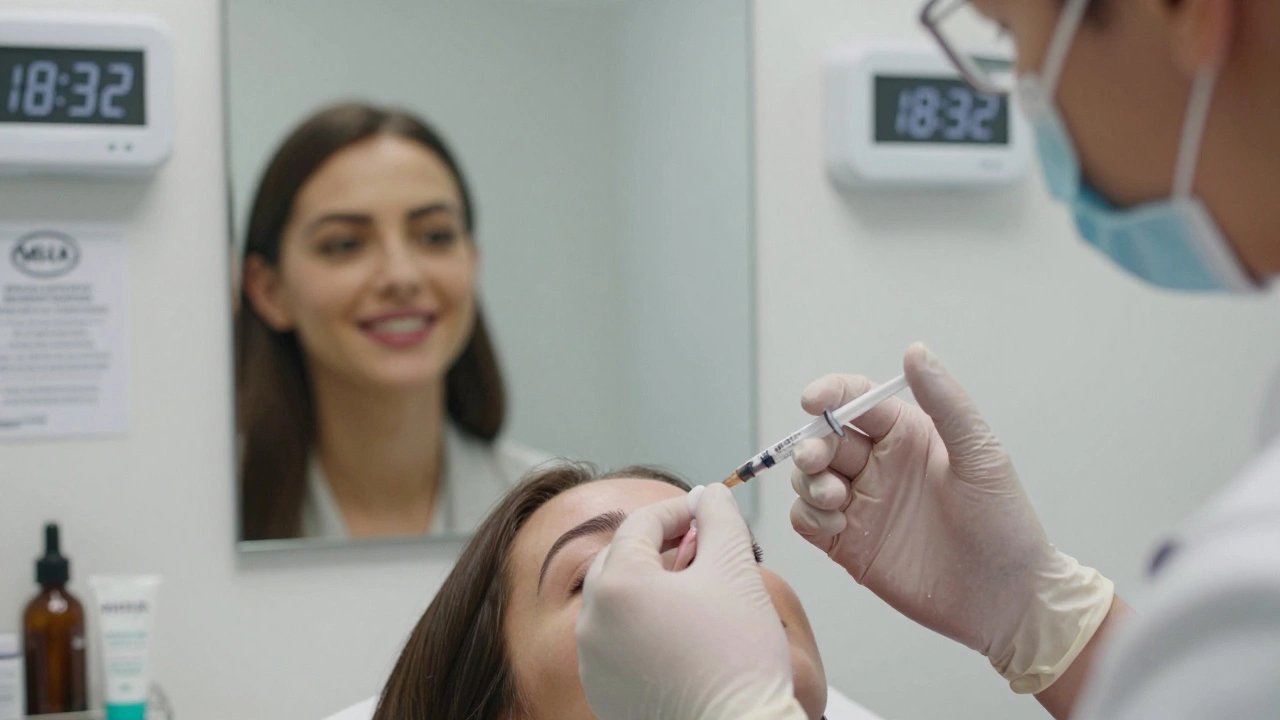
And the time? A full Botox session takes 15 to 20 minutes. You can fit five clients in an hour. That’s £1,250 to £2,250 in revenue per hour. Compare that to a 90-minute massage that nets you £80. The math doesn’t lie.
Other High-Earning Treatments (And Why They Don’t Top the List)
Laser hair removal is a close second. It’s popular, especially among younger clients. A full leg session can cost £200 to £350. But here’s the catch: clients need 6 to 8 sessions over 12 months. That means slower cash flow. You’re waiting months to get paid in full. Plus, the machines cost £15,000 to £40,000. You need volume to break even.
Chemical peels? They’re affordable-£80 to £150 per session-but clients often need monthly treatments for results. Profit margin is good, but volume is harder to scale. You can’t do 10 peels an hour like you can with Botox.
Microblading and semi-permanent makeup? Big upfront payments-£300 to £600-but clients come back once a year for touch-ups. That’s a nice income stream, but it’s seasonal and limited by healing time.
None of these match the combination of speed, repetition, and margin that Botox and fillers offer.
What You Need to Start Offering These Treatments
You can’t just walk into a clinic and start injecting. In the UK, these are classified as medical procedures. You need:
- A Level 4 or Level 7 qualification in Injectable Aesthetics (recognized by Ofqual)
- Medical supervision during training (some courses require you to shadow a doctor for 20+ hours)
- Professional indemnity insurance specifically for injectables
- Registration with the Care Quality Commission (CQC) if you’re running your own clinic
Most reputable beauty therapy courses now include injectables as a module. But don’t be fooled by weekend certifications. The real training takes 6 to 12 months, including theory, anatomy, live models, and clinical assessments. A solid course costs between £3,000 and £6,000-but it pays for itself in under three months if you’re doing even 5 sessions a week.
Where the Real Money Is: Private Clinics vs. Spas
Working in a luxury spa? You might earn £18 to £25 an hour plus commission. That’s fine for waxing or body wraps. But if you’re doing injectables, you’ll make more as a self-employed practitioner or clinic owner.
Many therapists in Bristol, Manchester, and London now rent a room in a medical building for £800 to £1,200 a month. They bring their own clients, handle their own bookings, and keep 85% of every session. One therapist I spoke to in Bristol started part-time in 2024. By 2026, she’s doing 25 sessions a week and clearing £14,000 a month after rent, products, and insurance.
Spas pay less because they take a cut. But they also bring you clients. If you’re just starting out, working for a clinic for a year or two gives you credibility and a client base before going solo.

The Risks (And How to Avoid Them)
With high reward comes high responsibility. Bad injectables can cause blindness, tissue death, or permanent disfigurement. The General Pharmaceutical Council (GPhC) reported 327 complaints about non-medical injectors in 2024-up 40% from 2023. Most came from unqualified people doing cheap treatments in salons or homes.
Here’s how to stay safe:
- Only train with Ofqual-approved providers
- Never buy Botox or fillers online-always through licensed distributors
- Use only FDA and MHRA-approved products
- Keep detailed records of every client, product batch, and injection site
- Get proper insurance-it’s not optional
The industry is tightening. The UK government is pushing for a ban on non-medical professionals doing injectables by 2027. If you’re serious about this, get certified now-before the rules change.
Who’s Making the Most Money Right Now?
It’s not the biggest clinics. It’s the quiet ones. The therapists who specialize. The ones who don’t offer 12 treatments-they do three, and they do them perfectly.
Think of a practitioner in Bath who only does lip fillers and brow lifts. She books 3 months in advance. Her clients refer friends. She doesn’t advertise on Instagram. She doesn’t need to. Her reputation is her marketing.
Specialization beats generalization every time. If you want to make serious money, don’t try to be everything to everyone. Master one or two treatments. Build trust. Let word of mouth do the rest.
Final Thought: It’s Not Just About the Money
Botox and fillers aren’t just profitable-they’re transformative. Clients come in with low confidence. They leave feeling like themselves again. That’s powerful.
If you’re in beauty therapy because you care about helping people feel better, this is the path that lets you do that-and earn well. But if you’re only chasing cash, you’ll burn out. Or worse, you’ll hurt someone.
The best earners in this field? They love what they do. And they’re meticulous. That’s why they’re still in business-and thriving-while others have vanished.
Is Botox the most profitable beauty treatment in 2026?
Yes, Botox and dermal fillers are still the most profitable beauty treatments in 2026. They have high client retention, low product costs, and quick session times. A single practitioner can earn £10,000 to £15,000 monthly after expenses by doing 15 to 25 sessions per week. No other treatment matches this combination of profit margin and repeat business.
Can I do Botox with just a beauty therapy diploma?
No. In the UK, Botox and fillers are regulated as medical procedures. You need a Level 4 or Level 7 qualification in Injectable Aesthetics, which includes anatomy training, live clinical practice, and supervision by a medical professional. A standard beauty therapy diploma doesn’t cover this. Skipping proper training is illegal and dangerous.
How much does it cost to train in injectables?
Reputable training courses cost between £3,000 and £6,000. This includes theory, anatomy modules, supervised practice on live models, and certification. Cheaper options under £1,500 are often unaccredited and won’t let you get insurance or work legally. The investment pays for itself in under three months if you’re doing even 5 sessions a week.
Do I need to be a nurse or doctor to do injectables?
No, you don’t need to be a doctor or nurse. But you do need to be trained and certified by an Ofqual-approved provider. Many beauty therapists, paramedics, and even dentists now offer injectables legally-so long as they’ve completed the right training and hold proper insurance. The key is certification, not your original profession.
What’s the difference between Botox and fillers in terms of earnings?
Botox has higher turnover because clients return every 3 to 4 months. Fillers last longer-6 to 12 months-so fewer repeat visits. But fillers have higher per-session prices (£400-£800 vs. £250-£450 for Botox). Together, they’re a powerhouse combo. Most top earners offer both. Botox brings in steady income; fillers bring in bigger one-off payments.
Is laser hair removal more profitable than Botox?
No. Laser hair removal requires expensive equipment (£15k-£40k), longer sessions (30-60 minutes), and clients need 6-8 treatments over a year. Botox sessions are 20 minutes, require no equipment beyond syringes, and clients come back every 3-4 months. The return on investment and cash flow for Botox is far superior.
Can I do injectables from home?
Technically, you can-but you shouldn’t. The Care Quality Commission (CQC) requires clinics offering injectables to be registered and meet strict hygiene and safety standards. Home treatments are often unregulated, and many insurers won’t cover you. Plus, clients are more likely to trust a professional clinic. Stick to a registered space-it’s safer and more profitable long-term.
What’s the future of injectable treatments in the UK?
The UK government is moving toward banning non-medical professionals from performing injectables by 2027. Even if the law changes, the demand won’t disappear. The smart move is to get certified now. The market is already tightening, and only qualified practitioners will survive. Those who delay risk being locked out entirely.



Write a comment