

NVQ Qualification Pathway Planner
You’ve heard about National Vocational Qualifications (NVQs) boosting your career prospects. Maybe a job posting listed one as "essential," or your manager suggested it’s the next step up. But here is the catch: unlike traditional school exams, you cannot simply sit down with a pen and paper to pass an NVQ. There are no final written tests in a classroom.
So, how do you actually qualify? The answer lies in what you already do every day at work. An NVQ is a work-based qualification that assesses your competence in real-life job tasks rather than theoretical knowledge. To qualify, you need to prove you can perform specific duties to a national standard. This guide breaks down exactly who is eligible, how the assessment works, and the steps you need to take to get certified.
Who Is Eligible for an NVQ?
The beauty of the NVQ system is its accessibility. You do not need A-levels, GCSEs, or any prior academic credentials to start. In fact, many people begin their first NVQ with just a basic entry-level position. The primary requirement is that you must be working in the relevant industry or sector.
- Current Employees: If you are already working in a role like construction, healthcare, or hospitality, you are likely eligible. Your employer may even sponsor your training.
- Apprentices: Most apprenticeships include an NVQ component. If you are on an apprenticeship scheme, qualifying for the NVQ is part of your contract.
- Self-Employed Professionals: Plumbers, electricians, and hairdressers who run their own businesses can qualify by documenting their daily work.
- Career Changers: If you have moved into a new field but lack formal qualifications, you can gain an NVQ by working in that sector and proving your skills over time.
There is no upper age limit. Whether you are 18 or 60, if you are doing the job, you can qualify for the NVQ that matches your level of responsibility.
Understanding NVQ Levels: Which One Do You Need?
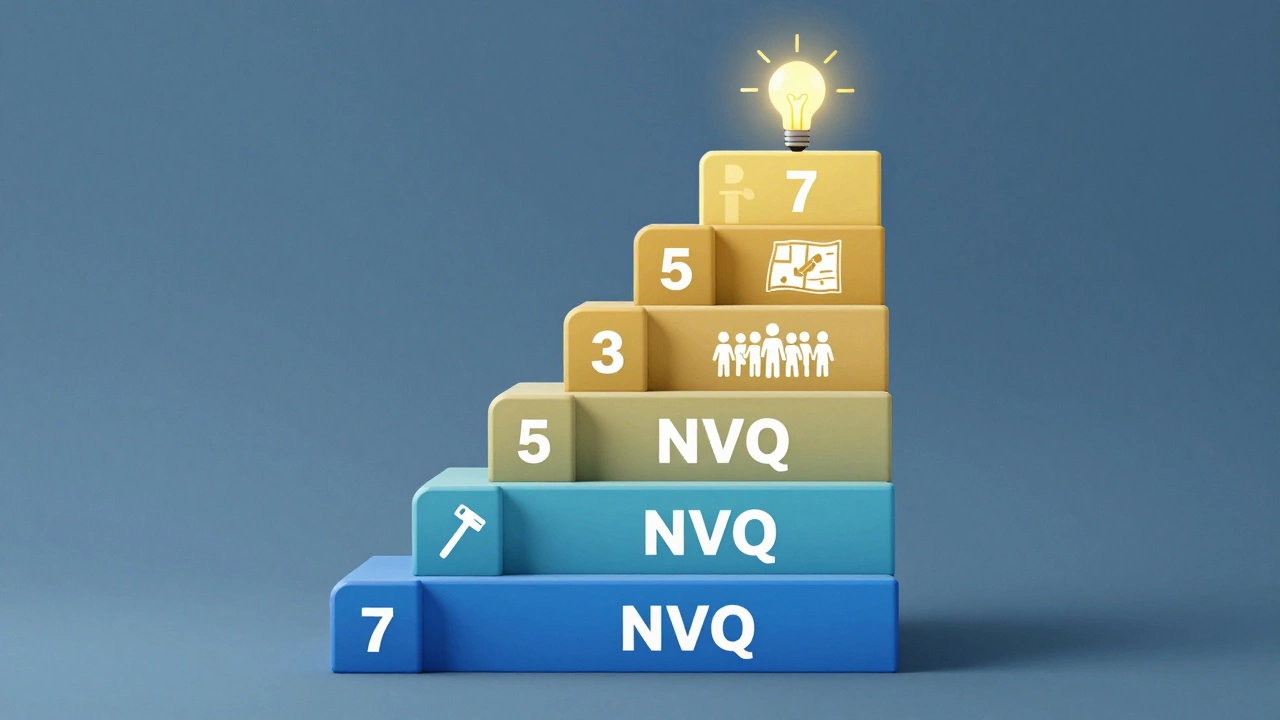
Before you apply, you need to know which level applies to your role. NVQs range from Level 1 to Level 7, each corresponding to different responsibilities and complexity. Choosing the wrong level can waste your time and money.
| NVQ Level | Academic Equivalent | Typical Role Example | Complexity |
|---|---|---|---|
| Level 1 | GCSEs (D-G) | Entry-level assistant, junior waiter | Basic tasks under supervision |
| Level 2 | GCSEs (A*-C) | Skilled worker, team member | Routine tasks, some independence |
| Level 3 | A-Levels | Supervisor, senior technician | Complex tasks, responsible for others |
| Level 4 | Foundation Degree | Team leader, specialist advisor | Highly complex, non-routine problems |
| Level 5 | Bachelor’s Degree | Manager, senior professional | Strategic management, broad responsibility |
| Level 6 | Master’s Degree | Senior manager, director | Autonomous expertise, strategic leadership |
| Level 7 | Doctorate | Executive, expert consultant | Advanced knowledge creation and strategy |
If you are a junior electrician installing sockets, you are looking at Level 2 or 3. If you are managing a team of engineers and overseeing site safety protocols, you might aim for Level 5. Always check the specific unit requirements for your industry, as titles can vary between sectors like health and social care versus construction.
The Core Requirement: Evidence-Based Assessment
This is where most candidates get confused. How do you "pass" without an exam? You qualify by building a portfolio of evidence. An assessor will evaluate whether you meet the criteria set out in the national occupational standards for your job.
Your evidence usually comes from three sources:
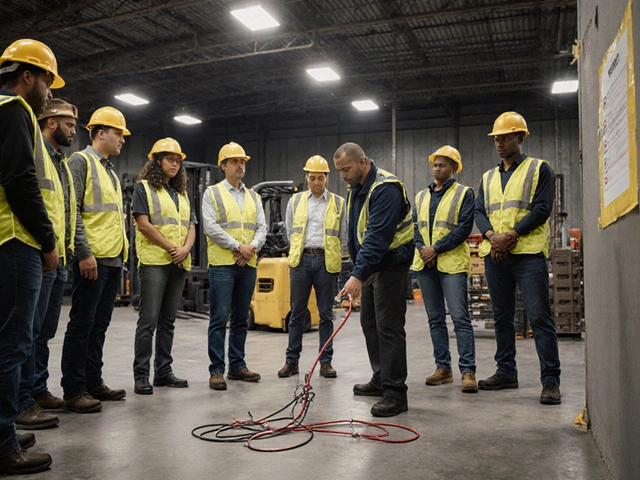
- Direct Observation: An assessor watches you perform a task. For example, a chef might be observed preparing a dish, while an IT support agent might be watched troubleshooting a server issue.
- Professional Discussion: You sit down with an assessor to talk through how you handle certain situations. They ask questions like, "What would you do if a client complained about X?" This proves you understand the theory behind your actions.
- Workplace Portfolio: You submit documents that show your work. This could include risk assessments you wrote, emails you sent to clients, schedules you created, or photos of completed projects (with sensitive data removed).
You do not need to create fake evidence. It must be genuine work produced during your normal job duties. If you are self-employed and lack a direct supervisor, you may need to provide witness testimonies from clients or colleagues who can vouch for your skills.
Step-by-Step: How to Start Your NVQ Journey
Qualifying for an NVQ is a process, not a single event. Follow these steps to ensure you stay on track.
1. Identify the Right Unit
NVQs are split into units. A Level 3 Health and Social Care NVQ, for example, has mandatory units (like safeguarding) and optional units (like dementia care). Check the specification for your chosen NVQ. Ensure your current job covers enough of these units. If you never deal with financial records, you cannot easily claim evidence for a finance-related unit.
2. Find an Accredited Training Provider
You cannot just send your work to a government office. You must enroll with an awarding organization or training provider accredited by Ofqual (in England), Qualifications Wales, or CCEA (in Northern Ireland). Look for providers with good reviews in your specific industry. Many employers have partnerships with local colleges or private training agencies.
3. Get an Initial Assessment
Once enrolled, an assessor will visit you or meet online. They will review your CV, discuss your role, and help you map your daily tasks to the NVQ units. This meeting confirms that you are working at the right level and identifies any gaps in your experience.
4. Collect Evidence Over Time
This is the longest phase. Depending on the level, it can take six months to two years. Keep a logbook. Save copies of your work. Ask your assessor for feedback early. Do not wait until the end to realize you are missing evidence for a critical unit.
5. Final Verification
When your portfolio is complete, a verifier (someone independent of your assessor) checks a sample of your evidence to ensure quality and consistency. Once approved, you receive your certificate.
NVQ vs. Other Qualifications: What’s the Difference?
You might wonder why you should choose an NVQ over a BTEC, HND, or university degree. The key difference is the focus on practical competence versus academic study.
A BTEC often involves college attendance, assignments, and exams. It is more structured and classroom-based. An NVQ is entirely flexible and happens at your workplace. If you learn better by doing rather than reading textbooks, an NVQ is usually the better fit. Employers value NVQs highly because they guarantee that the holder can actually do the job, not just talk about it.
In recent years, the term "RQF" (Regulated Qualifications Framework) has replaced the older "NVQ" branding in official documents, though most people still call them NVQs. RQF qualifications include NVQs, BTECs, and other vocational awards. When searching for courses, look for "RQF compliant" to ensure the qualification is nationally recognized.

Common Pitfalls to Avoid
Even qualified professionals stumble during the NVQ process. Here is how to avoid the most common mistakes:
- Ignoring the "Why": It is not enough to say, "I did this." You must explain why you did it that way. Did you follow health and safety regulations? Did you consider customer needs? Your evidence must show decision-making, not just action.
- Poor Documentation: If it isn’t written down, it didn’t happen. Take notes immediately after completing a significant task. Memory fades, and reconstructing details weeks later leads to weak evidence.
- Choosing the Wrong Level: Trying to skip a level is tempting but risky. If you go for Level 3 when you only have Level 2 experience, your assessor will struggle to find valid evidence, delaying your certification.
- Lack of Communication: Treat your assessor as a coach, not a police officer. Regular check-ins prevent surprises at the final verification stage.
Funding and Employer Support
One of the biggest barriers is cost. However, you do not always have to pay out of pocket. Many employers view NVQs as a way to upskill their workforce and reduce turnover. Negotiate with your HR department. Some industries offer grants or levy funds (such as the Apprenticeship Levy in the UK) that cover training costs.
If you are unemployed, local job centers or government schemes may fund your NVQ training to help you re-enter the workforce. Always check eligibility for financial aid before paying for a course privately.
Do I need to pass exams to get an NVQ?
No. NVQs are assessed through workplace performance, not traditional exams. You build a portfolio of evidence including observations, discussions, and work samples to demonstrate your competence.
Can I study for an NVQ while working full-time?
Yes, this is the ideal scenario. Since the assessment is based on your actual job duties, you collect evidence as you work. You only need extra time for meetings with your assessor and writing up your portfolio.
How long does it take to qualify for an NVQ?
It varies by level and individual pace. A Level 2 NVQ might take 6-12 months, while a Level 3 or higher can take 1-2 years. Part-time students often take longer due to balancing work and evidence collection.
Is an NVQ recognized internationally?
NVQs are primarily UK-based qualifications. While they are respected globally for demonstrating practical skills, you may need additional certification or equivalency checks depending on the country and profession.
What happens if I fail an NVQ assessment?
You rarely "fail" outright. Instead, your assessor will identify gaps in your evidence or understanding. You will be given time to improve and resubmit evidence or undergo further observation until you meet the standard.


Write a comment