

Level 5 NVQ Timeline Estimator
Estimated Completion Plan
- Earliest Possible Finish --
- Realistic Average --
- Conservative Estimate --
Recommended Strategy:
Most people assume that because a Level 5 NVQ is a higher-level qualification, it must take years to finish. The reality is much more flexible. Depending on your current experience and how fast you can gather evidence, you could complete a Level 5 National Vocational Qualification in as little as six months. On the other hand, if you are building up skills from scratch or working part-time, it might stretch to two years.
The timeline isn't fixed by the government or the awarding body. Instead, it is dictated by your ability to demonstrate competence in the workplace. This makes the process unique compared to traditional university degrees, which follow a strict academic calendar. Here is what actually determines how long your journey will take.
Why There Is No Fixed Duration for Level 5 NVQs
A Level 5 NVQ is a work-based assessment framework used across the UK to verify professional competence at a supervisory or management level. Unlike a classroom course where you sit exams on specific dates, an NVQ is purely about proving you can do the job. You don't study theory; you show proof of practice.
This means the clock starts ticking when you begin collecting evidence, and it stops when your assessor signs off your portfolio. Several factors influence this speed:
- Existing Experience: If you have been working in a supervisory role for three years, you likely already have the evidence needed. You just need to document it. This is called "prior learning" or "existing competence."
- Evidence Collection Speed: How quickly can you gather witness testimonies, photos of your work, emails, and reports?
- Assessor Availability: Your assigned assessor needs time to review your submissions and visit you for observations. Delays here are common.
- Your Workload: Are you studying full-time while working, or fitting it in around a busy schedule?
For someone with extensive relevant experience, the process is essentially administrative. For someone new to the role, it involves active skill development, which naturally takes longer.
Typical Timeframes: From Fast-Track to Extended
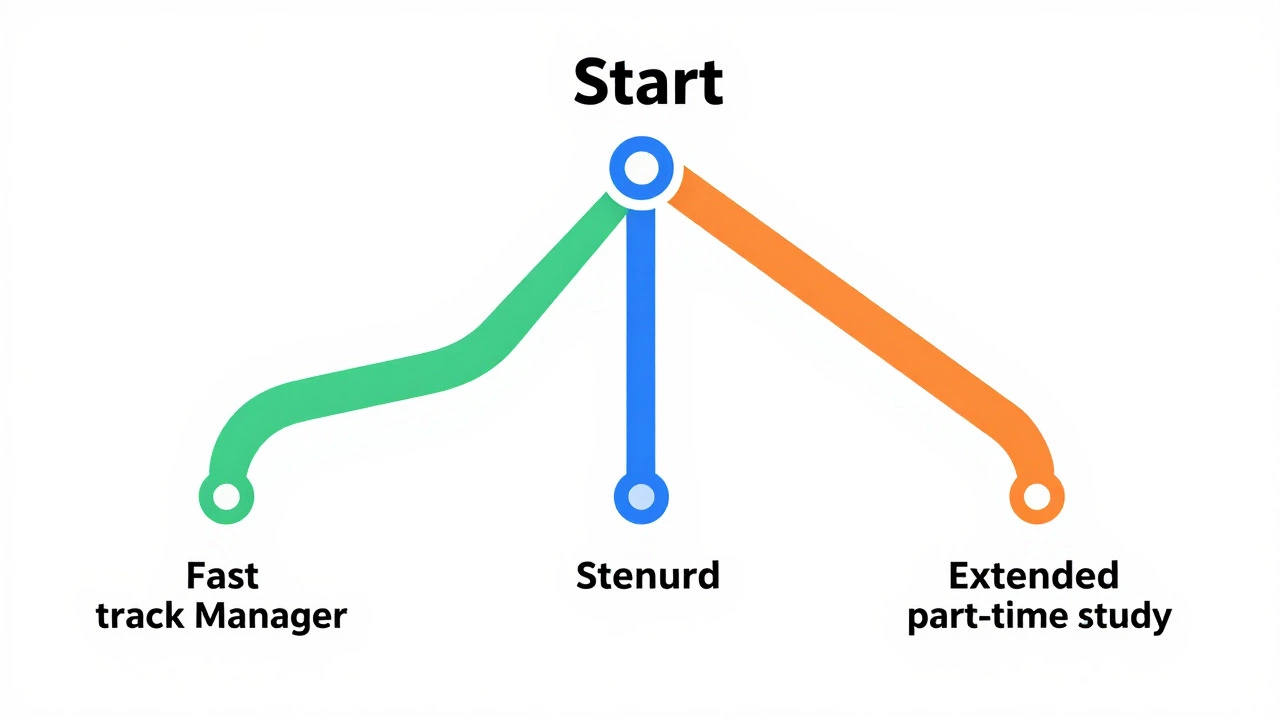
To give you a realistic expectation, we can break down completion times into three common scenarios based on data from training providers in England and Wales.
| Scenario | Timeframe | Who Fits This Category? |
|---|---|---|
| Fast-Track | 6 - 9 months | Experienced managers/supervisors who already perform all required tasks daily and can provide immediate evidence. |
| Standard Pace | 12 - 18 months | Professionals who have some experience but need to develop specific competencies or wait for opportunities to arise at work. |
| Extended/Part-Time | 18 - 24+ months | Those balancing heavy workloads, those new to the sector, or those requiring significant support with documentation. |
Note that most awarding bodies impose a maximum timeframe, often between 24 and 36 months. If you haven't completed the qualification within this window, your enrollment may lapse, requiring you to re-enroll and potentially pay additional fees.
What Actually Takes Up Your Time?
Many candidates underestimate the administrative side of an NVQ. The actual "work" you do at your job doesn't change, but the way you record it does. Understanding where the time goes helps you plan better.
- Initial Assessment (Weeks 1-4): Your assessor meets with you to map your current skills against the unit requirements. They identify gaps and create a personalized action plan.
- Evidence Gathering (Ongoing): This is the bulk of the work. You need to collect witness testimonies from colleagues or line managers, keep a logbook of your activities, and save examples of your written work (reports, plans, feedback forms).
- Professional Discussion (Mid-point): You will have recorded conversations with your assessor to explain your decision-making processes. Preparing for these takes mental energy and time.
- Observation Visits: Your assessor will visit your workplace to watch you perform tasks. Scheduling these around your shift patterns can be tricky.
- Review and Feedback: After submitting evidence, your assessor reviews it. If something is missing, they send it back. This back-and-forth can add weeks to your timeline if not managed proactively.
The biggest time sink is usually the "back-and-forth" phase. To avoid this, ensure every piece of evidence clearly links to a specific criterion in your qualification standard.
Popular Level 5 NVQ Subjects and Their Specific Demands
The subject area matters. A Level 5 NVQ in Management has different evidence requirements than one in Health and Social Care or Construction.
- Management (e.g., Team Leading, Supervision): Requires evidence of planning meetings, handling conflicts, and resource allocation. If you hold a formal leadership role, this is straightforward. If you are an individual contributor aspiring to manage, you may need to seek out projects to lead, which takes time.
- Health and Social Care: Involves sensitive client data. You must anonymize evidence carefully. The volume of reflective writing required is high, which can slow down progress if you struggle with academic-style reflection.
- Construction/Site Management: Heavily reliant on site visits and safety documentation. Weather delays or project pauses can stall evidence collection.
If you are unsure which units apply to your role, ask your training provider for a "unit mapping" session early on. This prevents you from gathering irrelevant evidence that wastes time.
How to Speed Up Your Level 5 NVQ Completion
If you want to finish in under a year, you need to treat the NVQ like a project with deadlines. Here are practical strategies to accelerate the process:
- Set Monthly Targets: Don't aim to "finish soon." Aim to submit three units per month. Break large units into smaller evidence pieces.
- Use Digital Portfolios: Many providers now offer online platforms. Uploading evidence immediately after an event happens (like leading a meeting) is faster than trying to remember details weeks later.
- Proactive Communication: Don't wait for your assessor to contact you. Send them updates every two weeks. Ask for quick feedback on small submissions rather than waiting until you have everything ready.
- Leverage Existing Documents: Use performance appraisals, project plans, and team feedback forms you already create as part of your job. Adapt them slightly to meet NVQ criteria instead of creating new documents from scratch.
- Get Manager Buy-In Early: Ensure your line manager knows about the NVQ. They need to sign off witness testimonies. If they are busy, their delay becomes your delay. Schedule regular check-ins with them specifically for NVQ signatures.

Common Pitfalls That Delay Completion
Avoid these common mistakes that push completion dates out by months:
- Waiting for "Perfect" Evidence: NVQ assessors look for consistent competence, not perfection. A good report with minor errors is better than no report because you were afraid it wasn't perfect enough.
- Ignoring Reflective Accounts: Simply showing a document isn't always enough. You often need to write a short reflection explaining *why* you made certain decisions. Leaving this until the last minute causes bottlenecks.
- Changing Assessors: If you switch trainers or agencies mid-course, the new assessor has to get up to speed. Try to stick with one provider unless there is a critical issue.
- Underestimating Administrative Tasks: Filling out cover sheets and referencing sources takes time. Block out 1-2 hours each week specifically for paperwork.
Is a Level 5 NVQ Worth the Time Investment?
Compared to a Level 5 HND (Higher National Diploma) or a bachelor's degree top-up, an NVQ is often faster if you already have the experience. An HND typically requires 1-2 years of structured study regardless of your background. An NVQ rewards existing competence.
In 2026, employers increasingly value demonstrated skills over theoretical knowledge. A Level 5 NVQ signals that you can hit the ground running in a supervisory role. For career progression in sectors like healthcare, construction, and public administration, it remains a gold standard.
If you are looking to move from a junior role to a management position, the time spent on an NVQ is an investment in your employability. Many funding options, such as Apprenticeship Levy transfers or employer sponsorship, can also cover the cost, making the time commitment the primary hurdle rather than financial one.
Can I complete a Level 5 NVQ in 3 months?
It is highly unlikely to complete a full Level 5 NVQ in just 3 months unless you are only completing a single unit or a very small cluster of units. A full qualification typically consists of 10-15 units. Even with extensive prior experience, the administrative processing, assessor reviews, and mandatory observation periods usually require a minimum of 6 months. However, if you only need specific units for recertification, a shorter timeline is possible.
Do I need to go to college for a Level 5 NVQ?
No, you do not need to attend regular college classes. Level 5 NVQs are work-based qualifications. Most of your time will be spent at your place of work. You will have occasional meetings with your assessor, which can be face-to-face, via video call, or conducted through digital portfolios. Some providers may offer optional workshops or webinars to help with understanding standards, but attendance is rarely mandatory for the core assessment.
What happens if I fail a unit in my Level 5 NVQ?
You don't exactly "fail" in the traditional sense. Instead, you receive feedback on what is missing or incorrect. You then resubmit the evidence or undergo another observation. This can add time to your overall completion date. To minimize delays, ensure you understand the grading criteria before submitting. If you struggle with a particular unit, ask your assessor for targeted guidance or additional resources early on.
Is a Level 5 NVQ equivalent to a Bachelor's Degree?
In terms of level, yes. A Level 5 NVQ sits at the same level on the Regulated Qualifications Framework (RQF) as a Foundation Degree or the first two years of a Bachelor's degree. However, they differ in focus. A degree is academically oriented, focusing on theory and research. An NVQ is competency-based, focusing on practical application in the workplace. Employers in vocational sectors often view them as equally valuable, depending on the role.
Can I start a Level 5 NVQ without any management experience?
Technically, yes, but it will be challenging and take longer. Level 5 NVQs are designed for individuals in supervisory or management roles. If you lack this experience, you will need to actively seek out opportunities to demonstrate these skills. Your employer might need to delegate specific tasks to you, such as leading a small project or mentoring a junior colleague, so you can generate the necessary evidence. Without access to real-world scenarios, progress will be very slow.



Write a comment