
Hairdressing Career Path Estimator
Tell us about your situation
Estimated Duration
--
Financial Impact
--
Why this fits you
--
Select your preferences and click 'Estimate My Path' to see recommendations.
You walk into a salon with a fresh cut, and it looks perfect. But have you ever stopped to wonder how many hours of practice went into that stylist’s hands before they touched your scissors? The question isn't just about talent; it's about time. If you are looking to break into the beauty industry, knowing exactly how long hairdressing courses take is the first step in planning your career.
The short answer? It depends on the path you choose. You could be qualified in six months through an intensive college program, or it might take two years if you opt for an apprenticeship where you earn while you learn. There is no single timeline because the UK vocational education system offers several distinct routes. Let’s break down exactly what each option involves, so you can decide which one fits your life right now.
The Fast Track: Full-Time College Courses
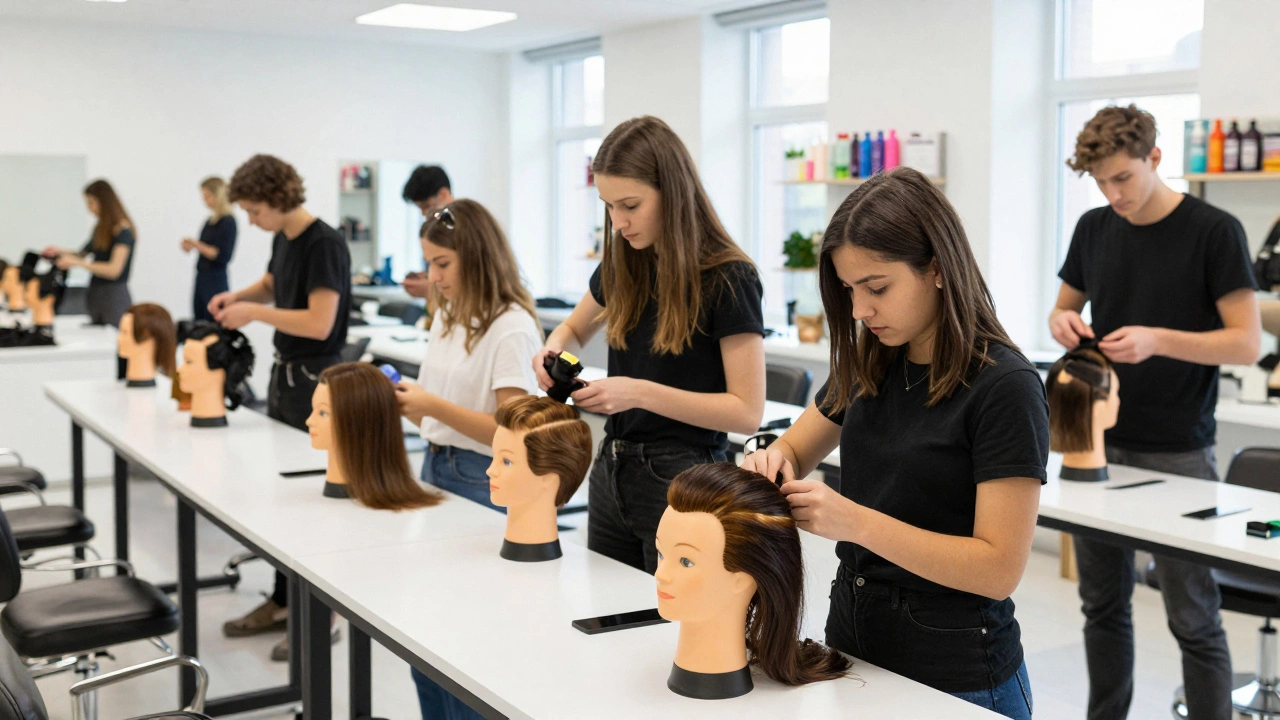
If speed is your priority, full-time study at a further education college or private academy is usually the quickest route. These programs are designed to get you classroom-ready as fast as possible. Most standard qualifications, like the NVQ Level 2 Hairdressing, which is the entry-level qualification required to work as a junior stylist in most salons, take between six and nine months when studied full-time.
During this period, you will spend roughly 80% of your time in practical workshops and 20% in theory classes. You aren't just reading about shampoo chemistry; you are washing, cutting, and styling mannequin heads and live models every day. This intensity means you graduate with muscle memory already forming. However, because these courses are condensed, they require significant self-study outside of class hours. Expect to spend evenings practicing braiding techniques or studying color theory formulas.
For those who want to move straight into senior roles, the NVQ Level 3 Hairdressing, which covers advanced creative cutting, complex coloring, and business management skills, typically adds another 12 to 18 months on top of the Level 2. So, if you aim for mastery immediately, plan for nearly two years of full-time commitment. This route is ideal if you have savings to cover tuition fees and living expenses without needing to work a separate job.
The Balanced Approach: Apprenticeships
In the UK, apprenticeships have become increasingly popular for trades like hairdressing. An Hairdressing Apprenticeship allows you to earn a salary while gaining qualifications under the guidance of experienced professionals. This model splits your week between the salon floor and off-the-job training.
A typical Level 2 apprenticeship lasts between 12 and 18 months. Why longer than college? Because you are working real shifts, dealing with actual clients, and balancing that with mandatory study days. The advantage here is experience. By the time you finish your certificate, you have likely served hundreds of paying customers. Employers love this because there is little "ramp-up" time-you hit the ground running.
However, apprenticeships come with their own challenges. You are subject to the salon’s opening hours, which often include weekends and early mornings. Your learning pace is also tied to your employer’s schedule. If the salon is quiet, you might have more time to practice; if it’s busy, you might be doing mostly washing and drying. It requires patience and resilience, but the financial benefit of earning while you learn is hard to beat.
Part-Time and Evening Classes
Not everyone can quit their current job or commit to full-time study. For parents, students, or those working in other industries, part-time courses offer flexibility. These programs stretch the same curriculum over a longer period, usually taking 18 to 24 months to complete a Level 2 qualification.
Classes might run two evenings a week plus one Saturday morning. This slower pace allows you to absorb information without feeling overwhelmed, but it requires strong discipline. You need to keep your skills sharp during the weeks when you aren’t in class. Many part-time students supplement their learning by volunteering at local charity events or practicing on friends and family to maintain their proficiency.
This route is particularly common for career changers who want to test the waters before fully committing. It lets you gauge whether you truly enjoy the physical demands of standing all day and the social interaction of client service before investing heavily in your future.
Barbering vs. General Hairdressing
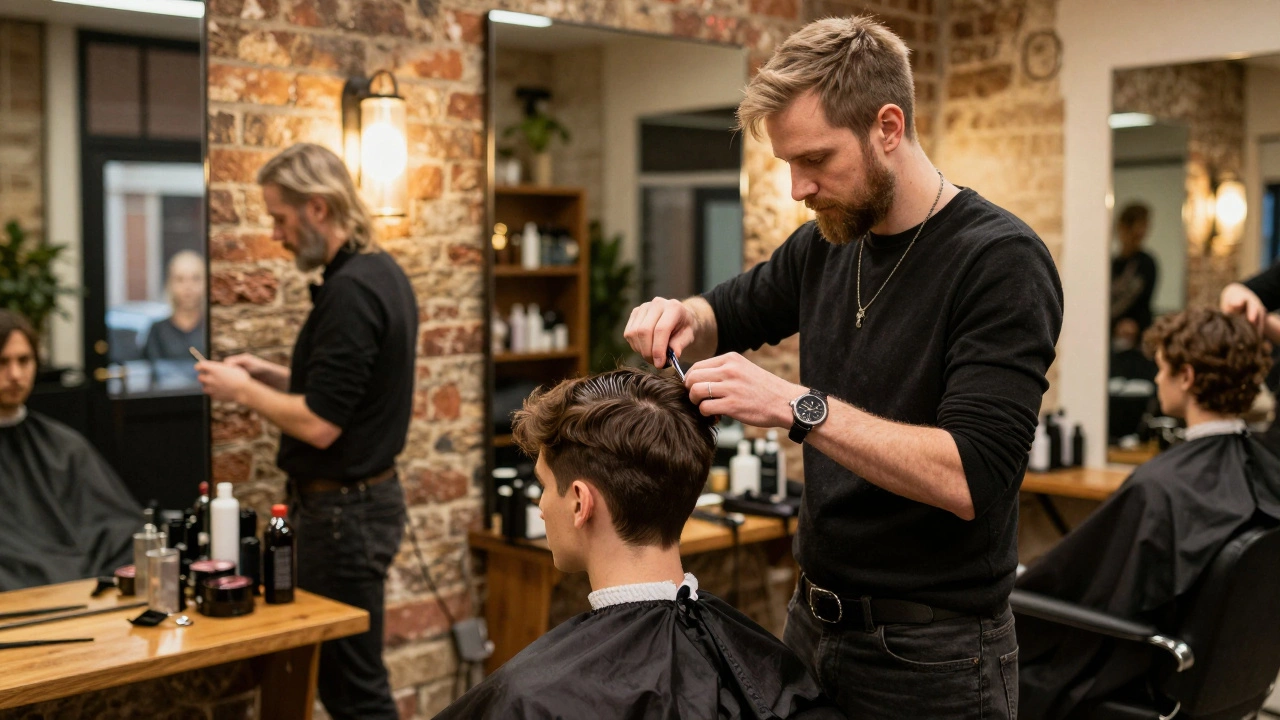
It is important to distinguish between general hairdressing and barbering, as the timelines can differ slightly. While both fields overlap in basic cutting techniques, barbering focuses heavily on men’s grooming, including clipper work, beard trimming, and traditional hot towel shaves.
A dedicated Barbering Diploma often takes 6 to 9 months full-time or 12 to 18 months via apprenticeship. The curriculum is narrower than general hairdressing, meaning you might progress through technical modules faster. However, mastering precision clipper fades requires repetitive practice that cannot be rushed. Some barbers start with a general hairdressing foundation and then specialize, adding three to six months of focused training.
| Training Route | Duration (Level 2) | Cost Structure | Best For |
|---|---|---|---|
| Full-Time College | 6-9 Months | Tuition Fees Only | Those wanting quick entry & no debt |
| Apprenticeship | 12-18 Months | Earn Salary + Free Training | Hands-on learners & budget-conscious |
| Part-Time Study | 18-24 Months | Tuition Fees + Current Job Income | Career changers & parents |
What Happens After Qualification?
Getting your certificate doesn't mean your training stops. In fact, the beauty industry changes rapidly. New trends in color correction, balayage techniques, and sustainable products emerge constantly. Most salons require new hires to undergo additional internal training for their first three to six months. This is known as the "junior stylist" phase.
During this time, you will continue to learn under supervision. You might not be allowed to perform certain high-risk services, like lightening dark hair, until you have demonstrated consistency. Think of this as an extended internship. The total time from starting your first class to becoming a fully independent, senior stylist is typically three to five years. This includes your initial qualification plus the on-the-job refinement needed to build confidence and speed.

Choosing the Right Path for You
So, how do you decide? Ask yourself three questions:
- What is my budget? If you need income now, an apprenticeship is best. If you have savings, full-time college gets you qualified fastest.
- What is my learning style? Do you thrive in structured classrooms, or do you prefer learning by doing in a real-world environment?
- What are my availability constraints? Can you commit to 30+ hours a week, or do you need evening flexibility?
There is no wrong choice, only different paths to the same destination. Each route builds the essential skills of consultation, sanitation, cutting, and coloring. The key is to start somewhere. Even if you begin with a short introductory workshop, it gives you the vocabulary and basic techniques to understand what professional training entails.
Practical Tips for Prospective Students
Before enrolling, visit the school or salon. Watch how students interact with instructors. Are they supported? Is the equipment modern? Old clippers and dull scissors can hinder your learning. Also, check the accreditation. Ensure the course leads to a recognized qualification like the NVQ or City & Guilds diploma. Without proper accreditation, your training may not be valued by employers.
Finally, consider the location. Travel time matters. If you commute two hours each way to a prestigious academy, that fatigue will impact your performance. Local colleges often provide excellent training with less logistical stress. Remember, the goal is not just to get a piece of paper, but to develop the dexterity and eye for detail that makes a great stylist.
Can I learn to cut hair in 3 months?
While you can learn basic cutting techniques in three months, achieving a professional qualification like NVQ Level 2 typically takes at least six months full-time. Short courses can teach you fundamentals, but they won't qualify you to work legally in most salons without further certification.
Is an apprenticeship better than college?
It depends on your goals. Apprenticeships are better if you want to earn money while learning and gain real-world experience quickly. College is better if you want to focus entirely on study, accelerate your qualification timeline, and have a broader theoretical foundation before entering the workforce.
Do I need math or science for hairdressing courses?
You don't need advanced degrees, but basic numeracy is essential for mixing color ratios and calculating processing times. Understanding basic chemistry helps with product interactions, but most courses teach this from scratch. Good communication skills are far more critical than academic subjects.
How much does hairdressing training cost?
Costs vary widely. Apprenticeships are free and paid. Full-time college courses can range from £2,000 to £5,000 depending on the institution and region. Private academies may charge more but often offer specialized luxury brand training. Always check if student loans or grants are available.
Can I work while doing a part-time hairdressing course?
Yes, many students work part-time jobs alongside their studies. However, be mindful of fatigue. Hairdressing is physically demanding, requiring long hours on your feet. Balancing a retail job with evening classes can be challenging, so ensure you have enough energy for practical assessments.



Write a comment