
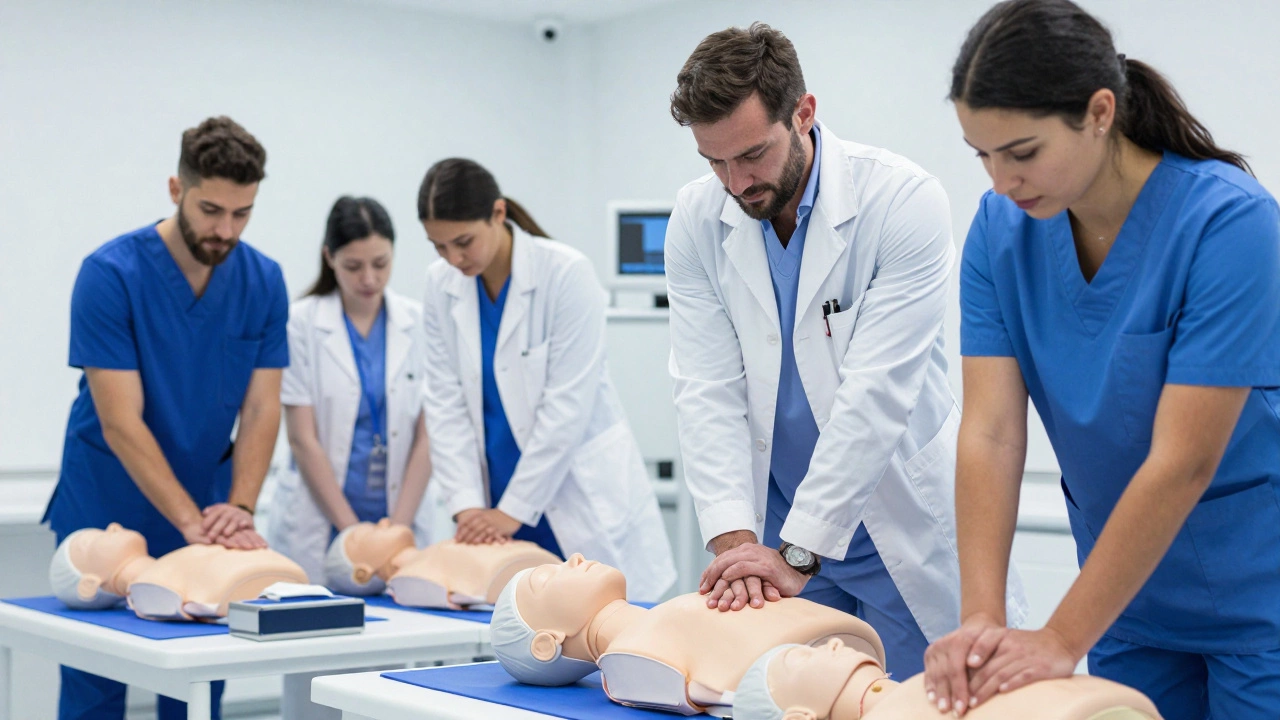
BLS vs. First Aid: Certification Pathway Finder
Tell us about your situation:
Select your options and click "Get Recommendation" to see which certification fits your needs.
You’ve got a workplace requirement for basic life support, but your current certificate says "First Aid." Can you just hand it over and call it a day? The short answer is no. While they sound like two sides of the same coin, they are distinct qualifications with different scopes, legal implications, and practical applications.
Confusing these two can lead to compliance issues in healthcare settings or leave you unprepared in a real-life emergency. Let’s break down exactly what each course covers, where they overlap, and why knowing the difference matters for your career and safety.
What Is Basic Life Support (BLS)?
Basic Life Support (BLS) is a specialized certification focused on recognizing life-threatening emergencies and performing immediate interventions to sustain life until advanced help arrives.
BLS is primarily designed for healthcare providers-doctors, nurses, paramedics, and EMTs-but it’s increasingly common in other high-risk professions. It goes beyond standard first aid by emphasizing rapid recognition of cardiac arrest, choking, and respiratory distress.
The core components of BLS include:
- High-quality cardiopulmonary resuscitation (CPR) for adults, children, and infants
- Use of an automated external defibrillator (AED)
- Relief of choking in conscious and unconscious patients
- Team dynamics during resuscitation efforts
- Recognition of early signs of stroke and heart attack
In the UK, BLS is often aligned with guidelines from the Resuscitation Council (UK). In the US, it’s typically certified through the American Heart Association (AHA). The key takeaway? BLS is about immediate action in critical situations where seconds count.
What Is Standard First Aid?
Standard First Aid is a broader set of skills aimed at providing initial care for minor injuries and illnesses before professional medical help arrives.
Think of first aid as the foundation of emergency care. It covers everything from treating cuts and burns to managing allergic reactions and sprains. Most people encounter first aid in community settings, workplaces, schools, or sports clubs.
A typical first aid course includes:
- Treating wounds, fractures, and burns
- Managing shock and bleeding
- Recognizing signs of poisoning or overdose
- Basic CPR and AED use (often included but not emphasized as deeply as in BLS)
- Handling common medical emergencies like asthma attacks or diabetic episodes
While first aid does include CPR, it’s usually taught as one component among many. The focus is on versatility-being able to handle a wide range of non-life-threatening incidents.
Key Differences Between BLS and First Aid
| Feature | Basic Life Support (BLS) | Standard First Aid |
|---|---|---|
| Primary Audience | Healthcare professionals, EMTs, first responders | General public, workplace employees, teachers, coaches |
| CPR Depth | Advanced techniques, team-based resuscitation | Basic single-rescuer CPR |
| AED Use | Detailed instruction on placement, timing, and integration with CPR | Basic operation only |
| Choking Relief | Comprehensive for all ages, including unconscious victims | Basic abdominal thrusts for conscious adults |
| Duration | 4-6 hours (in-person + skills assessment) | 1-3 days depending on level (e.g., Emergency First Aid vs. Full First Aid) |
| Renewal Period | Every 2 years | Every 3 years |
| Legal Recognition | Required in many healthcare roles; recognized globally | Often mandated by employers for general safety compliance |

Do They Overlap?
Yes, there’s significant overlap. Both courses teach CPR and AED use. If you take a comprehensive first aid course, you’ll likely cover enough ground to handle basic cardiac emergencies. However, BLS dives deeper into those specific skills.
For example, in BLS, you learn how to coordinate with a team during CPR-who compresses, who ventilates, who operates the AED. In standard first aid, you’re usually trained as a lone rescuer. That distinction matters if you ever work in a clinic, hospital, or emergency service.
Another point of convergence is the emphasis on quick decision-making. Both courses stress the importance of calling emergency services early and starting interventions without delay. But BLS adds layers: assessing pulse accuracy, recognizing agonal breathing, and adapting techniques based on patient age and condition.
When Do You Need Which Certification?
Your choice depends on your role and environment.
If you’re a nurse, doctor, dentist, or paramedic, BLS isn’t optional-it’s mandatory. Employers require it because you’re expected to respond to cardiac arrests and airway obstructions in clinical settings. Even allied health professionals like physiotherapists or radiographers may need BLS depending on their duties.
On the other hand, if you’re a teacher, construction worker, retail employee, or parent, standard first aid is probably sufficient. These roles benefit from broad knowledge covering cuts, falls, allergies, and minor trauma. You might also want to add a separate CPR/AED module if your job involves higher risk.
Some organizations offer hybrid courses that combine both elements. For instance, a “First Aid at Work” qualification in the UK includes extended CPR and AED training. Check local regulations to ensure compliance.
Can You Take One Instead of the Other?
Not always. If your employer requires BLS, submitting a standard first aid certificate won’t cut it. The curricula differ too much. Conversely, if you hold BLS, you generally satisfy any requirement for basic first aid since BLS encompasses more advanced skills.
However, don’t assume automatic equivalence. Some institutions verify credentials strictly. Always confirm with your employer or regulatory body before substituting one for the other.
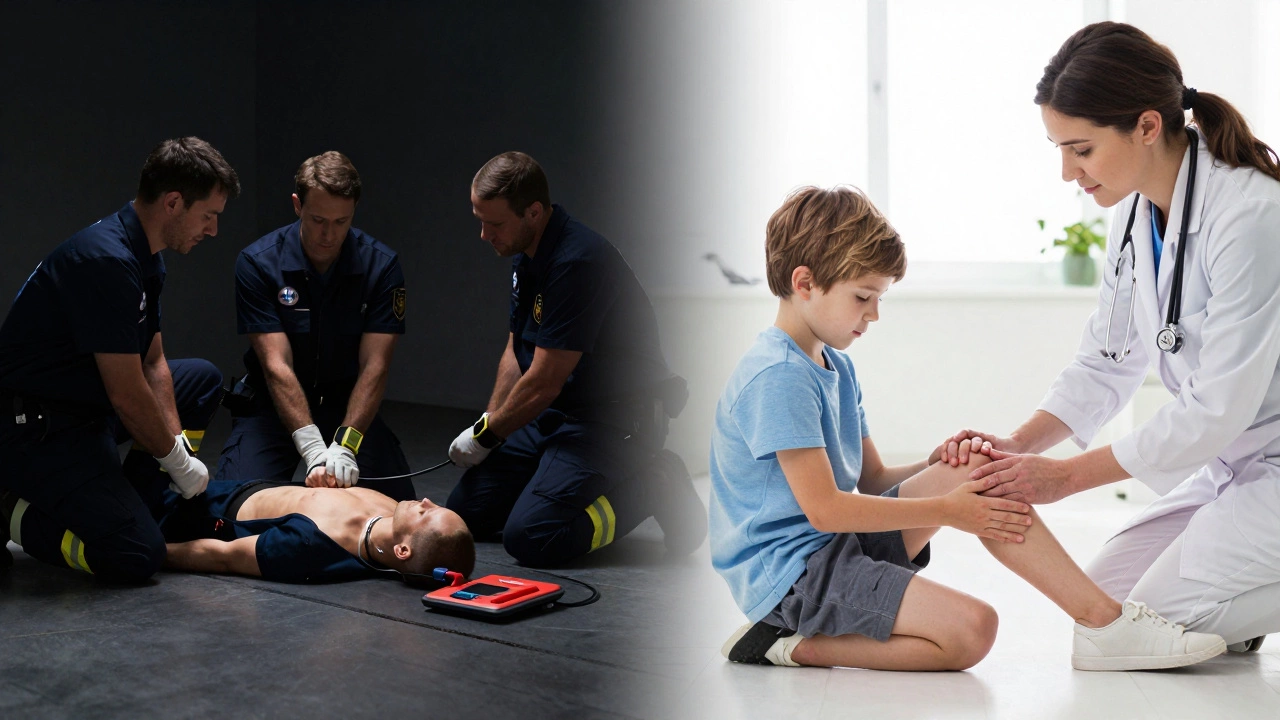
How to Choose the Right Course
Ask yourself three questions:
- What does my job require? Review employment contracts or occupational health policies. Healthcare roles almost always specify BLS.
- Where will I use these skills? Clinical environments demand precision under pressure. Community settings value adaptability across diverse scenarios.
- Am I prepared for hands-on practice? BLS involves rigorous skill checks. You must demonstrate correct chest compression depth, rate, and ventilation technique. First aid assessments tend to be less intensive.
If you’re unsure, start with a blended approach. Many training providers offer modular programs where you can stack certifications. This way, you build competence progressively without redundancy.
Common Misconceptions About BLS and First Aid
Let’s clear up some myths:
- “BLS is just fancy first aid.” False. BLS focuses narrowly on sustaining life during critical events. First aid addresses a wider spectrum of health issues.
- “I don’t need BLS unless I’m a doctor.” Incorrect. Firefighters, police officers, lifeguards, and even flight attendants often require BLS due to exposure to traumatic injuries and sudden collapses.
- “Online-only courses are enough.” Not true for either credential. Both require in-person skills evaluation. Blended learning options exist, but final competency must be demonstrated physically.
Next Steps: Getting Certified
Ready to enroll? Here’s how to proceed:
- Identify accredited training centers near you. Look for approvals from recognized bodies like the Red Cross, St John Ambulance, or national resuscitation councils.
- Compare course content against your needs. Don’t settle for vague descriptions-ask for detailed syllabi.
- Schedule a session that fits your timeline. Remember, renewals happen every 2-3 years, so plan ahead.
- Practice regularly. Skills fade quickly without reinforcement. Consider joining local volunteer groups to apply your knowledge safely.
Investing in proper training pays off-not just professionally, but personally. Knowing whether to reach for bandages or begin chest compressions could mean the difference between life and death.
Is BLS harder than first aid?
BLS tends to be more intense because it emphasizes speed, accuracy, and teamwork in high-stress situations. You’ll face stricter performance standards during skills assessments. First aid is broader but less demanding in terms of technical execution.
Can I get BLS online?
You can complete the theoretical portion online, but you must attend an in-person session to demonstrate CPR, AED usage, and choking relief. Fully remote BLS certification doesn’t exist because hands-on proficiency is essential.
Does BLS expire?
Yes, BLS certificates typically last two years. After that, you need recertification, which involves reviewing updated guidelines and retesting core skills. Keeping current ensures you follow the latest evidence-based practices.
Which is better for parents: BLS or first aid?
For most families, a pediatric-focused first aid course suffices. It covers child-specific emergencies like fever fits, drowning risks, and accidental ingestions. Add a standalone infant CPR module if you want extra confidence handling baby-related crises.
Are BLS and ACLS related?
Absolutely. Advanced Cardiovascular Life Support (ACLS) builds directly on BLS. Before tackling ACLS-which deals with complex drug protocols and rhythm interpretation-you must master foundational BLS skills. Think of BLS as the prerequisite gateway.


Write a comment